Engineer News Network The ultimate online news and information resource for today's engineer
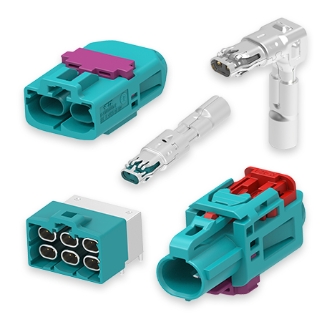
TTI IP&E – Europe is now stocking the GEMnet multi-gigabit differential connector system from TE Connectivity. The GEMnet series is engineered to enable 15GHz bandwidth and up to 56Gbps automotive data transmission, specifically addressing the needs of multi-gigabit (10Gbps+) Ethernet and SerDes applications. This high-performance system is ideally suited for a wide array of functional applications, including 4K camera systems, radar/lidar, high-resolution displays, advanced driver-assistance systems (ADAS), autonomous driving, and rear-seat entertainment.
Designed from the ground up, the GEMnet system boasts an automotive-grade robustness, compatible with the USCAR interface and qualified to LV214 and USCAR standards. It supports a comprehensive range of industry protocols, encompassing multi-gigabit Ethernet (100BASE-T1, 1000BASE-T1, 2.5/5/10/25GBASE-T1) and SerDes applications such as APIX, FPD-Link, GMSL, MIPI A-PHY℠, PCIe, USB, GVIF, HDBase-T, and ASA Motion Link.
The GEMnet system’s mechanical features include primary and secondary locking, a robust crimp design, high cable retention force, anti-stubbing pin protection, and scoop-proof construction, along with optional Connector Position Assurance (CPA). The system offers sufficient EMI performance due to its multiple contact points. It can be used with various cable types, including shielded twisted pair (STP), unshielded twisted pair (UTP), and new high-performance cables. The extensive portfolio features 90° and 180° terminals, offering sealed and unsealed PCB connectors (headers) and housings in 1, 2, 4, and 6 port configurations.