Engineer News Network The ultimate online news and information resource for today's engineer
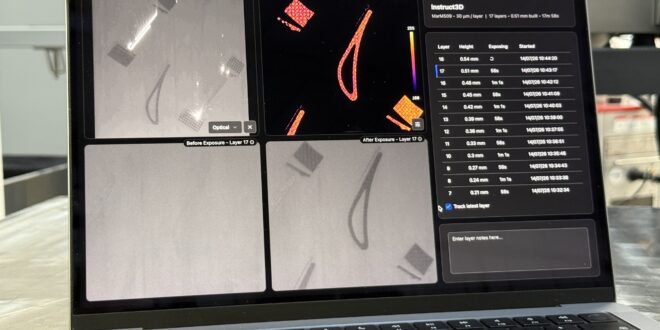
Instruct3D has launched its Additive Build Intelligence solution, introducing a new category of technology designed to help metal additive manufacturing users move beyond process monitoring and toward predictable, provable, right-first-time production.
Built on more than 20 years of pioneering research in additive manufacturing from the University of Sheffield, Instruct3D pairs physics-based optimisation with affordable sensor hardware and end-to-end data intelligence to give manufacturers greater confidence in every build.
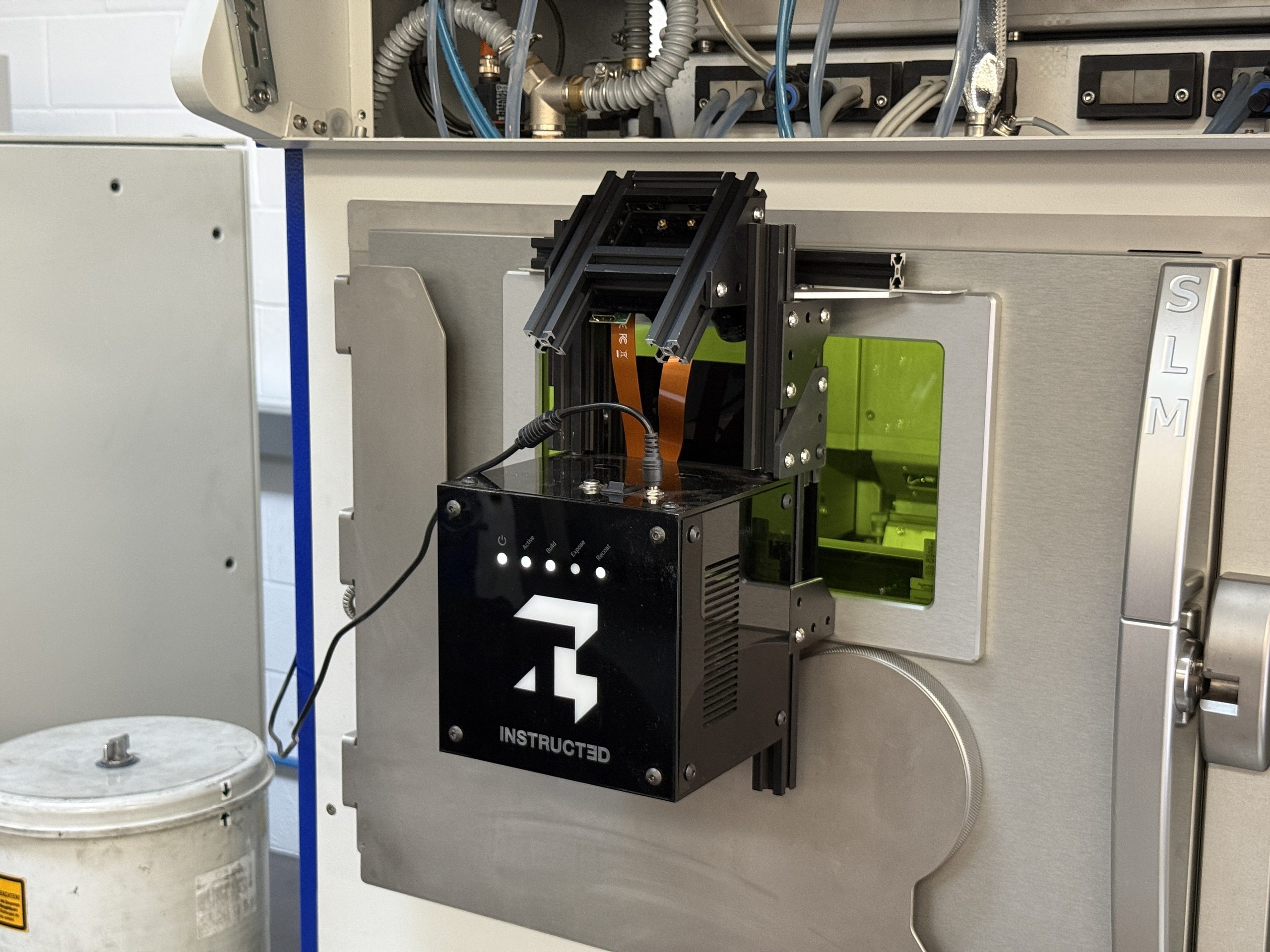
The launch marks an important shift in how AM quality should be understood. Instruct3D is not positioning itself as an in-situ monitoring company. While the system uses camera-based data acquisition through its VertX hardware, the purpose is not simply to collect images or flag anomalies. VertX acts as the ‘eyes’ of the platform, capturing the process data needed for AdditiveOS, the company’s software platform, to turn that data into actionable build intelligence.
Additive Build Intelligence allows AM users to predict where build issues may occur, understand what happened during the process, generate evidence to support build verification, and use every build to improve the next. This directly addresses one of metal AM’s most persistent barriers, the gap between being able to print complex parts and being able to prove, repeat, and scale them with confidence.
“Metal AM does not need more disconnected data,” says Ben Thomas, Co-Founder of Instruct3D. “It needs intelligence that helps manufacturers make better decisions before, during, and after the build. Additive Build Intelligence is about giving teams the confidence to build high-value parts more predictably, reduce trial-and-error, and move faster from development into production.”
The platform has already moved beyond the laboratory. It has been deployed across multiple machines around the world, with adoption progressing from academic environments into contract manufacturing and prime-led applications. The technology has also been developed with commercial deployment in mind, using a scalable hardware-enabled software model, affordable sensor architecture, and practical installation routes.
Rob Snell, Co-Founder of Instruct3D, says, “Cameras are part of the system, but they are not the story. The story is what we do with the data. By linking measured build behaviour with physics-based prediction and learning workflows, we can help users understand the material reality of the build, not just observe the process.”
Instruct3D’s hard launch comes as AM users across aerospace, defence, energy, and advanced manufacturing look for better ways to reduce failed builds, shorten parameter development, improve process understanding, and create usable quality evidence.