Engineer News Network The ultimate online news and information resource for today's engineer
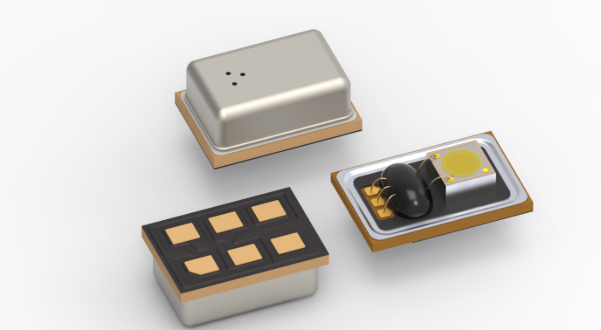
MEMSensing announces the European launch of its microelectromechanical systems (MEMS) bone-vibration sensor developed to improve uplink voice capture in true wireless stereo (TWS) earbuds. Used alongside a conventional microphone, the sensor provides a separate reference for the wearer’s voice that is less affected by background and wind noise. Its compact, low-power design and microphone-like voltage output support integration, while the capacitive MEMS architecture enables reliable vibration detection in a component suited to high-volume production.
In noisy settings, conventional earbud microphones capture speech together with surrounding sound. Dual- and triple-microphone environmental noise cancellation (ENC) systems can improve separation but require additional space and processing, which can be difficult to accommodate in compact, bean-style earbuds. The bone-vibration sensor captures structure-borne vibration from the wearer’s skull and ear cartilage.
The audio processor can combine this with the microphone input to distinguish the wearer’s voice from surrounding sound, reducing reliance on additional microphones and complex beamforming algorithms. This supports simpler, more cost-effective audio architectures.
The device measures 3.5 x 2.6 x 1.0mm and uses a metal-lid land grid array (LGA) package with soldered connections for electromagnetic shielding. Its dimensions are compatible with standard microphone packages. An integrated application-specific integrated circuit (ASIC) converts the vibration signal into a voltage output like that of a conventional silicon microphone, supporting integration with established Bluetooth audio processing architectures.
The typical sensitivity is -30dBV/g at 1 kHz, with a specified signal-to-noise ratio of 75dB and a resonant frequency of about 8kHz. The frequency response remains flat up to approximately 1.5 kHz to support subsequent signal processing. The sensor operates at voltages between 1.8 and 3.6V and normally draws 150µA. These specifications allow the device to provide a separate voice reference with limited power overhead, offering an alternative to adding another microphone channel or using a multifunction motion sensor solely for voice detection.