Engineer News Network The ultimate online news and information resource for today's engineer
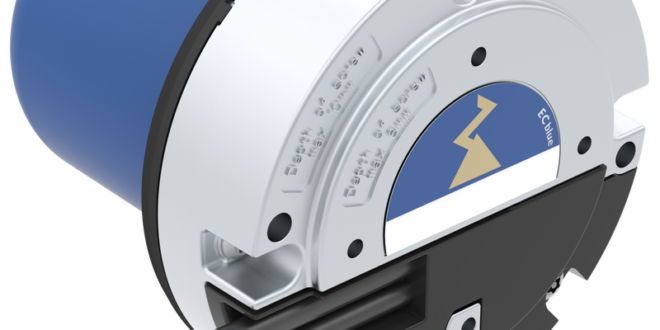
Advanced blast chiller technology improves food safety, cooling efficiency, and sustainability through optimized airflow, energy-efficient EC motors, and intelligent control systems. By integrating high-performance axial fans, digital monitoring, and precise temperature control, commercial refrigeration systems can reduce energy consumption, lower operating costs, extend equipment life, and support evolving European regulatory requirements. Paz Garcia reports
Commercial refrigeration is undergoing an unprecedented transformation. The need to guarantee food safety, reduce energy consumption and comply with new European regulatory requirements is driving a new generation of equipment in which every component plays a strategic role. In this context, blast chillers have evolved from being a specialised element of professional kitchens to becoming a key solution for optimising processes, improving food quality and advancing toward more efficient and sustainable installations.
Professional refrigeration can no longer be understood solely from the perspective of cooling production. In recent years, equipment digitalisation, rising energy costs and the evolution of the European regulatory framework have profoundly changed the criteria used by manufacturers, engineering firms and installers when designing refrigeration systems.
The objective remains the same: preserving food under optimal conditions for as long as possible. However, the way this is achieved has evolved. Today, rapid cooling has become a standard practice throughout the food industry and professional catering sector. Blast chillers accelerate this process through intensive circulation of cold air, reducing food temperatures from more than 70°C to below 3°C in as little as ninety minutes.
The benefits extend far beyond regulatory compliance. Rapid cooling limits bacterial growth, extends product shelf life and better preserves texture, moisture, aroma and nutritional value. It also facilitates production planning, reduces food waste and improves organisation and productivity in high-volume kitchens, hospitals, hotels, catering services, and food processing plants.
- Rapid cooling: A barrier against microbiological risk. After cooking, food goes through a particularly critical phase. While its temperature remains within the so-called ‘danger zone’ — approximately between 63°C and 4°C — micro-organisms find ideal conditions for rapid multiplication. Reducing the time spent within this temperature range is one of the fundamental principles of the HACCP system (Hazard Analysis and Critical Control Points), widely implemented across the food industry and professional catering sector.
Blast chillers are specifically designed to accelerate this process through intensive cold-air circulation, minimizing microbiological risks while ensuring food safety and product quality.
- Airflow: The decisive factor. When evaluating the performance of a blast chiller, focus is typically on the refrigeration circuit, compressor or evaporator. However, the equipment’s actual performance largely depends on how effectively cold air is distributed around the product.
Heat transfer is only effective when airflow reaches the entire load uniformly. If there are areas of lower air velocity or turbulences, certain parts of the product will cool more slowly and improperly; these temperature differences can compromise food safety, cooling times and final product quality.
For this reason, the fan is not a secondary component anymore, but one of the key elements impacting the overall efficiency of a blast chiller.
The development of EC (Electronically Commutated) technology means a significant advancement over traditional drive systems. These motors combine high electrical efficiency with the ability to continuously control rotational speed, adapting airflow to the specific requirements of each stage of the cooling process.
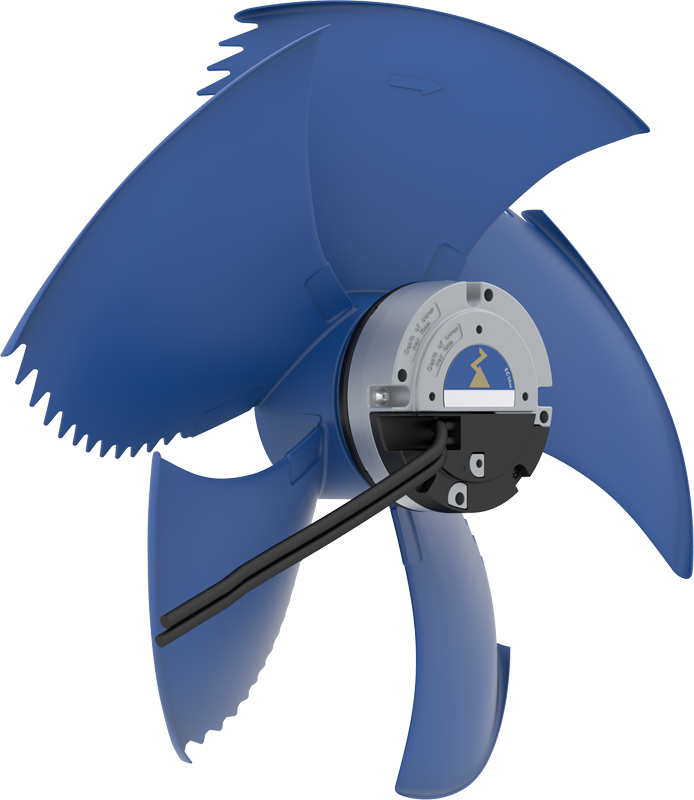
When this technology is combined with advanced biomimetic impeller design and next-generation composite materials, the result is dual: significantly more uniform cold-air distribution and lower energy consumption, leading to lower environmental impact and supporting full traceability. Energy consumption is substantially reduced, either shortening cooling time or avoiding nominal rate operation. It would replace as well big external controllers when they are used, which maximises room for food in the chiller.
While electronics can optimise equipment operation, aerodynamic performance ultimately determines cooling uniformity and overall results. This optimisation is what defines excellence in a professional kitchen.
On the other hand, this technology offers other valuable benefits for professional processes. Improved turbulence control reduces noise levels and enhances working conditions, while lower heat generation increases refrigeration system performance. Because EC motors operate under lower mechanical stress and with more precise control, they also extend equipment service life and reduce maintenance requirements.
In a context highly impacted by rising electricity costs, optimising energy consumption is no longer a concern but also a factor directly linked to the profitability of the installation.
- Digitalisation and Smart Management. Another major transformation in professional refrigeration is intelligent management systems integration.
Today’s blast chillers can automatically select programs according to the type of food being processed, monitor temperature evolution through probes, and record the entire process to ensure full traceability. This information is particularly valuable during food safety audits and facilitates compliance with HACCP protocols.
The incorporation of open communication protocols such as Modbus also enables these units to be integrated into professional kitchen infrastructures and Building Management Systems (BMS). This integration optimises operations, increases system profitability and facilitates remote monitoring and predictive maintenance.
Continuous analysis of parameters such as temperatures, fan speeds, operating hours and energy consumption allows deviations to be detected before they become failures, reducing maintenance costs and improving equipment availability.
- The New European Framework: Efficiency as a Design Criterion. The energy transition is reshaping the future of commercial refrigeration. The European Union has established increasingly ambitious objectives for reducing energy consumption and carbon emissions, driving a comprehensive revision of regulations affecting energy-related products.
Within this context, the Ecodesign framework is evolving toward criteria that extend beyond energy performance alone. It now incorporates aspects such as durability, repairability, digitalisation, and efficiency — not only of individual components but also of the system as a whole. The implementation of the Ecodesign for Sustainable Products Regulation (ESPR) marks a turning point and guides the development of the next generation of equipment.
Although many measures will be introduced progressively, the 2026 horizon is already influencing the decisions of manufacturers and engineering firms developing solutions capable of meeting future energy efficiency and sustainability requirements.
Performance improvements will no longer depend solely on the refrigeration circuit. The behaviour of motors, fans, heat exchangers, and electronic systems will be equally critical in achieving the efficiency levels demanded by the market.
- Innovation Applied to System Design. Technological evolution is also changing the way refrigeration equipment is designed. Whereas increasing cooling capacity was once the primary objective, today’s focus is on maximising energy performance by optimising every component within the system.
This philosophy explains the growing collaboration between equipment manufacturers and companies specialised in ventilation technologies, electronic motors, and control systems.
In this field, ZIEHL-ABEGG represents a clear example of this evolution. Its EC axial fans, developed for commercial refrigeration and food service applications, combine high-efficiency motors, optimised aerodynamic design, low noise levels, and communication capabilities through open protocols, facilitating integration into intelligent energy management systems.
Beyond the product itself, this trend reflects a broader paradigm shift:
- The overall efficiency of a blast chiller depends on the combined performance of all its components.
- Optimal laminar distribution of cold air delivers faster and better cooling results while reducing the equipment’s carbon footprint throughout its service life.
- A Shared Challenge for the Industry. Technological evolution is also redefining the role of manufacturers, engineering firms, and installers.
Manufacturers must continue investing in innovation to develop equipment capable of meeting increasingly demanding regulatory requirements. Installers, meanwhile, will need to broaden their expertise in electronics, connectivity, and control systems in order to serve customers who now seek not only refrigeration capacity, but solutions capable of reducing operating costs while ensuring maximum reliability.
The integration of intelligent components, remote monitoring, and predictive maintenance will transform installation professionals into valuable technology advisors who can deliver added value throughout the entire equipment lifecycle.
- Looking Ahead. Professional refrigeration is evolving toward equipment that is more efficient, intelligent, and sustainable. Blast chillers represent one of the clearest examples of this transformation by combining food safety, automation, and energy efficiency within a single solution.
The evolution of the European Ecodesign framework and the objectives associated with the 2026 horizon will accelerate the adoption of high-performance components and digital solutions capable of optimising installation performance
In this new landscape, the fan is no longer a secondary component but a strategic element of refrigeration design. Its influence on airflow, cooling uniformity, energy consumption, and acoustic performance directly affects both process quality and installation profitability
Food safety will remain the primary objective, but achieving it will require an integrated approach in which energy efficiency, digitalisation, and sustainability form part of a single concept. The next generation of commercial refrigeration equipment must not only produce cold effectively; it must do so with minimum energy consumption, greater connectivity, and the flexibility needed to meet the sector’s emerging regulatory and environmental challenges.
Paz Garcia is Market Segment Manager for Food, ZIEHL-ABEGG.