Engineer News Network The ultimate online news and information resource for today's engineer

Viking Kristjansson reframes facility drainage from a forgotten utility into a strategic asset, revealing how the ‘hole in the ground’ mindset silently drains operational budgets, and explains that a coordinated mix of area, trench, and slot drains can slash hidden costs, simplify sanitation, and fortify food safety from the floor up
Walk onto the floor of an elite food processing facility, and you will immediately notice the sophisticated robotics, the gleaming stainless steel machinery, and the highly engineered conveyor systems. Facility managers scrutinise every operational detail to maximise yield and ensure safety. Yet, if you look down, you often find a critical infrastructure component treated as a complete afterthought. For decades, the food processing industry has viewed drainage as nothing more than a hole in the ground. You run a pipe, slope the concrete, throw a heavy iron grate over it, and hope the wastewater disappears.
That outdated mindset is quietly draining millions of dollars from operational budgets.
Treating a drain as a mere exit point ignores its fundamental role within the larger ecosystem of your building. A modern, high-performance facility requires a fundamental shift in perspective. We must move away from the isolated ‘hole’ mentality and embrace a ‘whole’ systematic view. This means recognising drainage as a whole-building infrastructure component that directly dictates your total cost of ownership, workplace safety protocols, and absolute food hygiene. It also means recognising that no single drain type is right for every room. A modern strategy deliberately uses area, trench, and slot drains where each makes the most sense for the application and cleaning procedure.
When you view drainage as a strategic asset rather than a necessary nuisance, you stop pouring money down the drain. Let us examine the true financial realities of food-safe drainage systems and explore the evolution of sanitary design.
Decoding the true cost of drainage
When executives evaluate new drainage systems, they frequently fall into a dangerous financial trap. They look exclusively at the initial purchase order. But drainage is not a simple transaction; it is a long-term operational investment. Understanding the total cost of ownership requires looking past what is immediately visible and examining the massive, often submerged financial impacts of your infrastructure choices.
That investment spans the entire lifecycle of the facility: new construction, day‑to‑day cleaning and inspection, periodic shutdowns for repairs, and eventually major renew or retrofit projects. Each choice you make about drain type and layout either compounds hidden liabilities or systematically removes them.
Think of your drainage investment in two distinct categories: the visible upfront costs and the hidden operational hazards that lie just beneath the surface.
The upfront realities: visible costs
The upfront costs are the highly visible metrics that drive initial capital expenditure discussions. These include the raw materials purchased for the product, such as stainless steel. However, the purchase price is only a fraction of the visible expense. You must also account for the installation labor. Complex drainage setups require extensive integration with underground piping, highly specialized concrete formwork, and significant manual labor to properly grade the floors.
Furthermore, you must calculate the cost of production downtime during facility drainage upgrade, improvement, or replacement work. Every hour your facility floor is torn up is an hour of lost revenue. While upgrading to high-grade, food-safe stainless steel systems commands a premium material cost, superior engineering often neutralises these numbers by drastically simplifying the installation process and getting your production lines running faster.
The hidden depths: operational inefficiency and catastrophic risk
While upfront costs determine the initial budget, hidden costs pose a potentially massive, long-term financial burden that can sink a facility’s profitability.
The most immediate hidden cost is cleaning and maintenance. The extensive underfloor piping system of area drains is notoriously difficult to clean and unclog. Traditional grated drains require sanitation crews to manually lift heavy, grease-slicked grates, scrub hidden crevices, and sanitize the catch basins.
In many legacy food plants, that means hundreds of area drains tied into miles of buried stainless‑steel piping that are difficult to see, reach, or clean. What looks simple at the floor surface can become the most expensive and failure‑prone part of the entire system.
Beyond maintenance, consider the costs to personnel and equipment. Inadequate drainage results in standing water, creating significant slip-and-fall hazards and damaging mobile equipment. Moreover, repeatedly lifting heavy grates frequently causes chronic back and shoulder injuries among sanitation staff.
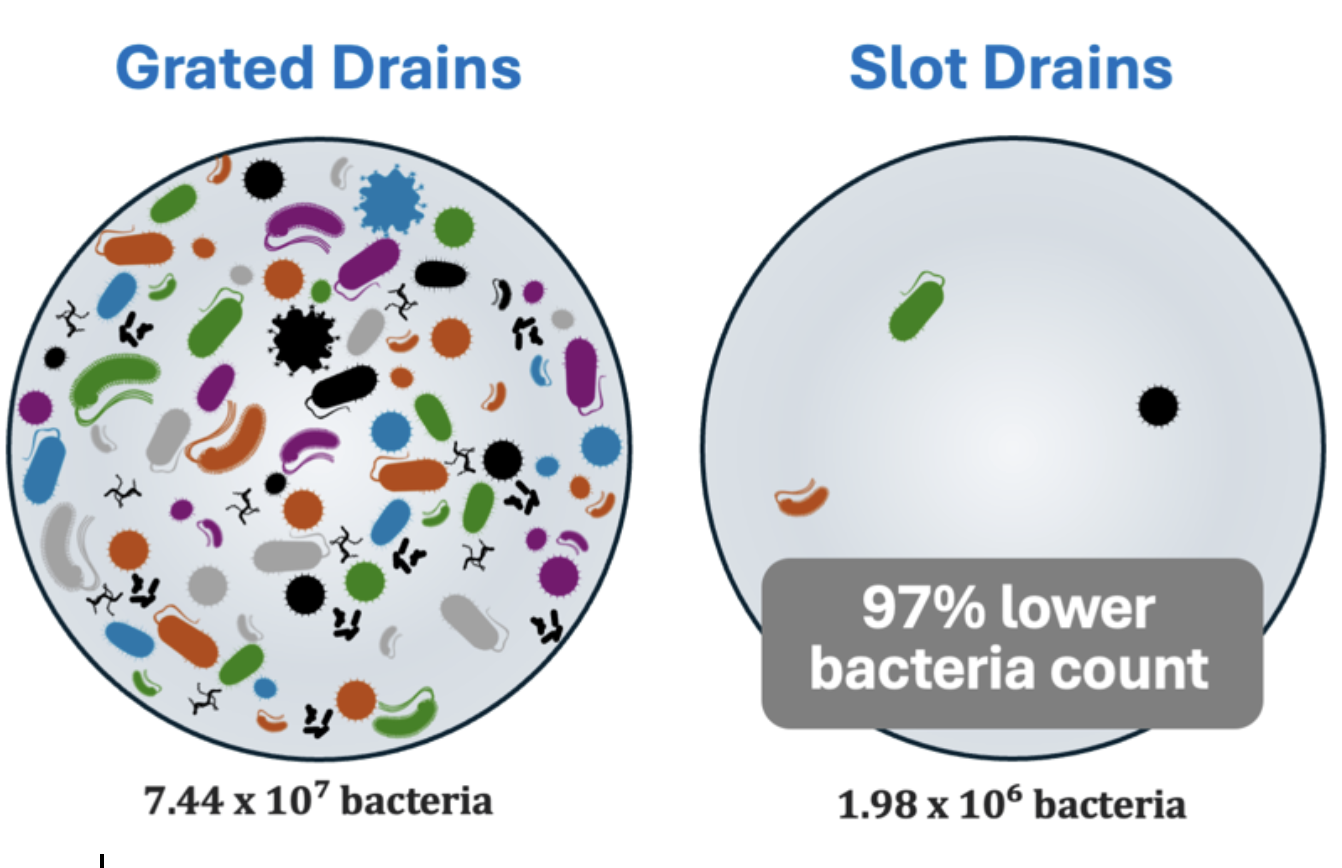
Finally, we reach the most catastrophic hidden costs: failed sanitation audits and food contamination. A poorly designed drain is a perfect incubator for Listeria, Salmonella, and E. coli. If bacteria bloom in a hard-to-clean underground pipe, high-pressure hoses will aerosolize those pathogens right onto your production belts.
The resulting plant shutdowns, massive product recalls, brand reputation, and inevitable legal lawsuits carry immeasurable financial devastation. Recent recall data show microbiological contamination remains one of the most common drivers of enforcement. Regulations such as the Food Safety Modernization Act reinforce that drains and plumbing in wet areas must be durable, cleanable, and designed so they do not become pathogen harborage points. A holistic drainage system actively defends against these risks lurking below the floor.
The evolution of sanitary drainage
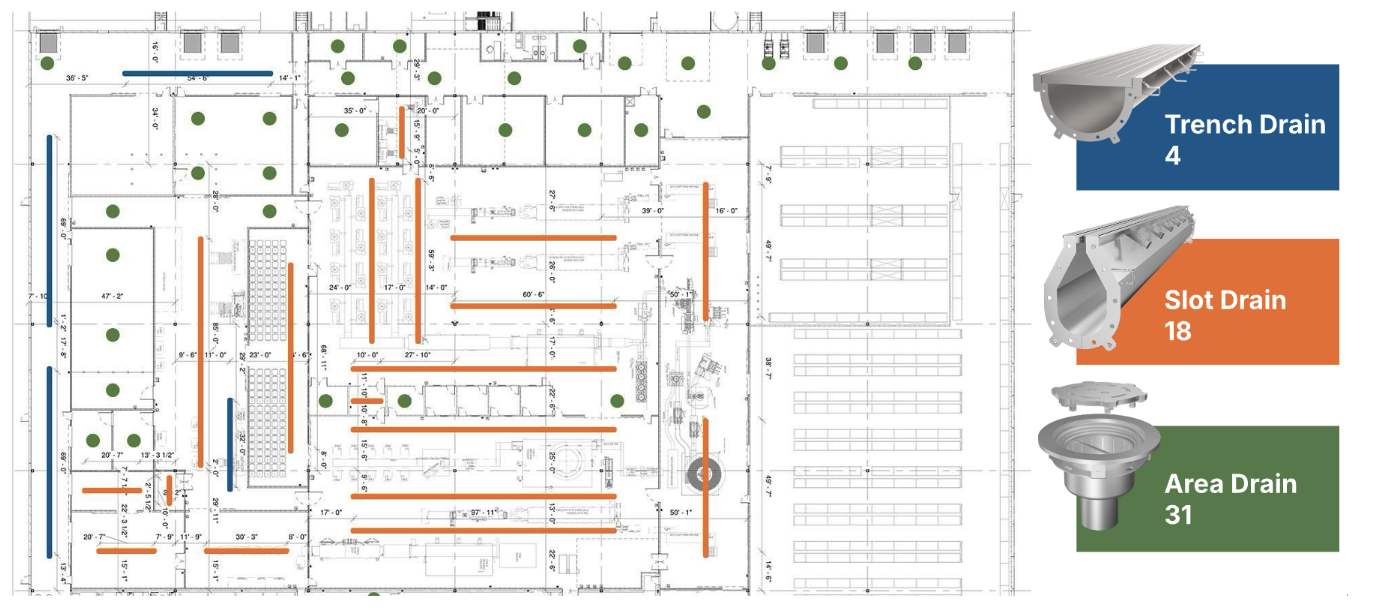
To fully embrace a holistic approach, a facility must apply the optimal solution for each specific application, function, and physical area. Not all drains are created equal. In practice, most food plants rely on three main categories: area drains, trench drains, and slot drains. The real opportunity lies in using each one where it performs best. Understanding the strategic pros and cons of area, trench, and slot drains is vital for engineering a defence system that aligns with your specific operational demands.
Area drains: the traditional standard
Area drains, often referred to as point drains, are the classic ‘hole in the ground’. They consist of a centralized basin covered by a grate that collects water from the surrounding floor space.
The pros of area drains
Area drains still have an important role in modern facilities when they are used selectively and intentionally. They are highly effective in compact spaces, utility closets, or isolated processing zones or equipment that discharge low volumes of water. When applied selectively to the right application, they provide a targeted solution for localised liquid management.
The cons of area drains
Despite their niche utility, area drains are often the suboptimal choice for linear product processes. To force water toward a single point, the concrete floor must be sloped in four different directions. This multi-directional sloping creates an uneven, bowl-like surface that is precarious for heavy forklift traffic and presents constant trip hazards for employees.
More critically, relying on multiple area drains requires an extensive underground piping network to connect them to the main sewer line. In a food‑processing environment, this underground piping must be constructed from expensive stainless steel to withstand thermal shock and corrosive cleaning chemicals. These factors must be considered when evaluating the expenditures of your facility construction.
Furthermore, extensive underground piping creates miles of dark, hazardous, and incredibly difficult-to-clean places. These underground networks become prime breeding grounds for bacterial contamination and frequent clogging, directly threatening your food hygiene and halting production.
Trench drains: the high-capacity workhorse
Trench drains consist of a long, linear channel set into the concrete floor, typically covered by a series of heavy grates. They are designed to intercept water over a wide area.
The pros of trench drains
Trench drains excel in high-volume environments. If your facility uses extensive washdown procedures or rapidly dumps large vats of liquid or solids, a wide trench drain can handle the high hydraulic load without flooding the floor.
Crucially, trench drains require significantly less underground piping than a network of area drains. Because the channel itself transports the water across the room to a single catch basin, you reduce the complexity of your subterranean pipe network.
Less underground piping means lower material costs and, most importantly, fewer hazardous zones where dangerous bacteria can hide and multiply unseen. Additionally, linear trenches require only a simple two-way floor slope, which is cheaper to pour and much safer for forklift traffic.
The cons of trench drains
The primary drawback of the traditional trench drain lies in the grates. Since the grates are not integrated with the drain body, the risk and frequency of them becoming damaged or breaking loose increases, impacting drain performance and maintenance. Heavy cast iron or polymer grates degrade, crack, and chip when exposed to industrial chemicals and heavy wheel traffic. This is why only stainless steel grates should be used in hygienic facilities.
Improperly designed covers harbor bacteria in their intricate grating patterns. To properly clean a trench drain, sanitation crews must manually remove every grate, scrub the interior channel, and replace the grates. This is a labor-intensive process that drives up your facility’s hidden operational costs.
Slot drains: the pinnacle of holistic design
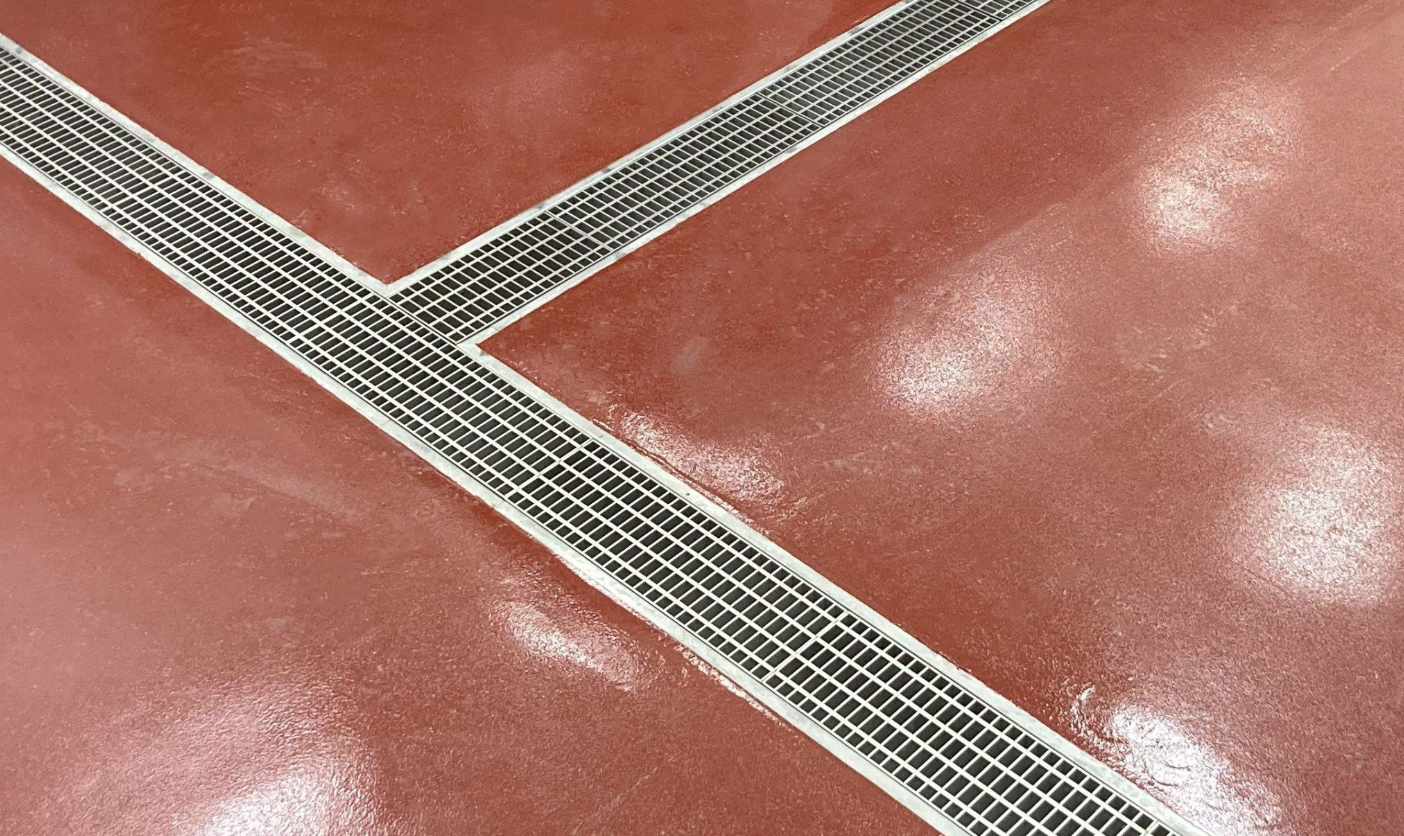
Slot drains are a highly advanced variation of the linear drain. Instead of a wide channel covered with grates, a slot drain features a sleek, narrow opening at the floor level that widens into a larger subterranean channel, eliminating the need for covers.
The pros of slot drains
Slot drains represent one of the most effective linear solutions for food‑safe environments when they are correctly specified and maintained. Because they are grateless, they sit flush with the floor and remove the need to lift heavy covers during routine cleaning. This dramatically reduces ergonomic strain, minimises trip hazards, and avoids the long‑term floor and grate degradation seen with traditional cast iron trenches.
Like trench drains, slot drains significantly reduce the need for expensive underground stainless-steel piping, keeping your wastewater management near the surface, where it can be easily monitored and controlled. This near-surface design eliminates the deep, inaccessible breeding grounds for harmful pathogens.
Furthermore, modern slot drains are engineered for automated, efficient operation. When paired with clean‑in‑place (CIP) technology, these systems can automatically flush and sanitise key sections of the channel, often cutting manual sanitation time from hours to minutes per cleaning cycle. The non‑porous stainless‑steel design minimises crevices and surfaces where biofilm can take hold, making it much easier to maintain hygienic conditions.
The cons of slot drains
Slot Drains are not optimal for all locations. Like any other drain in holistic facility design they have a place and a purpose. They have flow rate limitations due to a maximum slot width of 1 1/2-in limiting flow rates to 27GPM per foot of drain. This makes them less than ideal for extremely high volume zones, especially where solids may be present. Similarly they are overkill in smaller production or maintenance areas that could be better served by an area drain. For that reason, slot drains are best deployed where their long‑term safety and cleaning advantages can be fully realised; typically in high‑traffic, high‑washdown zones rather than every corner of a facility.
Building a systematic defence
Upgrading your perspective from a localised hole to a holistic infrastructure requires partnering with engineering and drainage experts who understand the rigorous demands of the food production ecosystem. A holistic approach does not mean forcing one type of drain into every room. It means mapping the fluid dynamics, traffic patterns, and sanitation protocols of your specific operation, and applying the right tool for the job.
Perhaps you use a high-capacity trench drain in the heavy wash-down bay, a sleek slot drain across the primary packaging floor to protect foot traffic, and a strategically located area drain in the isolated utility closet.
In many existing plants, the first step is not pouring new concrete. Instead, it is objectively evaluating how the current drainage system performs. That involves walking the facility, mapping actual process flows and cleaning patterns, identifying where area drains are constantly clogging or where trench drains are under‑utilized, and then recommending targeted changes such as replacing a single problematic trench with a properly sized area drain or consolidating dozens of area drains into a few linear runs.
By designing a system that seamlessly integrates into the building’s architecture, you optimise the entire facility. Food-grade stainless steel ensures longevity against extreme temperatures and harsh sanitisers. Grateless designs maintain rapid flow rates while keeping the floor dry and safe. Reduced underground piping minimises contamination risks and protects your capital budget.
Elevate your infrastructure
Whether constructing a new facility or upgrading an existing one, do not assume traditional drainage design principles are sufficient for modern food production. A holistic, systematic drainage strategy fortifies your facility against threats and drives down the total cost of ownership. The most resilient designs use area, trench, and slot drains in a coordinated way, rather than relying on any single option as a silver bullet. By partnering with specialists who understand drainage as critical infrastructure, not just a hole in the floor, owners and engineers can turn a chronic liability into a durable advantage.
Consult with specialists to engineer the optimal solution: one that is durable, long-lasting, and cost-effective. Taking a comprehensive approach is essential to achieving operational excellence and building an infrastructure fit for the future of food safety.
Viking Kristjansson is Vice President Sales Engineering at Global Drain Technologies.