Engineer News Network The ultimate online news and information resource for today’s engineer
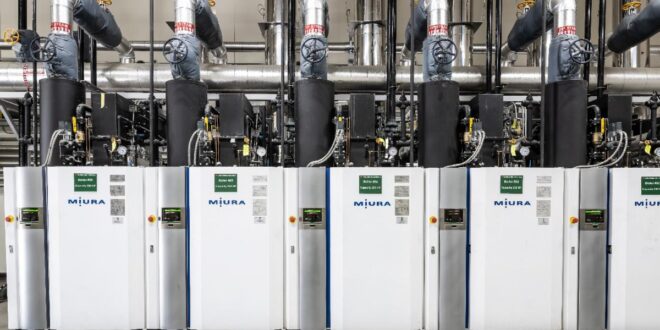
Joshua Townsend explains how industrial plants can reduce fuel use, emissions, and operating waste through smarter steam system management
For many industrial facilities, the pressure to reduce emissions is increasing faster than the practical ability to change fuels. Full electrification, hydrogen, renewable natural gas, and other low carbon pathways may play a larger role in the future, but most plants still rely on natural gas fired steam systems today. That creates a more immediate question for engineers, plant managers, maintenance leaders, and sustainability teams: how much can be improved before the fuel source changes?
The good news is: often more than expected. Boiler room decarbonisation does not have to begin with a major energy transition. It can begin with a closer look at where heat is being wasted, where steam production is mismatched to demand, and where system performance is limited by basic controls or inconsistent monitoring. In many plants, meaningful reductions in fuel use and emissions are available through practical improvements to water chemistry, heat recovery, standby management, boiler sizing, and data visibility.
This matters because a boiler room is not just a utility space. It is a major energy center for the facility. When it runs inefficiently, the effect shows up in fuel bills, emissions, maintenance costs, and equipment life. When it is actively managed, it can become one of the clearest places to make progress on operational and ESG goals without waiting for future fuel infrastructure to mature.
Start with the losses already in the system
Before considering alternative fuels, plants need to understand where energy is currently leaving the boiler room. In many natural gas boiler installations, the most common losses fall into a few categories: stack losses, blowdown losses, and standby or radiant heat losses.
Stack losses occur when usable heat leaves through the flue. A portion of the sensible and latent heat created during combustion is discharged instead of being returned to the system. Depending on the operating conditions, standard or condensing economizers can recover some of that heat and use it to preheat boiler feedwater or support other low temperature process needs. This reduces the firing rate required to produce the same useful output.
Blowdown is another major source of lost energy. The problem is not blowdown itself, but excessive blowdown driven by poor water quality management. When heated boiler water is discharged more often than necessary, the plant loses both treated water and the fuel energy used to heat it. Standby losses are especially important in large volume systems. A conventional firetube boiler with a large water mass may need to remain hot during low load or idle periods. Even when steam demand is limited, the boiler continues losing heat through radiation and convection. Over time, those losses can become a steady drain on system efficiency.
Water chemistry is an efficiency issue, not just a maintenance issue
Boiler water chemistry is sometimes treated as a reliability concern first and an efficiency concern second. In reality, the two are inseparable. Poor water control can increase blowdown, accelerate scale formation, reduce heat transfer, and push the boiler to consume more fuel for the same steam output.
Scale is particularly damaging because it acts as an insulator. When deposits form on boiler heat transfer surfaces, combustion heat has a harder time moving through the tube wall and into the water. The boiler then must work harder to produce the same amount of steam. Scale can also create localised overheating beneath deposits, increasing the risk of tube damage or failure.
Even facilities with upstream softening systems still need active control. Small amounts of hardness can pass through over time. Proper chemical control limits, appropriate dispersants, and consistent monitoring help keep precipitated solids suspended so they do not settle on boiler surfaces. For plants that need to go further, reverse osmosis or similar high quality water treatment systems can reduce dissolved solids and support lower blowdown rates.
This is one of the most accessible decarbonisation levers in the boiler room. Better water management can reduce the direct energy loss associated with blowdown while protecting long term thermal efficiency. It also gives operators a clearer understanding of how everyday water treatment decisions affect fuel use.
Match steam production to real demand
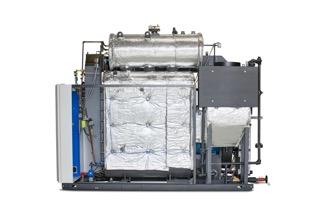
A boiler is most efficient when it is producing steam only when steam is needed. That sounds simple, but many boiler rooms are not designed or controlled around that principle. Even newer systems built around modern firetube or traditional industrial watertube boilers still carry the consequences of large water and boiler mass. They take significant time to warm up, often hold more water volume than the load requires, and tend to operate inefficiently at low demand. Older systems relying on these large conventional designs can be especially prone to long warm up times and high standby losses, since the boiler must remain hot even when steam demand is limited. By contrast, small modular once-through watertube boilers are engineered for rapid startup and lower radiant losses, allowing steam generation to track actual demand more closely and reducing wasted fuel during low-load or idle periods.
A long warm up period burns fuel before the system is delivering useful steam. Standby conditions create another drain, since a boiler kept hot for possible demand continues losing heat even when the load is low. Oversized capacity compounds the problem by forcing equipment to spend too much time operating outside its most efficient range.
Modular, on-demand boiler configurations address this problem at the system level. Rather than depending on one large boiler to cover a wide range of demand, multiple smaller units can be sequenced on and off as load changes. This allows steam generation to track actual demand more closely. It also gives facilities the ability to add capacity incrementally as production needs grow, instead of committing to excess capacity upfront.
The difference with on-demand systems is especially important in facilities with variable steam profiles. Food and beverage plants, chemical processors, manufacturing sites, hospitals, and laundries may all experience shifting steam loads throughout the day. A system that can respond quickly to these changes can reduce unnecessary firing, avoid overproduction, and limit standby waste.
Turndown should also be evaluated at the system level. A single large firetube boiler may appear to offer strong turndown on paper, but a bank of modular boilers can often provide more useful flexibility across real operating conditions. The goal is not just to produce enough steam. The goal is to produce the right amount of steam at the right time with the least wasted fuel.
Monitoring turns the boiler room into a managed system
Many boiler rooms still rely on manual testing, periodic checks, and basic controls. Those practices can be effective, but they also leave room for inconsistency. Water testing may be missed, sampling methods may vary, and operators may not have enough historical data to recognise when a small issue is becoming a larger performance problem.
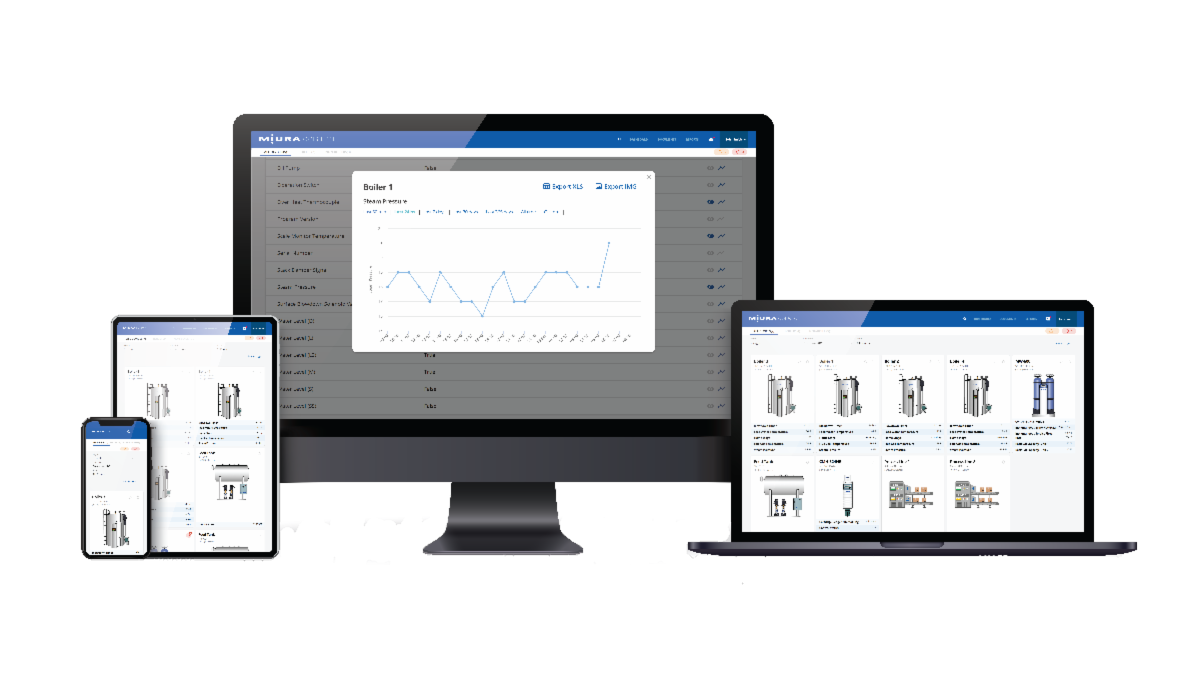
Integrated controls, continuous water analysis, and remote monitoring shift that operating model. Instead of reacting after efficiency has already declined, operators can use data to manage boiler performance more proactively. Controls can coordinate multiple boilers, optimise sequencing, and support a faster response to changing demand. Continuous water analysis can help refine chemical treatment and reduce unnecessary blowdown, while remote monitoring can reveal operating patterns over time.
That visibility helps teams identify problems that might otherwise remain hidden. Firing patterns, standby behavior, water usage, steam demand, blowdown activity, and maintenance trends all shape the true performance of the boiler room. Once those conditions are measured consistently, they can be managed more effectively.
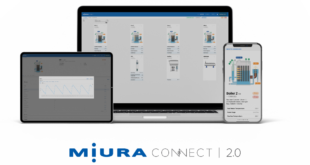
Miura, a leader in modular, on-demand steam solutions, provides water tube boiler systems, controls, water treatment support, and the Miura Connect remote monitoring platform that reflect this broader shift toward data-driven boiler room management. The value is not only in the equipment itself, but in the ability to understand how the steam system is actually operating. For plants evaluating decarbonization, that understanding can support load studies, right-sizing decisions, water chemistry improvements, and long-term planning.
Monitoring does not eliminate the need for skilled operators. Rather, it changes the work. As boiler rooms become more automated, operators need to understand fuel data, steam flow, water quality, combustion indicators, and performance trends. Their role moves from reactive oversight toward active system stewardship.
Build the roadmap before the fuel transition
Fuel switching is a long term decision requiring changes to utility infrastructure, process design, capital planning, and site level energy strategy. That does not mean plants should wait to act. The most practical roadmap begins with the existing boiler room.
The first step to higher efficiency is to establish a performance baseline. Plants need accurate data on fuel use, water use, steam production, load patterns, and flue gas performance. From there, they can evaluate whether rapid load swings can be smoothed through process adjustments, whether installed boiler capacity matches actual demand, and whether water quality practices are supporting or limiting efficiency.
These improvements create value today. They can lower fuel consumption, reduce emissions, improve reliability, and give teams a clearer view of their steam system. They also keep future options open. A boiler room that is well instrumented, right sized, and actively managed will be better prepared for eventual fuel switching or electrification because the plant will already understand its real steam demand.
Decarbonisation does not have to begin with the most disruptive project on the table. In many facilities, it begins with reducing the waste already present in the system. Better water chemistry, smarter sequencing, faster response, heat recovery, right sized capacity, and continuous monitoring can all move the boiler room from a black box to a measurable, manageable part of the plant’s energy strategy.
Joshua Townsend is Applications Engineering Supervisor at Miura America.