Engineer News Network The ultimate online news and information resource for today's engineer
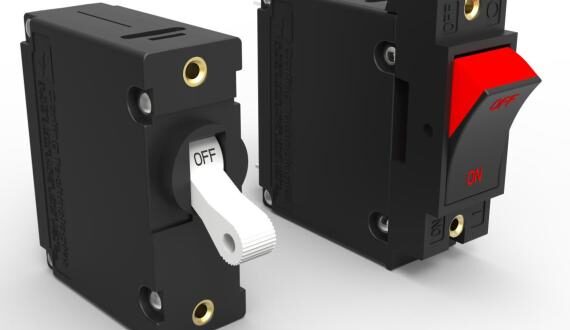
Hydraulic magnetic circuit breakers help reduce nuisance trips, protect critical loads, and support long term reliability in equipment exposed to vibration, moisture, temperature swings, and high inrush current
Circuit protection may occupy a small footprint in a larger electrical design, but in harsh environment systems, that small component can carry significant operational risk. In off-highway vehicles, emergency fleets, marine vessels, industrial equipment, and mobile power systems, breakers are exposed to vibration, moisture, salt air, temperature extremes, and changing loads rather than stable cabinet conditions.
That is why selection cannot stop at current rating. Engineers need to understand how the breaker will respond to the actual circuit, including the available fault current, operating voltage, AC or DC architecture, trip curve, pole configuration, actuator access, agency requirements, and expected startup behavior. Many common loads draw a brief current spike when energized. That inrush may be normal, but if the protection is selected too tightly, the system may trip when nothing is wrong. If it is selected too loosely, the breaker may not respond appropriately to a real overload.
Hydraulic magnetic circuit breakers are often considered in these applications because their trip behavior is based on current rather than ambient heat. In practical terms, that can support more predictable performance in environments where temperatures vary widely. For OEMs building transportation and marine systems, this consistency can matter as much as the rating printed on the breaker.
Why harsh environments complicate breaker selection
Harsh environment electrical systems rarely fail because of one isolated condition. Reliability issues usually arise when vibration, heat, moisture, corrosion, and repeated inrush overlap, especially in marine systems and mission-critical platforms such as emergency vehicles.
These varying conditions change how engineers should think about circuit protection. A breaker must protect the circuit, but it also has to hold up in the environment where it is installed, making mechanical performance part of the electrical decision. Engineers should look at how the breaker responds under overload, how clearly it indicates a trip, how many operating cycles it is designed to withstand, and how well the actuator and housing can tolerate vibration, shock, moisture, corrosion risk, and temperature change.
The practical value is straightforward. In a fielded system, the breaker has to operate consistently before, during, and after the environmental stress that surrounds it. If a breaker trips unnecessarily, an operator may lose power to a pump, control panel, lighting circuit, communications system, or auxiliary load. If it does not trip when it should, the risk shifts toward damaged wiring, failed components, or unsafe operation. A reliable circuit protection strategy should balance both risks.
The role of hydraulic magnetic protection
Unlike thermal devices, hydraulic magnetic breakers are not relying on ambient heat as the primary driver of trip behavior. That temperature stability helps maintain predictable coordination across cold starts, hot compartments, direct sun, and seasonal extremes, reducing nuisance trips in one operating condition and insufficient sensitivity in another. Hydraulic magnetic breakers give engineers a more stable starting point for matching protection to the actual load.
High inrush current is another major consideration. Many loads draw a short current surge when energized. That surge may be brief enough to be harmless, but high enough to trip a breaker if the time delay is not matched to the application. Hydraulic magnetic breakers can be selected with time delay characteristics that tolerate expected inrush while still responding to sustained overloads. This is especially important in systems with motors, transformers, converters, lighting, and power supplies, where the difference between startup behavior and a true fault must be reflected in the protection strategy.
This is also where breaker selection becomes more than a catalog exercise. Engineers need to understand the load profile, available fault current, voltage, environmental exposure, agency requirements, panel constraints, and service expectations. A breaker that is technically available in the right amperage may still be the wrong choice if the actuator, pole configuration, trip curve, interrupting rating, or approval path does not match the application.
Matching the Breaker Series to the Application
Before choosing a specific breaker family, engineers need to define what the application is asking the breaker to do. The right hydraulic‑magnetic breaker is not simply the one that meets the amp rating; it must fit the electrical load, panel space, operating environment, approval path, and long‑term service strategy.
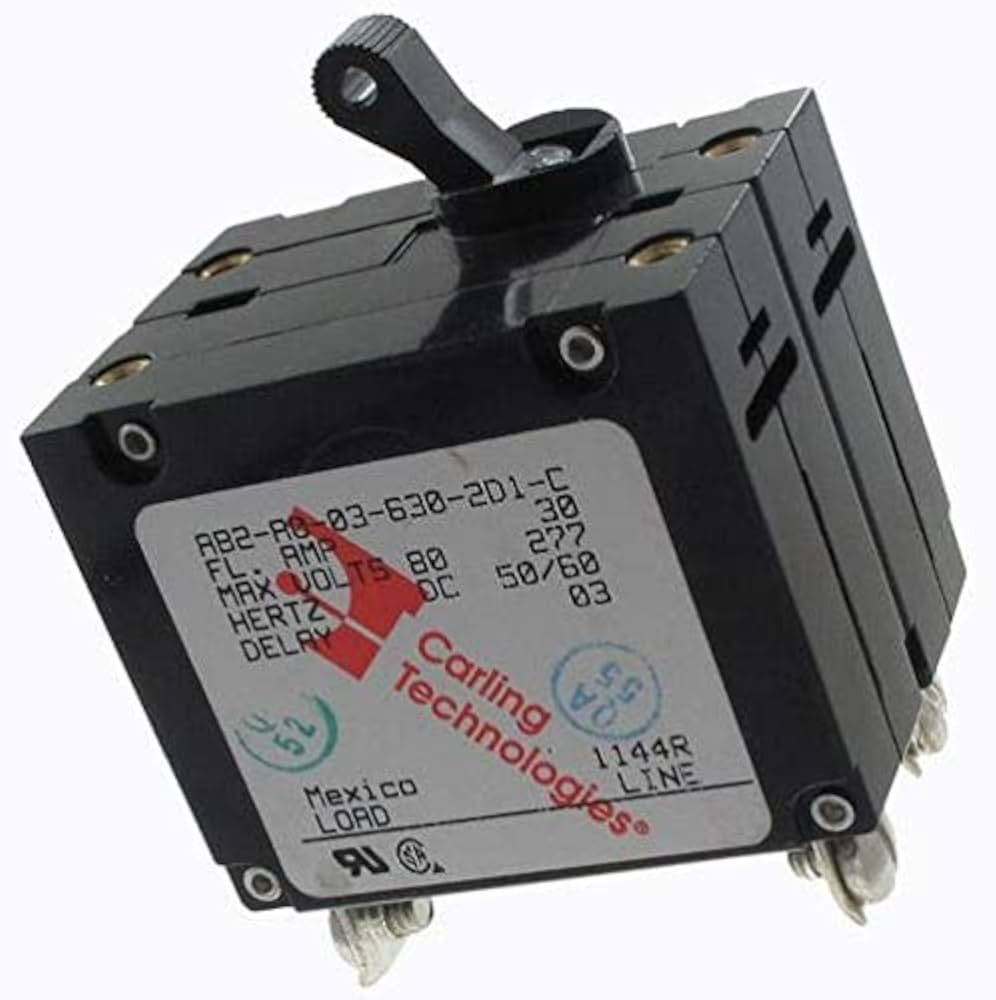
Within that broader selection process, Carling’s A, C, and M Series hydraulic magnetic breakers give OEM engineers several paths depending on the electrical and mechanical requirements of the system. The A Series is positioned as a compact, versatile option for general purpose and full amp load applications. With ratings up to 50 amps, 277 VAC, and 80 VDC, it can support a range of control panels, equipment circuits, and auxiliary power applications. Its available actuator styles also allow engineers to account for the physical design of the panel, whether the priority is a clean front panel appearance, recessed access, or a more rugged toggle configuration for demanding environments.
The C Series is designed for applications that require higher amperage, higher voltage capability, or greater interrupting capacity. That makes it relevant for larger equipment platforms, higher power loads, and more demanding panel architectures where a smaller breaker family may not provide enough headroom. Depending on configuration, the C Series supports ratings up to 100 amps, with parallel pole options from 100 to 250 amps, and voltage ratings up to 480 VAC and 125 VDC. Its arc chute design also supports interrupting capacities up to 10,000 amps, which can be an important factor when engineers are evaluating available fault current and overall protection strategy.
The M Series serves a different role. As a miniature front panel mount breaker, it is suited to compact applications where panel space, mounting style, terminal options, and actuator configuration are central to the design. With one to two pole or parallel pole configurations, current ratings from 0.02 to 50 amps, and voltage ratings up to 250 VAC and 80 VDC, it can support smaller circuits that still require resettable protection and agency approved performance. Its compact format can be especially useful when engineers need to protect control, power supply, communications, or auxiliary circuits without giving up more panel space than the design allows.
The important point for OEMs is that the product family should be selected around the application, not forced into it. A compact breaker, a high interrupting capacity breaker, and a miniature panel mount breaker solve different problems. The most efficient selection process starts with the electrical load and environment, then narrows the options through ratings, approvals, mechanical layout, actuator access, and lifecycle support.
Distributor support
Distributor Wesgarde offers OEMs assistance in their move from application requirements to a practical, supportable component selection. This advisory matters in harsh environment systems because the correct choice often depends on the details: how the equipment is used, where the breaker is mounted, what loads are connected, how often the circuit cycles, what approvals are required, and how the OEM plans to build and service the platform over time.
For engineering teams, support like this can help narrow a wide range of configurations into a smaller set of realistic options. Ratings, trip curves, actuator styles, terminals, auxiliary or alarm contacts, and agency approvals can all affect the final part number. Early distributor involvement can reduce the risk of designing around a breaker that later creates sourcing, compliance, panel layout, or field service problems.
Once a breaker is designed into a vehicle, vessel, or equipment platform, the OEM needs more than an initial recommendation. It needs continuity across production, service, and replacement demand. Wesgarde’s background in electromechanical and electronic power components, harsh environment applications, and vendor managed inventory programs supports that full lifecycle view. For larger OEM accounts, structured stocking and logistics support can help prevent an approved component from becoming a production constraint.
As transportation, marine, and industrial platforms become more electrified and power dense, circuit protection decisions will keep carrying more weight. More intelligent controls, more auxiliary loads, tighter panels, and higher expectations for uptime all make breaker selection more important. Hydraulic magnetic circuit breakers are not the answer for every circuit, but they are a strong option when temperature stable performance, inrush tolerance, mechanical durability, and resettable protection are central to the design. For OEMs in demanding environments, the best results come from pairing the right breaker technology with early technical review, careful configuration, and a supply partner that understands both engineering requirements and long‑term operational realities.