Engineer News Network The ultimate online news and information resource for today's engineer
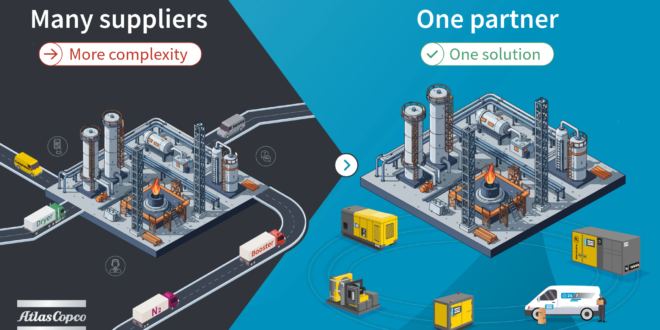
Oil and gas projects often rely on connected equipment to supply compressed air and nitrogen at the required pressure, flow and purity. When several suppliers provide and service different parts of the system, project teams face more co-ordination, more interfaces and less clarity when something goes wrong.
Working with one reliable partner will simplify the process, from system design and installation to maintenance and support.
Let us discuss five key advantages of choosing one partner for a complete air and nitrogen system.
1. One clear point of responsibility
A complete air and nitrogen system may combine compressors, dryers, nitrogen generators and boosters for applications such as pipeline services, drilling and instrument or plant air. Each component plays a different role, but they must work together to deliver the required pressure, flow and nitrogen purity. When several companies supply and service these machines, responsibilities will become fragmented, making it more difficult to assess and optimise the installation as a whole.
Working with one partner creates a clear point of contact for the complete installation. Instead of co-ordinating several companies, the customer can arrange the equipment and support through one team. That partner can look beyond individual machines, test how different components work together and refine the set-up around the needs of the application. This makes it easier to develop the right solution together, while maintaining clear responsibility throughout the project.
2. Equipment designed to work as one system
Combining equipment from different manufacturers can create practical and technical complications. Components may have different connection requirements, operating ranges or control systems, while individual suppliers may not have a complete view of the installation. Connecting and configuring the machines can therefore require more time, effort and co-ordination during installation and commissioning.
With an integrated approach, one team selects the right combination of compressor, dryer, nitrogen generator and booster for the customer’s application. The components are engineered and tested to work together, with connections designed as part of the complete system. This will simplify installation and commissioning, reduce the risk of integration issues and save project teams from co-ordinating technical details between several suppliers.
3. Consistent support across project locations
Oil and gas projects often span several sites, regions and countries. Working with the same partner across locations will reduce the need to establish new supplier relationships and technical processes for every project. It will also improve consistency in equipment selection, documentation, maintenance and training. With access to a global service network, project teams can follow a familiar support model while still receiving assistance close to each site.
4. A complete solution with co-ordinated service
Unplanned downtime can delay work, increase costs and put pressure on project schedules. A co-ordinated service approach makes it easier to maintain the complete installation, including the connections between components and the way changes to one part may affect the rest of the system. With one partner responsible for the full solution, project teams avoid having to co-ordinate several service providers or determine where one supplier’s responsibility ends and another begins. A global service network will support this integrated approach across locations, while remote telematics tools, such as FleetLink from Atlas Copco, provide greater visibility into equipment use and maintenance needs. Together, this helps teams identify potential issues earlier and plan interventions more effectively.
5. Manage costs across the complete system lifecycle
The lowest purchase price does not always lead to the lowest cost over time. Project teams also need to consider energy use, maintenance, spare parts, transport, storage and the financial impact of downtime. Working with several suppliers can add less visible costs too, from coordinating multiple contacts and service agreements to resolving integration issues between machines.
An integrated set-up will make these costs easier to manage by reducing the number of supplier interfaces and bringing equipment and service together in one co-ordinated approach. For projects that generate nitrogen on site, it may also reduce reliance on external deliveries and the related transport and storage requirements. The most cost-effective solution will depend on the application, operating profile and site conditions, so teams should consider the full lifecycle cost rather than the purchase price alone.