Engineer News Network The ultimate online news and information resource for today’s engineer
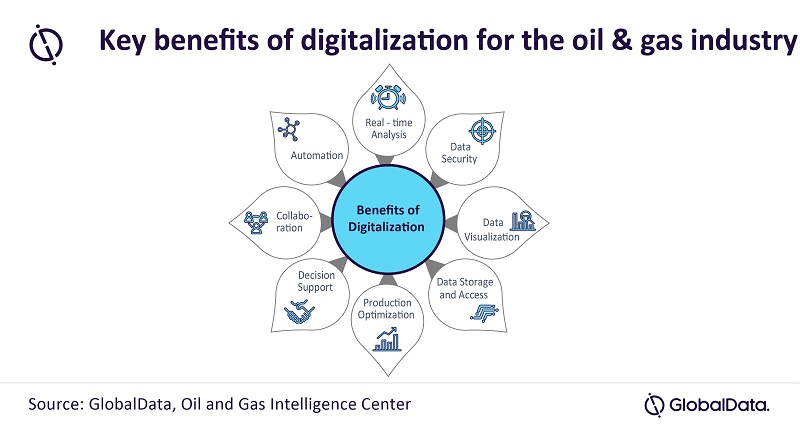
Digitalisation, which involves the adoption of digital technologies such as artificial intelligence (AI), big data, cloud computing, cybersecurity, the Internet of Things (IoT), and robotics in day-to-day oil and gas operations, is enabling the industry to improve productivity and profitability by streamlining operations and cutting costs, says data and analytics company GlobalData.
According to GlobalData’s report, Digitalization in Oil and Gas – Thematic Research, digital technologies can deliver actionable insights for an oil and gas asset and help companies to reduce their capital and operating expenditures.
Ravindra Puranik, Oil and Gas Analyst at GlobalData, comments: “The adoption of digital technologies in the oil and gas industry has been previously hindered by the shortage of skilled technicians, concerns over data security, and cost-benefit uncertainty for adapting aging assets. However, since the technologies have the ability to transform the industry and create a synchronised ecosystem to meet future energy demands, an increasing number of oil and gas companies are upgrading their assets with digital technologies for long-term gains.
“Minimising equipment downtime while enhancing operational performance remain key focus areas for increasing company revenues. There is also a growing emphasis among producers on digitalising workflows to enhance operational visibility for improved decision making.”
Leading oil and gas players are increasingly collaborating with technology vendors in a bid to develop custom digital solutions that address their needs. For instance, TotalEnergies has collaborated with IBM to develop predictive drilling analytics to aid precision drilling. Similarly, Equinor has developed and deployed its digital twin, Echo, in its North Sea operations by leveraging its exploration and production (E&P) expertise in the region. Concepts such as digital twins and predictive maintenance are increasingly being modified to suit the different use cases of the oil and gas value chain.
Puranik concludes: “Digital technologies are improving the oil and gas industry by streamlining processes and creating new frontiers for operations. These technologies are well suited to tap new hydrocarbon deposits, boost operational efficiency, and reduce methane emissions.”