Engineer News Network The ultimate online news and information resource for today's engineer
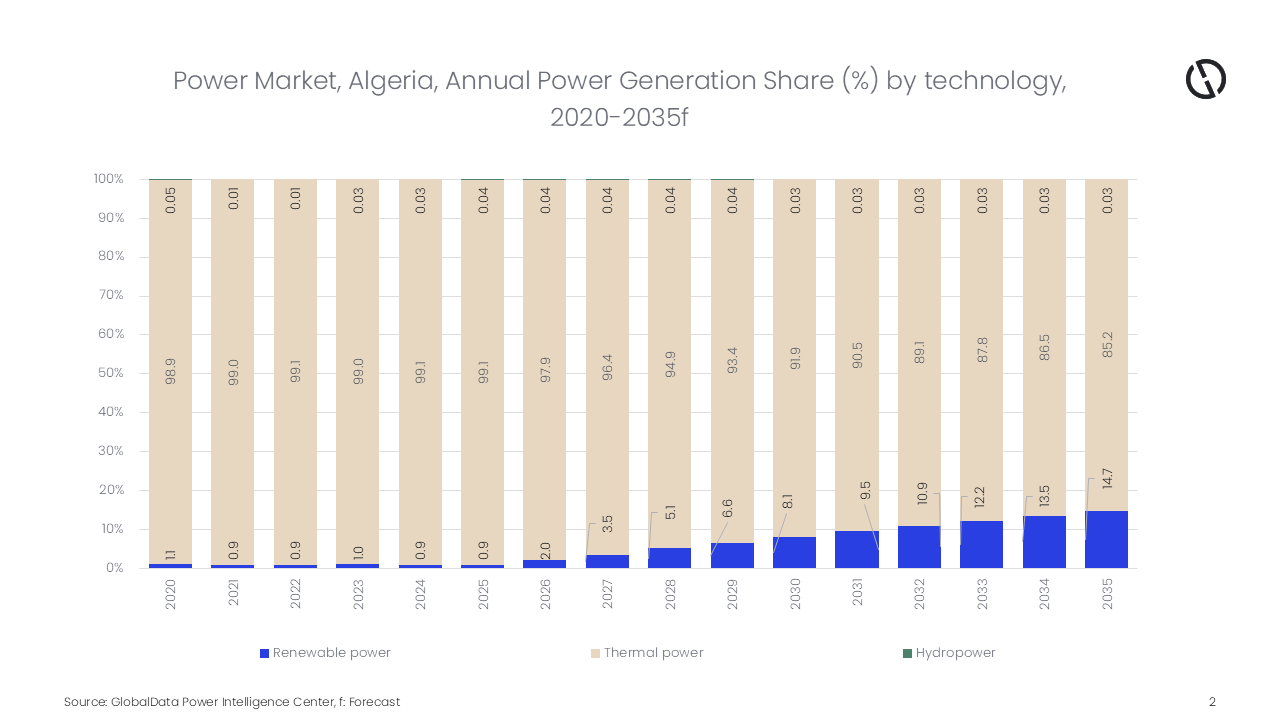
Algeria is accelerating its energy transition, supported by government policy, strong renewable energy sources potential, and sustainability targets. Despite ambitious renewable targets, thermal power capacity (especially gas-fired power) remains central because of the existing infrastructure and natural gas reserves, and is estimated to account for a dominant share of 85.2% of the country’s power generation mix by 2035, according to GlobalData.
GlobalData’s latest report, Algeria Power Market Trends and Analysis by Capacity, Generation, Transmission, Distribution, Regulations, Key Players and Forecast to 2035,shows thermal power is projected to account for 72.4% of the country’s total power capacity mix by 2035. It represented 97.5% of total capacity share in 2025.
Sudeshna Sarmah, Power Analyst at GlobalData, comments: “Algeria’s electricity supply security is a key concern for both the government and energy planners, particularly as demand increases amid the nation’s economic diversification and energy transition. Given the country’s ample gas reserves, there is no imminent risk to supply security. However, in the long term, heavy reliance on natural gas exposes the system to vulnerabilities such as export pressures, as gas is needed for foreign revenue generation. Internal disruptions, including pipeline or production issues, and a lack of diversification in the energy mix, also contribute to systemic risk.”
Public funding for new projects, encompassing generation, storage, and renewables, often depends on oil and gas revenues. Consequently, in years of low global energy prices, projects may be subject to delays or reductions in scale.
Natural gas serves as the predominant energy source for Algeria’s power generation. The Hassi R’Mel gas field, among the world’s most prolific, stands as a cornerstone of this resource wealth. This dependence on an indigenous fuel source makes electricity generation both cost-effective and relatively stable, particularly when compared with nations that rely on imported fuels.
Sarmah concludes: “The absence of a competitive market and a transparent regulatory framework deter independent power producers (IPPs) from investing in renewable energy projects. Additionally, the lack of clearly defined power purchase agreements (PPAs) and the mandate for local content in renewable energy projects introduce additional complexity and risk for potential investors.”