Engineer News Network The ultimate online news and information resource for today's engineer
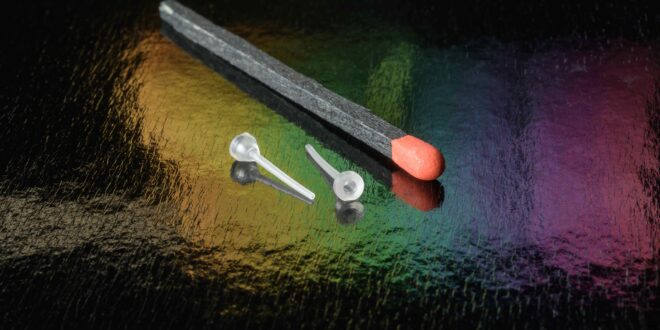
Micro moulding is a manufacturing architecture, not simply moulding. It is a mindset that says, design the full chain (Design for Micro Molding [DfMM], tooling, automation, production, metrology, and packaging) as one integrated system from the start. Not to be flashy, but to be predictable. Brett Saddoris explains
In micro manufacturing, the part you see on the drawing is only the beginning. The real product (if you want it to scale) is the system that makes that part reliably, repeatably, and measurably correct. That is why ‘manufacturing architecture’ matters. It is the discipline of designing the entire production system around the part before production begins, rather than trying to patch problems after the fact.
In many manufacturing environments, you can start with tooling, run a few lots, then gradually refine inspection, automation, and packaging as volumes grow. Micro moulding rarely gives you that luxury. When components are tiny, tolerances are tight, and function depends on geometry you can barely see, the downstream details become upstream risk. The wrong inspection strategy can make a stable process look unstable. The wrong handling method can damage parts that are otherwise perfect. The wrong packaging can turn high yield at the press into scrap at the customer. And when parts are measured in microns, the cost of learning late escalates quickly.
This is why at Accumold we treat micro moulding as manufacturing architecture, not simply moulding. It’s a mindset that says, design the full chain (Design for Micro Molding [DfMM], tooling, automation, production, metrology, and packaging) as one integrated system from the start. Not to be flashy, but to be predictable.
Why architecture becomes essential at micro scale
At a practical level, micro parts amplify three realities that exist in all manufacturing.
First, variation is inevitable, but at micro scale it becomes more consequential. A slight shift in shrink, a subtle tool wear pattern, a small thermal gradient, or a trace amount of flash may be irrelevant in a larger part. In a micro assembly, those same shifts can affect fit, sealing, optical alignment, or signal response. Micro parts are often ‘functional interfaces’, not just structures.
Second, measurement is harder than people expect. A feature can be within tolerance yet impossible to measure consistently at speed. Or it can be measurable, but only with specific fixturing and lighting conditions. If you can’t measure it reliably, you can’t control it. And if you cannot control it, you cannot scale it.
Third, handling becomes quality. With tiny parts, static, part orientation, surface protection, contamination control, and packaging design can influence yield as much as the moulding process itself. A part can be ‘perfect’ leaving the mould and unacceptable by the time it reaches assembly.
Manufacturing architecture is how you manage those realities proactively rather than reactively.
DFM and DFMM
The most efficient micro manufacturing programs are the ones that start with honest design-for-manufacturing discussions. Not to ‘water down’ innovation, but to protect it. In micro moulding, the goal of DfM and DfMM is not simply to make a part mouldable. It’s to make the part mouldable at the volume, repeatability, and cost profile the business requires.
That means addressing questions early that are often postponed:
- Which features are truly critical to function, and which can be relaxed?
- Which datums should control assembly, measurement, and process monitoring?
- What material behaviours at micro scale could create risk (creep, moisture effects, thermal drift)?
- How will the part be handled, oriented, and packaged without damage?
- What inspection method will confirm quality at production speed?
When these decisions are made early, the rest of the system becomes easier to design. When they are not, tooling becomes a gamble and downstream processes become a patchwork.
Tooling is a strategy
At micro scale, tooling is where architecture becomes physical. The tool is not just a cavity that forms plastic, it is the first major embodiment of process control. Gate design influences shear and stress. Venting influences fill and flash risk. Ejection strategy influences part integrity and cosmetic quality. Cavity count influences scale economics and also introduces a new variable which is cavity-to-cavity repeatability.
This is where micro moulding differs from ‘small part moulding’. The tool must be designed for stability, not heroics. It must anticipate what will matter over time such as wear, maintenance, drift, and long-run repeatability. That is why the manufacturing architecture approach treats tooling, inspection, and automation as one conversation. Tool features should support measurement. Automation requirements should inform part presentation. Packaging needs should inform handling decisions. None of these exist independently if the goal is stable production.
Automation and inspection
In conventional moulding, you can often bolt on automation later. In micro moulding, that is a common source of painful surprises.
If a part will be inspected by vision systems, it must present consistently. That may require specific datum surfaces, controlled orientation features, and geometry that supports stable fixturing. If a part must be tape-and-reeled, it must not only be mouldable, it must be orientable and protected. If an insert is part of the design, the insert handling system must confirm presence and position before overmoulding, because positional drift of a few microns can be a functional failure.
A manufacturing architecture mindset designs these systems together. Automation is not about speed for its own sake, it’s about repeatability, predictability, and controlled part flow. Vision inspection is not about ‘finding defects’, it is about validating the features that matter and creating feedback loops that keep the process inside the required window.
Metrology
Most micro programs do not fail because teams lack commitment. They fail because teams overestimate what can be measured, how quickly, and with what repeatability.
A robust metrology approach begins with the question, what are we trying to prove? In micro manufacturing, it is not enough to check random dimensions. Metrology must be aligned to function, and it must be consistent enough that measurement noise does not masquerade as process variation.
This is another reason architecture matters. If you plan inspection late, you often discover that critical features are hard to access or hard to locate consistently. If you plan it early, you can design reference features that make measurement reliable, define the correct acceptance criteria, and set up ongoing process monitoring that catches drift before it becomes scrap (or worse, a field issue).
Packaging
Packaging is often treated as logistics. In micro moulding, it is an extension of manufacturing control. A micro part that is correct at the press can be compromised by vibration, part-to-part contact, contamination, static attraction, or misorientation. In medical, optics, and microfluidics applications especially, packaging may also need to support downstream assembly requirements, ensuring parts arrive oriented, protected, and consistent.
Architected manufacturing treats packaging as part of the value chain, designed early enough that handling and inspection decisions support it, and tested early enough that production doesn’t discover packaging-related defects after scale-up begins.
Why in-house capabilities matter
It’s possible to outsource many steps in manufacturing. But micro manufacturing is unforgiving of handoffs. Every handoff introduces potential variation in interpretation, timing, and control.
When DfM, DfMM, tooling, automation, production, metrology, and packaging are closely co-ordinated, the system can be built faster, validated more reliably, and improved more intelligently. You get shorter feedback loops. You get alignment between what engineering intended and what production delivers. You can also respond faster when an issue emerges, because the expertise is connected.
That co-ordination, whether achieved through strong internal teams or exceptionally tight collaboration, reflects a mature manufacturing culture. It is part of how we approach programs. Not as isolated steps, but as a designed system.
Summary
The most expensive mistakes in micro manufacturing are often not catastrophic failures. They are slow failures like creeping yield loss, inconsistent assembly behaviour, unexpected measurement variation, packaging-related rejects, and qualification delays that feel ‘mysterious’ because the system wasn’t designed to reveal root causes early.
Manufacturing architecture prevents those slow failures by treating the production system as something that must be designed from day one. The part, the tool, the automation, the inspection method, the handling flow, and the packaging solution must all be conceived as one integrated design.
If you want micro manufacturing that scales, do not start by asking whether a part can be moulded. Start by asking whether the entire system can be engineered around it, before production starts. That is how high-volume micro moulding becomes predictable, repeatable, and ready for the real world.
Brett Saddoris is Technical Marketing Manager at Accumold.