Engineer News Network The ultimate online news and information resource for today's engineer
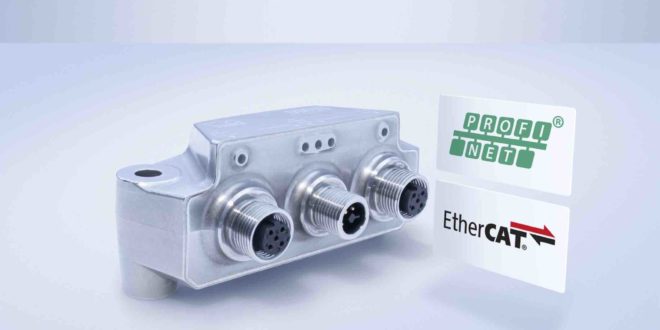
Weighing technology expert, HBM has launched a new load cell conditioner – DSE-HIE, which allows any strain gauge-based load cell to operate in a modern, industrial Ethernet system.
Developed with highly dynamic and automated weighing applications in mind, DSE-HIE is also European Hygienic Engineering & Design Group (EHEDG) compliant, making it ideal for applications with stringent hygiene and cleanliness standards, such as food and beverages, pharmaceutical or chemical process industries.
The device’s stainless-steel casing and IP67/68/69K degree of protection, allows it to be washed quickly and thoroughly, by high-pressure cleaners or by clean-in-place (CIP) systems, thus reducing downtime – and the risk of cross-contamination.
The output of the new weighing electronics is in line with common industrial Ethernet protocols – PROFINET RT/IRT and EtherCAT (in preparation). Parameterisation and acquisition of measured values is possible via an integrated web interface using TCP/IP – or directly via the PLC.
Maximum output for retrofitting and new systems is guaranteed with 10,000e (0.01%FS) and 2,000 measured values per second. It has integrated filters for precise weighing applications, such as industrial automation or weighing application in rough conditions – and moving parts or vehicles.
HBM also offers easy-to-clean, EHEDG-compliant load cells to complete the hygienic measurement chain.