Engineer News Network The ultimate online news and information resource for today's engineer
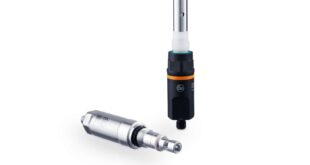
Developed specifically to provide a convenient and cost-effective solution for CIP monitoring, the new LDL200-series conductivity sensors from ifm electronic are available in versions that can be directly installed into pipes of any size from DN25 upward. The need for costly and inconvenient pipe extensions is eliminated and, thanks to their compact construction, the sensors can be positioned almost anywhere in the pipework.
LDL200-series sensors are available in four versions. The LDL200 and LDL201 have G1 Aseptoflex Vario process connections with insertion depths of 37mm and 77mm respectively. The LDL220 has a G 1/2 sealing cone and an insertion depth of 24mm, while the LDL210 has a G 1 sealing cone and an insertion depth of 31mm. An extensive range of optional accessories is available to further simplify installation in a wide variety of applications.
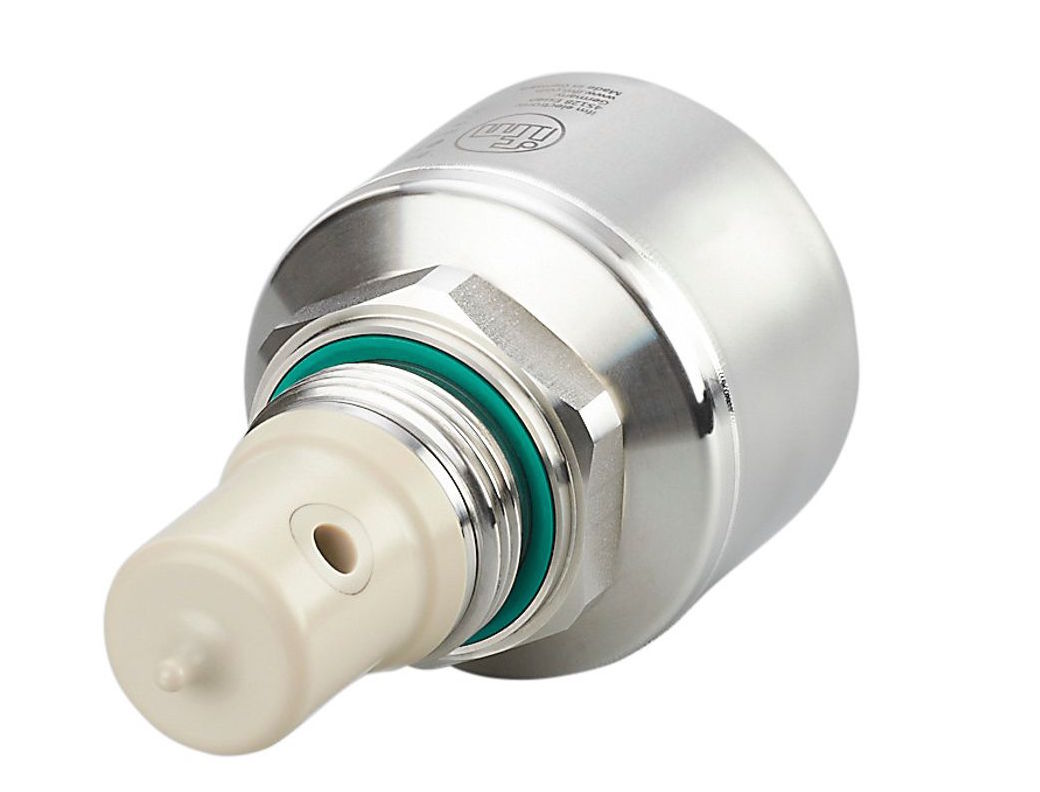
All sensors in the LDL200 series have a conductivity measuring range of 100 to 1,000,000 µS/cm, making them ideally suited to controlling CIP chemical makeup and that CIP solution has been fully cleared from a plant before it is returned to production. No initial on-site calibration is needed and, if required, factory calibration certificates can be downloaded free of charge.
The sensors have stainless-steel bodies with an IP69K ingress protection rating and can be used with media over the temperature range -25 to +100 ºC, or up to 150 ºC for a maximum of one hour. Maximum pressure rating is 16 bar. All versions carry EHEDG and 3A approvals for use in food-related applications.
To ensure that measured values are accurately and reliably communicated with the plant control system, LDL200-series conductivity sensors feature a digital IO-Link interface. This is accessed via a standard M12 connector which keeps wiring complexity to a minimum.