Engineer News Network The ultimate online news and information resource for today's engineer

Mike Torbitt explores how neutral earthing resistors enable data centres to treat first earth faults as alarm-only events, maintain continuous operation and demonstrate grid-friendly performance under the new readiness-based requirements. It also outlines how well-specified NERs support resilient, predictable operation as demand on infrastructure continues to grow
In December 2025, the UK’s National Energy System Operator (NESO) announced the results of its major overhaul of the UK’s grid connection process, removing speculative schemes and introducing a readiness-based system. While this affects all electricity projects, it raises the bar for data centres, which must now demonstrate grid‑friendly behaviour from day one. Neutral earthing resistors (NERs) can support resilient, grid‑compatible operation.
Data centres have been recognised as Critical National Infrastructure (CNI) since September 2024, placing them on “an equal footing with water, energy and emergency services systems”. While this recognition is invaluable to scaling capacity, NESO’s reforms add a new layer of complexity.
The Connections Reform context
Under the Connections Reform, NESO now prioritises “first ready and needed,” replacing the former first‑come, first‑served approach. Many transmission-connected demand projects – including data centres – have been placed into firm capacity blocks with connection dates extending to 2035, reflecting a more realistic delivery timeline than the prior ambition to connect the full pipeline by 2030. In this context, fault management and predictable, grid‑friendly operation become prerequisites for connection.
The readiness framework is evidence‑based. To secure a firm offer, developers must prove deliverability and true grid readiness — not just on paper, but through design maturity, risk controls and credible delivery plans. A robust power and protection strategy is therefore critical, showing the facility will behave predictably during network disturbances and will not trigger unnecessary disconnections.
What is high-resistance grounding?
One mechanism central to grid‑friendly design is high‑resistance earthing, also known as high‑resistance grounding (HRG). Although industry benchmarking shows overall outages are declining, Uptime Institute data indicates power remains the leading cause of impactful incidents when failures do occur, cited by 54% of operators surveyed would be more accurate to the Uptime Institute’s methodology.
In HRG systems, the transformer or generator neutral is connected to earth through a high‑value resistor. By introducing resistance, HRG limits single‑line‑to‑earth fault current to a small, controlled value — typically a few amps at low voltage or tens to hundreds of amps at medium voltage. The outcome is that a first earth fault becomes an alarm‑only event rather than an immediate trip, enabling continued operation while teams quickly locate and clear the fault.
This approach avoids the drawbacks of other schemes. Unlike solid earthing, it prevents very high single‑line‑to‑earth currents and the associated incident energy, and unlike ungrounded systems, it keeps the neutral referenced, suppressing transient overvoltages and making faults easier to locate.
Proper HRG design sets the resistor so the permitted fault current is above the system’s capacitive charging current, yet low enough to reduce equipment stress and arc flash energy for single-line-to-earth faults. In data centres, this keeps the first earth fault ‘alarm‑only’, sustaining critical services while teams rapidly pinpoint the faulted feeder, avoiding nuisance trips across uninterruptible power supply and generator transitions and supporting grid‑friendly operation in the high‑density, always‑on environment.
The critical component
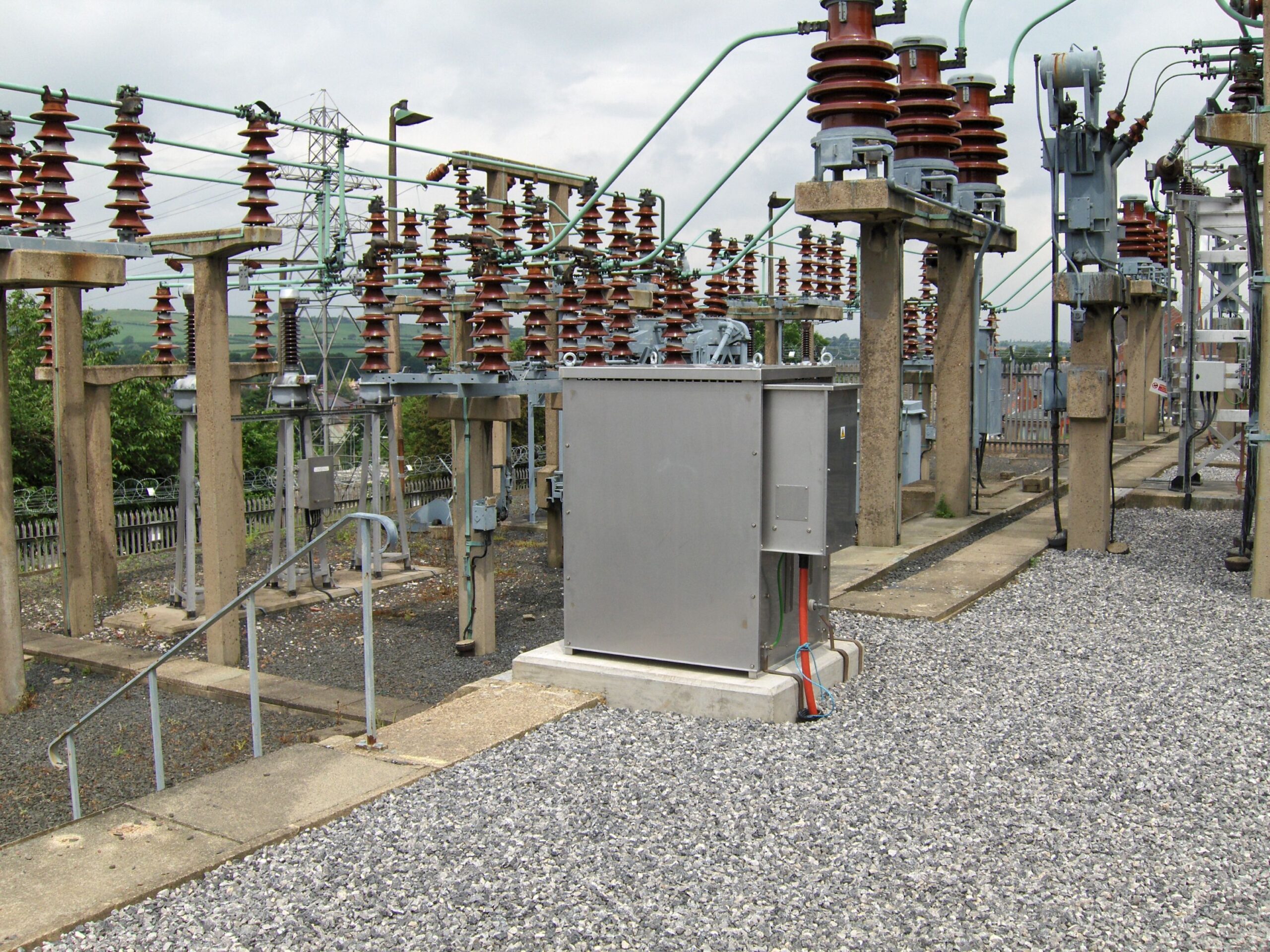
An NER is the enabling component of a HRG system because it connects the neutral point to earth through a precisely selected resistance. By setting the resistance value correctly, the NER establishes the single‑line‑to‑earth fault current and the associated thermal duty so that protection relays can reliably detect a first fault without forcing an immediate trip. This behaviour keeps the system stable during disturbances and allows operators to locate and clear faults while maintaining service continuity.
For data centres, NERs must be engineered to match real‑world constraints such as footprint, access routes for installation and maintenance, cooling and ventilation needs, and compliance with relevant international electrical standards. Cressall’s designs prioritise ease of maintenance, high thermal performance and long service life so that facilities can run continuously and recover predictably after fault events or tests.
Selecting the right resistor element is central to performance and cost. Edge‑wound coils are suited to higher currents, while grid and wire-wound elements serve other ratings efficiently. Cressall manufactures NERs across essentially any system voltage and initial fault‑current requirement, with rated durations ranging from a few seconds to continuous duty, so that specifications can align with the site’s protection guidelines and operational objectives.
Now that grid connections have been reprioritised, well‑specified NERs within HRG schemes make the first earth fault a managed, alarm‑only condition, keeping services online, demonstrating grid‑friendly behaviour and helping ensure data centre designs do not delay connection.
Mike Torbitt is Managing Director of Cressall Resistors.