Engineer News Network The ultimate online news and information resource for today’s engineer
The United Kingdom is set to become the most expensive place in Europe to buy steel later this year, according to new research by UK-based steelwork manufacturer Tadweld.
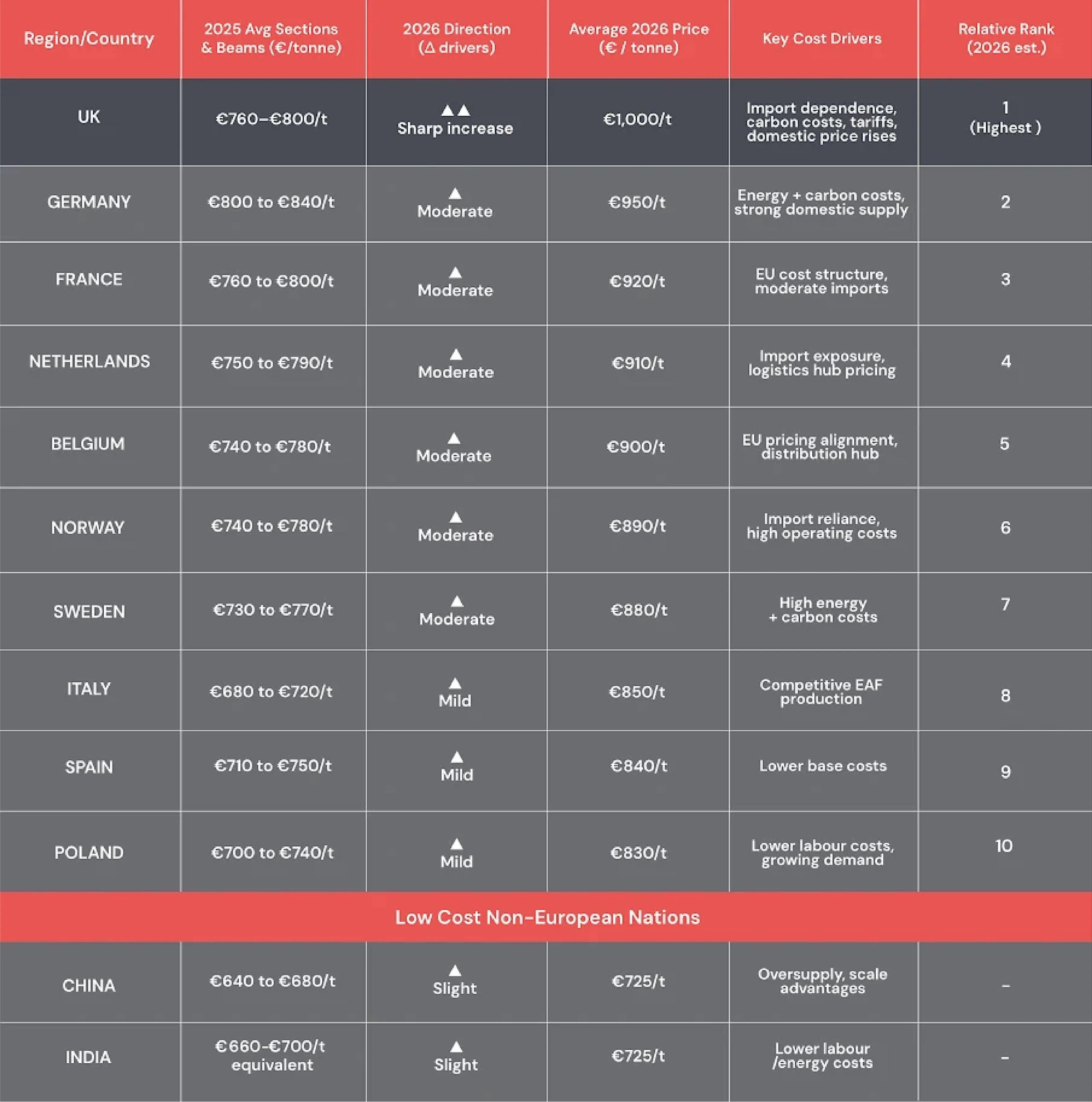
Based on current per-tonne benchmarks, projections suggest that the UK will overtake core EU markets in structural steel pricing by late 2026, overtaking Germany and France where prices typically range around €850 to €900 per tonne.
The research shows that UK hot-rolled structural steel sections are expected to rise from circa €780 per tonne to over €1,000 per tonne once a new 50% import tariff and carbon pricing are fully reflected, pushing it significantly above its nearest competitors on a like-for-like basis.
Aside from ongoing global cost-pressures relating to energy and logistics costs (which caused Tata Steel UK to recently announce a £125/tonne increase), the new steel trade policy announced by the UK government in March 2026 is set to have the biggest influence.
On 1st July 2026, quota levels for steel imports will be significantly reduced by 60% compared to current arrangements, and steel coming into the UK above these levels will be subject to a 50% tariff. This is followed by the implementation of a Carbon Border Adjustment Mechanism (CBAM) taxation which will commence on the 1st January 2027.
Chris Houston, Managing Director at Tadweld, says: “In general, the entire manufacturing sector is supportive of helping UK domestic steel to be competitive, but instead of addressing the uneven playing field UK steel producers face – by having the highest energy costs in Europe – this new quota and tariff-led approach shifts the pressure downstream to the consumers of steel including construction and steel fabrication businesses. As a result, the UK is moving towards the highest steel prices in Europe, making it increasingly difficult for UK fabricators to compete internationally.”
He added: “This policy is framed as support for UK steel production, but in reality it benefits a small number of domestic producers while adding significant cost pressures across more than 1,200 steel fabrication businesses and the wider construction sector, which relies on steel every day. There is little value in a competitive UK steel production base if the final consumer is priced out of the market. Given that there are several steel grades and products that have no UK domestic manufacturing at all currently, I’m not sure this policy does anything except raise prices on those products”
Several key uncertainties remain around the policy, which is expected to come into effect on 1 July 2026. A proposed transitional arrangement could exempt some goods under contracts agreed before 14 March 2026 for a limited period between July and September 2026. Industry stakeholders have also raised concerns about a potential ‘pre-fabrication’ loophole, where lightly processed steel could fall outside the scope of the tariff regime.

Sources
- The Guardian, Steel bosses warn ‘back-door’ loophole could lead to job cuts and factory closures, 31 March 2026.
- MEPS International – Europe steel prices (sections & beams)
- IndexBox – European steel market overview
- Focus Economics – Steel price outlook (Europe/global drivers)
- UK Steel (industry body – UK production and market structure)
- All Steel Trading – UK steel pricing & import reliance discussion
Data methodology
This analysis uses a single, consistent benchmark from MEPS International, which publishes monthly prices for hot-rolled structural steel sections (H-beams, I-beams and channels) across European markets. All prices are standardised into euros per tonne and averaged to create a 2025 baseline for each country.
To estimate 2026 levels, the baseline is adjusted using observed market factors. For the UK, this includes import-related costs (as the majority of structural steel is sourced overseas), carbon pricing impacts linked to European emissions policy (European Commission), and recent mill price increases reported by market analysts such as Argus Media.
Applying the same framework across all regions allows like-for-like comparison. The UK ranks highest in 2026 estimates due to the combined effect of these additional cost layers rather than the underlying steel price alone.