Engineer News Network The ultimate online news and information resource for today's engineer
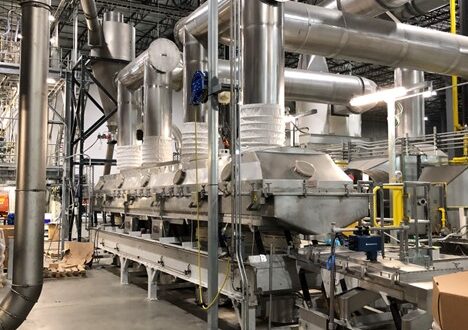
Moisture control in plastics fails when it is treated as a dryer-only setting — by the time silver streaks or bubbles appear on a part, the damage is already done. Track resin moisture from receiving through processing, using continuous measurement to catch problems before they become defects
Track resin from receiving through processing to protect part quality, stabilise throughput, and reduce unnecessary drying energy.
Moisture control in plastics is most effective when processors treat moisture as a process-wide variable, not a dryer-only setting. By measuring resin at key points from receiving through processing, plants can identify where moisture enters the material stream, respond before defects appear, and protect part quality without relying on excessive drying.
Effective moisture control in plastics helps:
- Prevent over‑drying and resin embrittlement
- Reduce extrusion defects and surface blemishes
- Optimize dryer energy consumption
- Prevent hydrolysis and property loss
- Stabilize film appearance and thickness
By the time silver streaks appear on a molded part or bubbles show up in extruded film, moisture has already impacted the material. And that defect may not appear until the material reaches the press or die, even though the moisture problem could have begun days earlier with damaged packaging, improper storage, inadequate drying, a conveying leak, or prolonged exposure during a production pause.
Moisture is often treated as a dryer setting issue because drying is the most visible moisture control step. But resin can gain or retain moisture at several points, from delivery and storage through drying, conveying, and the time it spends waiting at the molding machine. Effective moisture control therefore requires a moisture-content target for each material, handling procedures that prevent reabsorption, and moisture testing at critical points, especially after drying and as close as possible to the point of use. Those measurements show whether the resin meets the target before processing and help identify where moisture is being introduced or the drying process is falling short.
Why the right moisture window matters
Moisture affects both how engineering resins process and how finished parts perform. Too much water can degrade the polymer and destabilize production, while excessive drying can waste energy and expose the material to unnecessary heat. The goal is to keep each resin within the moisture range recommended by the material supplier for that specific process, not to drive the material to the lowest possible moisture level.
Engineering resins such as nylon, PET, PBT, polycarbonate, and TPU absorb water from the surrounding environment. At melt-processing temperatures, water can trigger hydrolysis, a chemical reaction that breaks polymer chains, lowers molecular weight, and weakens the material before it is formed into a finished part.
In injection molding, excess moisture may cause visible defects such as splay, bubbles, voids, poor surface finish, warping, or inconsistent dimensions. The less visible effects can be more serious. Hydrolytic degradation can reduce impact resistance and tensile strength, increase brittleness, and contribute to premature failure in service. A molded part may look acceptable at the press but exhibit a loss of mechanical performance during testing or use.
In continuous processes such as film, sheet, pipe, profile, or fiber extrusion, changing moisture levels can disrupt melt viscosity and process stability. The result may be bubbles, rough surfaces, poor clarity, or dimensional variation. Compounding introduces additional complexity because the base polymer must also combine consistently with fillers, reinforcements, colorants, and other additives. Variations in moisture can interfere with that consistency and make the final formulation harder to control.
Over-drying creates a different set of problems. Excessive temperature or residence time consumes energy, reduces available dryer capacity, and subjects the resin and its additives to unnecessary thermal exposure. For that reason, the operating target should be the resin supplier’s recommended moisture window, not just the lowest moisture level the dryer can achieve.
Control moisture beyond the dryer
A moisture control plan should track resin from delivery through processing. Incoming material may contain elevated or inconsistent moisture because of transportation conditions, damaged packaging, seasonal humidity, or upstream storage practices. Once a package is opened, hygroscopic pellets begin absorbing moisture from the surrounding air, especially when bags or containers remain uncovered between production runs.
Dryer performance can also vary. Incorrect settings, insufficient residence time, deteriorated desiccant, restricted airflow, or excessive loading can leave resin above its target moisture level. Even properly dried material can regain moisture after it leaves the dryer. Humid conveying air, vacuum leaks, long transfer distances, and extended dwell time at the machine can expose the resin before processing.
Because moisture can change at several points, one measurement may not show where the problem occurred. A sample taken at the dryer discharge may confirm proper drying but miss moisture absorbed during conveying or storage at the machine. A test at the machine hopper may show that the resin is above target but cannot determine whether the moisture came from the incoming lot, the dryer, or the conveying system.
Processors can improve control without redesigning the production line. Bags, gaylords, and storage vessels should remain sealed whenever possible. Dryer temperature, airflow, dew point, and residence time should be checked against a material-specific procedure rather than an inherited recipe. Plants should also maintain desiccant systems, inspect transfer lines for leaks, and define how long dried resin can remain in a hopper during a stoppage before it must be tested again. These practices create a traceable process instead of assuming that one drying cycle protects the material until it reaches the machine.
Why periodic testing can miss process changes
Laboratory methods such as loss on drying, Karl Fischer titration, and benchtop moisture analysis remain important. They provide reference measurements, support calibration, and help investigate quality problems. However, each result represents one sample collected at one point in time. Production continues while the sample is transported, tested, and reviewed.
Periodic testing leaves the intervals between samples unobserved. A short dryer upset, a wet portion in a batch of recycled material, or moisture absorbed during a production interruption may pass through the line without appearing in the next scheduled test. By the time a defect prompts an investigation, the affected material may already have been molded or extruded.
Inline near-infrared measurement helps close that gap by monitoring material as production continues. The system directs light at moving material and uses an application-specific calibration to interpret the reflected wavelengths as moisture data. Continuous, non-contact measurement can show when moisture begins to change, how long the change lasts, and whether conditions return to normal without interrupting production. Laboratory testing remains the reference method, while inline measurement adds the time-based data needed to respond during production.
Sensor placement should be driven by the source of variation the processor is trying to isolate. Monitoring at receiving reveals differences between incoming lots, while a measurement point after the dryer confirms whether the material reached its target. A second point near the molding machine or extruder can show whether the resin reabsorbed moisture during conveying or while waiting to be processed. In more variable operations, comparing readings at two locations helps distinguish an upstream drying problem from a downstream handling issue.
Connect measurements to corrective action
Continuous data improves production only when the plant defines how operators should respond to specific moisture trends. A rising moisture trend after the dryer may prompt an operator to check temperature, airflow, desiccant condition, or residence time. A stable reading at the dryer outlet combined with a high reading near the machine points to conveying air, leaks, or hopper exposure. Variation in incoming material may require lot segregation, a revised drying procedure, or follow-up with the supplier.
For processors that need real-time visibility, MoistTech’s IR-3000 is one example of how non-contact measurement can support a continuous data approach. The near-infrared sensor is calibrated for the application and continuously measures material moving beneath it. The system can store multiple product calibrations, communicate with plant control systems, and operate above belts, screw conveyors, chutes, bins, and pneumatic conveying systems.
The application setup is as important as the instrument because the reading is only useful when it reflects the way the material actually moves through the process. Resin formulation, additives, material presentation, sensor location, and the intended corrective action all affect performance. MoistTech works with processors to select the measurement point, develop the calibration, integrate the signal, and refine performance for extrusion, compounding, pelletising, film, converting, and recycling operations.
Once the signal reaches a PLC or operator interface, it can support alarms, trend analysis, and controlled adjustments to dryer settings or material flow. Any closed loop adjustment should remain within the resin supplier’s approved processing limits and be verified through reference testing. Used this way, real time measurement can show where the process changed and guide operators toward the most likely cause.
Variable feedstocks require better visibility
Recycled and reprocessed plastics make moisture control more difficult because their processing and storage histories are less predictable. Material from different suppliers may vary in exposure, particle size, contamination, and starting moisture. Conditions can also change between lots or within a blended batch. A dryer recipe that worked for one shipment may under-dry the next or use unnecessary energy on material that arrived drier.
Continuous measurement gives processors a practical way to manage that variation. Moisture trends can support lot segregation, dryer optimisation, supplier feedback, and controlled transitions between virgin and recycled content. The data can also help distinguish a change in the material from a problem with the equipment, reducing the time required to identify and correct the cause.
Effective moisture control begins when a plant treats moisture as a changing process variable rather than a pass-or-fail result from one sample. That approach connects receiving, storage, drying, conveying, and processing to the same material-specific target. The benefits extend beyond surface appearance: polymer properties remain more consistent, dryers perform less unnecessary work, and plants can protect throughput as feedstocks and ambient conditions change.