Engineer News Network The ultimate online news and information resource for today’s engineer
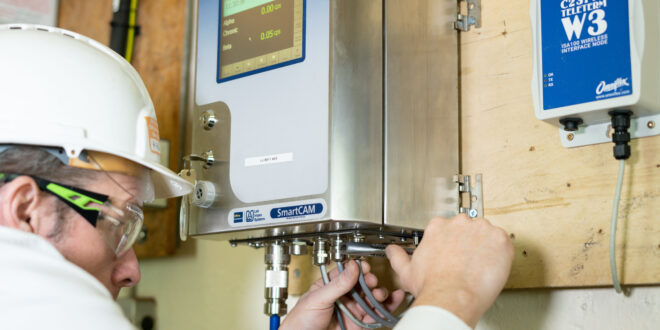
Radiation monitoring specialist Omniflex has supported a major UK nuclear plant operator through a critical phase of its decommissioning programme, ensuring continuous safety and security monitoring and buildings were progressively de-manned. The company delivered a bespoke control and instrumentation (C&I) overlay solution that allowed essential site data to be centrally monitored, even as legacy infrastructure was removed and staffing levels reduced.
Nuclear plant operators overseeing a decommissioning phase must manage constant balancing acts. They have to balance collecting data from radiological monitors, critical alarms and key plant instrumentation to protect people and the environment with the need to reduce costs, shrink site footprints and de‑man sites.
The plant operator needed a flexible, robust and cost-effective solution to remotely collect diverse analogue and digital signals from these emptying buildings and consolidate them into a centralised monitoring system. The core challenge was the need to maintain continuous, reliable monitoring of site-wide critical safety and security signals, such as alarms and radiation monitors, across several buildings that were being de-manned.
The project faced several notable challenges. For example, much of the existing communications infrastructure was fragmented or slated for removal. Furthermore, as it was a working plant, the solution had to involve minimal disruption and avoid wherever possible extensive civil or re-cabling works.
Omniflex proposed and implemented a series of bespoke C&I Overlay systems designed specifically for the unique demands of the nuclear decommissioning environment. These systems provide a parallel, dedicated infrastructure for essential monitoring, separate from the primary plant systems being systematically dismantled.
“We took a three-pronged approach to our C&I overlay solution for the decommissioning nuclear site; signal aggregation, robust communication and SCADA integration,” explained Gary Bradshaw, director at Omniflex. “We deployed remote terminal units (RTUs) from our Teleterm and Maxiflex ranges as they are industry-proven in nuclear environments and can collect data using all network types, such as ethernet, radio, wireless and, our proprietary network technology, Conet.
“The monitoring data was seamlessly integrated into a central monitoring system, which we kept as flexible as possible. It was able to be integrated with either existing site SCADA infrastructure or a new, bespoke SCADA system at the gatehouse or other site locations, offering a complete end-to-end solution,” continued Bradshaw.
Omniflex’s approach allowed site operators to safely de-man buildings while ensuring that all essential alarms and status indications were continuously and reliably monitored from a safe, permanently manned location.
“Our C&I overlay solution ensured continuous site-wide monitoring, even as physical infrastructure and staff levels were reducing. Furthermore, by leveraging our well proven Conet network technology, which utilises existing cable infrastructure to connect instrumentation, we can drastically cut installation time, reduce labour and new cabling costs, and minimise installation expenses and operational disruption,” concluded Bradshaw.
Ultimately, Omniflex’s C&I overlay solution meant the client could proceed with the de-manning schedule on time, avoiding unplanned staffing costs, and navigate the complexities of the decommissioning process efficiently and safely.