Engineer News Network The ultimate online news and information resource for today’s engineer
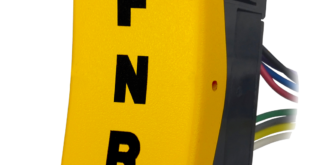
Parker Hannifin announces the launch of the SCVOT2 Vortex Flow & Temperature Sensor, a compact, high-performance sensing solution engineered to support the rapid adoption of liquid cooling in data centres. Designed for modern cooling architectures, including direct-to-chip and secondary loop applications, the SCVOT2 helps operators and OEMs improve thermal control, protect critical hardware, and increase overall energy efficiency through accurate, real-time measurement of both flow rate and fluid temperature.
As AI and high-density computing continue to increase rack-level power consumption, liquid cooling is becoming essential to maintain reliable performance and predictable operating temperatures. The SCVOT2 is designed to deliver the core measurements needed to manage coolant distribution, validate heat removal, and enable system-level optimisation so operators can maintain stable operation under dynamic workloads and changing thermal demand.
Built for demanding cooling environments, the SCVOT2 uses a wear-free vortex measurement principle with no moving parts, helping maintain long-term performance while reducing maintenance requirements. Its low pressure loss supports efficient loop operation, and the sensor’s integrated temperature measurement enables tighter control strategies and faster diagnostics from a single installation point. The SCVOT2 is engineered for typical data center cooling media, supporting water and water-glycol mixtures up to 15cSt, and is designed for robust mechanical performance with 16bar operating pressure and the ability to withstand pressure shocks up to 100 bar. For high-temperature operating conditions, it supports applications up to 125°C, with a media-resistant design intended to maintain durability in real-world cooling loops.
The SCVOT2 is well-suited for instrumentation across the liquid cooling ecosystem inside the secondary loops (Racks) supporting facility-side heat rejection. By consolidating sensing functions into one device, the SCVOT2 can reduce component count and simplify commissioning, while helping teams identify conditions that can lead to downtime, including reduced flow, thermal excursions, air entrainment indicators, or early signs of wear.