Engineer News Network The ultimate online news and information resource for today's engineer
Laboratory automation is scaling to handle higher throughput with less manual intervention
Medical device engineering has never been simple, but the nature of that complexity is changing. As systems become more capable, the burden of integrating motion components has emerged as a primary design challenge.
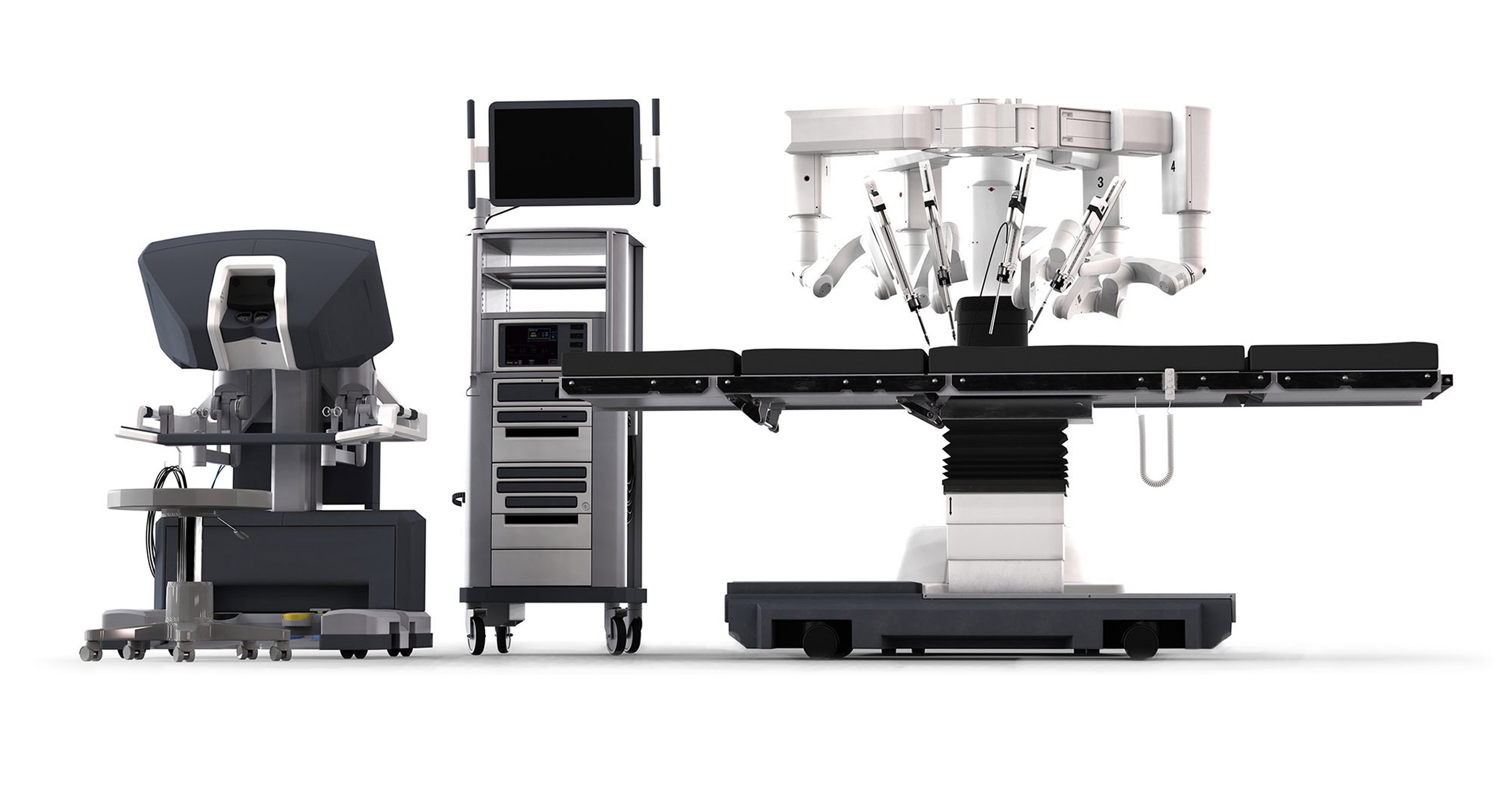
Surgical robots continue to advance. Powered surgical hand tools are becoming smaller, lighter, and smarter. Laboratory automation is scaling to handle higher throughput with less manual intervention. And across all segments, the underlying motion system is being asked to deliver higher performance within smaller footprints, tighter margins, and faster development timelines.
What is an integrated motion subsystem?
Before going further, it is worth being precise about terminology, because ‘integrated’ can mean different things depending on who is using the word.
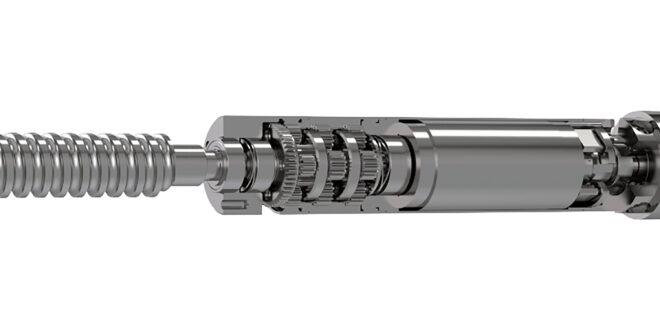
In the context of a medical device, an integrated motion subsystem refers to several elements engineered to function together as a unit. Typically, this means an electric motor, a gearhead, a feedback device, and – increasingly – a controller, either embedded or supplied as a closely paired module.
In a surgical hand tool, those elements often sit within centimeters of each other inside a sealed handpiece. In surgical robots, they form one of dozens of joint-level subsystems, each subject to coordinated multi-axis motion – where aligning motor response, gear characteristics, and feedback resolution at the subsystem level reduces variability and limits the need for software compensation.
The engineering question is the same in either case: should those components be specified individually or delivered as an integrated solution? The answer increasingly favors integration.
That said, discrete component sourcing still has a place. Applications with highly specialised requirements, or programs that rely on existing approved components, may benefit from retaining control at the component level. In those cases, flexibility and familiarity can outweigh the advantages of integration. The decision is less about replacing one model with another and more about selecting the right approach for the constraints of the program.
Why integration has become a design priority
Several pressures are pushing this decision up the priority list. In practical terms, OEMs evaluating this shift are typically balancing three factors: how quickly a system can move from concept to production, how much integration risk they are prepared to carry internally, and how performance tradeoffs affect the end device. Integration does not eliminate those tradeoffs, but it can move them earlier in the design process and place more of the execution risk with the subsystem supplier.
Supply chains have grown more complex, with ongoing disruptions to global trade compounding the impact of export controls and regional regulatory considerations that limit where components can be sourced and built. At the same time, device complexity continues to climb, particularly in robotics, where coordinating multiple motors through dynamic 3D motion places significant demands on the controller.
Alongside this, many OEMs are having to operate with smaller and smaller talent pools. Engineering teams are being asked to deliver more, faster, with fewer specialists able to go deep on every component in the bill of materials.
An integrated subsystem responds to all three pressures. It reduces the number of interfaces the OEM must manage across procurement, system testing, and long-term support. One part number replaces several. One supplier holds the design responsibility. Root-cause analysis can be conducted at the subsystem level, rather than across multiple suppliers. None of that solves the underlying complexity, of course, but it puts the responsibility for managing it where the deepest expertise sits.
The same logic explains why integration matters not just organisationally, but technically.
Integration at the system level
When a motor, gearhead, feedback device, and controller are specified as separate part numbers, the OEM is implicitly responsible for ensuring they work well together. That responsibility is technically demanding. Tolerances stack. Thermal interactions are not always predictable from datasheets alone. Control loops must be tuned against real mechanical inertia rather than a model of it.
A partner who supplies the entire subsystem has visibility into the full system, rather than individual part numbers in isolation. That visibility creates opportunities for optimisation that are difficult to achieve through component-level sourcing.
Losses can be designed out of the gear stage that the motor specifier would never have known to look for. Feedback resolution can be matched precisely to the control bandwidth the application actually needs. Sealing strategies and thermal paths can be co-designed rather than negotiated across an interface.
The resulting efficiency shows up in different places depending on the application. In a battery-powered hand tool, it tends to appear as lower current draw at a given torque output, leading to improved battery life. In ergonomically driven designs, it more often shows up as a smaller, lighter package delivering the same performance. In high-volume programs, the gain is in manufacturability – there are fewer parts to assemble and fewer points of failure.
As motion-driven medical devices get more capable, the gap between specifying motion well and specifying it poorly is widening. That gap is precisely where integrated subsystems earn their place.
Where integration meets global reality
There is a further dimension to integration that often gets overlooked in the technical discussion: where the support sits.
Medical device OEMs increasingly operate as global businesses. A surgical robotics platform developed in one region may be manufactured in a second, qualified for sale in a third, and serviced across all of them. Each of those locations brings its own regulatory environment, its own language, and its own expectations around supplier responsiveness.
When a supplier has engineering expertise distributed across regions, they are well positioned to deliver the support needed to overcome these issues.
Local engineering presence shortens the loop on technical questions and design reviews, while local regulatory familiarity accelerates documentation work that otherwise stalls in translation — both literal and figurative.
None of these advantages relate to the motor itself, but each of them affects whether the motion subsystem can be specified, delivered, and supported on the timeline the program actually needs.
Rethinking the role of the supplier
The OEMs leading the next generation of medical devices rarely make the integration decision purely on price. They make it on whether the partner has the engineering depth to act as an extension of their own team, the manufacturing footprint to support them in the regions they care about, and the staying power to be there for the lifetime of the device.
Suppliers with vertically integrated motion portfolios, including those within Regal Rexnord, are structured around this model: delivering motion control under one umbrella, supported by global engineering capability. None of that replaces the OEM’s own expertise on the device itself, but it changes what is possible inside the motion envelope and frees the OEM’s engineers to spend their time on the parts of the device that only they can build, rather than tinkering with individual components.
Ultimately, integrated motion is not about replacing individual components. As device complexity increases, the real shift is from deciding what to specify to determining who is responsible for system-level performance.
For more information, visit Portescap.