Engineer News Network The ultimate online news and information resource for today’s engineer
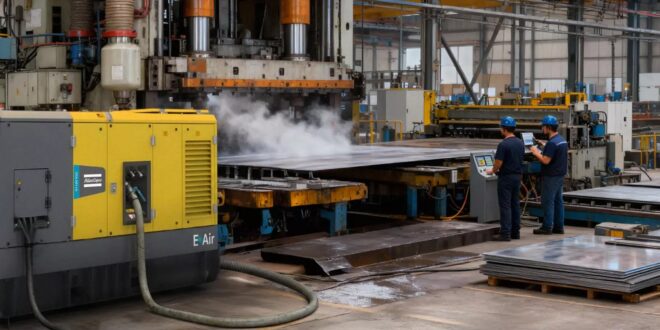
Metal manufacturing environments are among the most demanding in industry. Extreme temperatures, heavy-duty machinery, dust and other airborne particulates create conditions that test the limits of every system on the floor. And when equipment fails, production does not just slow. It grinds to a halt.
At the heart of these operations is compressed air. Essential for forging, cutting, finishing, and automation, a stable and clean air supply is non-negotiable. Any interruption can halt production lines, resulting in costly downtime and missed delivery targets. For engineers, investing in robust, on-site air compressor solutions is not just about maintaining operations. It is a strategic move to ensure productivity and profitability.
1. Powering pneumatic tools and heavy machinery
Pneumatic tools are foundational in metalworking. Grinders, sanders, drills and impact wrenches all depend on compressed air for precise, high-torque performance. Unlike electric tools, pneumatic systems are safer in environments where sparks can pose a hazard. However, their reliability hinges on air quality and pressure stability. Pressure drops or air contamination can lead to inconsistent finishes, premature tool wear, and increased rework.
In harsh environments such as steel mills, compressors must deliver clean, dry air at consistent pressures. Advanced filtration systems are essential to block moisture and particulates, extending tool life and ensuring repeatable results. This stability keeps production lines moving and minimizs
2. Supporting cooling and quenching processes
Thermal management is crucial in steel manufacturing. Compressed air is used for cooling and quenching processes, helping regulate temperatures and prevent component damage. In areas where furnaces and welders generate intense heat, compressors must operate reliably without succumbing to thermal stress.
Modern compressors are engineered with advanced cooling systems to maintain performance in high-temperature zones. This resilience ensures uninterrupted cooling and quenching, protecting product integrity and keeping operations on schedule.
3. Enabling automation and robotics
Automation and robotics are increasingly central to modern steel plants, driving gains in efficiency and precision. Pneumatic actuators and robotic arms require a steady air supply for accurate, synchronized operation. Any fluctuation in pressure can disrupt automated sequences, leading to errors or unplanned stoppages.
Integrated air solutions offer real-time monitoring and control, ensuring stable air delivery for advanced automation. Smart controllers dynamically adjust output, supporting continuous improvement and minimizing downtime.
4. Ensuring clean surfaces and high-quality finishing
Surface preparation and finishing are among the most demanding applications for compressed air. Whether it is cleaning debris before coating or powering spray systems for painting and electroplating, air quality directly impacts the final product. Contaminated or inconsistent air can lead to defects such as uneven coatings, poor adhesion, or compromised corrosion resistance.
The bottom line: reliability that reduces downtime
In steel manufacturing, every minute of downtime translates into lost revenue and missed deadlines. By investing in robust, on-site air compressor solutions, you can ensure reliable performance across all critical applications: from tooling and cooling to automation and finishing. Atlas Copco‘s electric E-Air range is built for demanding working conditions and stands up to heat, vibration, and heavy-duty cycles.