Engineer News Network The ultimate online news and information resource for today’s engineer
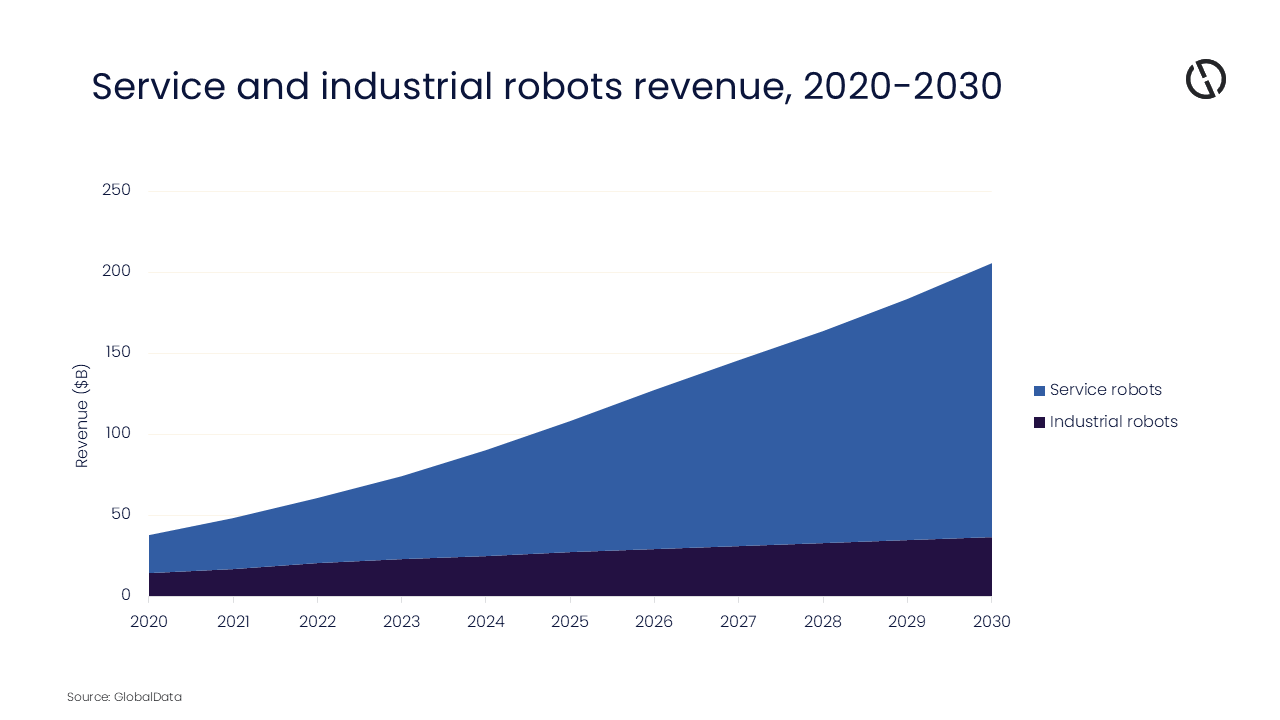
Robotics is rapidly transforming oil and gas operations as advances in artificial intelligence (AI) and cloud computing unlock the next phase of industrial automation. AI enables advanced decision-making, navigation in complex environments, and reduced reliance on human intervention. Against this backdrop, the global robotics market is projected to grow from $90.2 billion in 2024 to $205.5 billion in 2030, forecasts GlobalData, a leading intelligence and productivity platform.
GlobalData’s Strategic Intelligence report, Robotics in Oil and Gas, highlights how robotics is increasingly being adopted across the oil and gas value chain to improve safety, efficiency, and asset integrity.
Operators such as Equinor deploy subsea autonomous vehicles, including Hydrone-R, for extended underwater inspections, while Shell uses Cyberhawk drones and Sensabot robots for aerial and ground-based inspection of flare stacks, tanks, and pipelines. BP and Chevron have trialled Spot quadruped robots to autonomously survey facilities and collect visual, thermal, and methane data, reducing personnel exposure to hazardous environments.
Ravindra Puranik, Oil and Gas Analyst at GlobalData, comments: “Autonomous robotic systems are being introduced across hazardous, remote, and offshore environments to perform inspection, surveillance, and monitoring tasks without continuous human control.”
These platforms deliver higher operational efficiency through faster inspection cycles, consistent task execution, and repeatable, high-quality data capture, independent of operator skill or availability.
GlobalData notes that offshore and subsea operations remain a major focus area for robotics deployment. Remotely operated vehicles (ROVs) continue to support real-time subsea inspection, maintenance, and intervention, while autonomous underwater vehicles enable long-duration seabed surveys and pipeline monitoring with reduced reliance on surface vessels.
Puranik concludes: “While challenges remain, the integration of robotics with digital twins, edge intelligence, and predictive analytics is accelerating. As these technologies mature, robotics will move beyond supporting roles to become indispensable operational assets, across the oil and gas industry.”