Engineer News Network The ultimate online news and information resource for today’s engineer
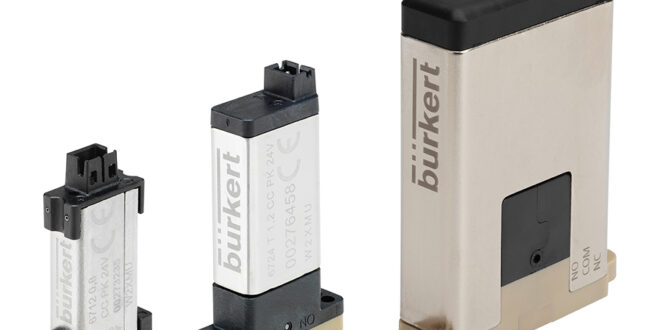
Across a range of medical and laboratory applications, confirmation of liquid flow status is critical, but integrating sensors or electronics to check the performance of functions like valve switching adds design complexity. Troy Stehr looks a a set of algorithms developed to monitor the induced current within its electrodynamic whisper valves, presenting a range of diagnostic capabilities to identify faults for immediate and preventative maintenance, and increased process intelligence
In a dialysis machine, precise timing and positioning of each valve is critical to maintain controlled, sterile, and safe therapy. If a valve fails to open, blood or dialysate flow can be restricted, reducing toxin removal and potentially trigger pressure build-up. Alternatively, if a valve fails to close, fluid can leak or flow in the wrong direction, risking contamination. This scenario can be applied to a range of medical equipment where the controlled flow of liquid is critical to point-of-care procedures.
In a lab environment, the outcome may not be as immediately significant, but deviation in valve actuation can lead to inaccurate flow, returning incorrect results, or wastage of the sample. As the liquid volume is typically down to the microlitre level, errors could take a significant time to spot.
Whether it’s a medical or lab setting, incorrect valve operation could result from a variety of factors, ranging from mechanical wear through to clogging or media crystallisation. Whatever the cause, identification, diagnosis, and maintenance need to happen quickly.
Whisper valves
Across these applications, a solenoid valve with rapid switching and high-pressure resistance is required to maintain safety and sterility. These capabilities are combined with a very low operational noise level, essential for patient settings and important in the lab, hence the name ‘whisper valve’.
Typically, these valves are analogue, with no means of monitoring if or how they were actuated. A 24-volt signal can be supplied, but this doesn’t provide feedback on whether the valve’s opening or closing rate are performing as required. Diagnostic devices such as flow meters or photoelectric sensors can be installed downstream, but aside from adding cost and footprint, their integration complicates device design.
Now, a new development for valves with electrodynamic actuators, such as Bürkert Whisper Valves, provides a diagnostic option where the valve itself is used as the sensor. A valve with an electrodynamic actuator contains a coil positioned in a magnetic field. When electrical current flows through the coil, it stimulates the Lorentz force, moving the coil to produce precise and rapid motion to open or close the valve.
When voltage is applied to the coil, it draws raw, ohmic current, but this doesn’t give sufficient data about valve switching status. However, as the coil moves within the magnetic field under the Lorentz force, this generates an additional, induced current. By analysing this induced current, which ultimately provides a wider scale and more precise measurement of valve stroke, the system can interpret the actual motion of the valve, and ultimately, its switching status – as well as factors influencing the switching behaviour of the valve.
A key advantage of this new capability is the ease of integration. Instead of requiring additional third-party sensors or electronics for data acquisition, Bürkert’s ValveInsight solution relies on a set of algorithms that are offered open source on the developer platform Github. Manufacturers can easily increase the intelligence of their devices and processes by integrating the algorithms into the existing electronics. A range of algorithms are available for switching detection and switching time monitoring, which can be used dependent on the functional requirements of the OEM equipment.
Valve switching detection is a key function that confirms if the valve has switched completely, identified by interruption of the induction current curve against the known profile for a complete stroke. This provides immediate detection of switching anomalies, for example, detecting blocked valves. This adds process safety to critical applications in medical settings, or can reduce wastage or downtime in the lab. This capability also adds key data for documentation purposes, essential to pharmaceutical production.
Diagnostic customisation
Switching time monitoring can also be achieved. In crucial dosing processes, assessing deviation from the speed curve could identify challenges with the valve or changing environmental conditions. While switching detection provides immediate identification of blockages, switching time monitoring can be essential to identify developing challenges, alerting to preventative maintenance.
The algorithms can also be trained to the specific requirements of the application. For example, they could be developed to identify empty tanks, where a customised algorithm can detect air in the valve, adding redundancy to tank level monitoring. The algorithm could also be taught to understand normal state conditions and recognise deviations, caused by factors such as changing liquid viscosity, feed rate, or back pressure.
Ease of integration
This capability is inclusive with Bürkert’s Whisper Valve technology. While OEMs are provided with access to the range of ValveInsight algorithms, giving the freedom to experiment and develop bespoke solutions, Bürkert’s flow control engineering capabilities are also available in support.
While Github provides full resources to get the most from ValveInsight, an Evaluation Kit allows users with the hardware to get quickly up and running. The Evaluation Kit enables current measurement, voltage measurement, valve switching circuits, and a controller to execute the algorithm. Users can also test the standard switching detection algorithm with a blockable valve directly on the controller or use their own controller with the measurement circuits provided with the Evaluation Kit electronics.
When precision and reliability in liquid handling is application-critical, a closed-loop solution that adds feedback on valve performance is crucial. While ValveInsight adds this layer of security, its diagnostic capabilities can provide a range of advantages with algorithms that can be explored for tailored needs. What is more, harnessing these insights is possible without significant redesign of an OEM’s existing equipment.
Troy Stehr is Business Development Manager, Lab & Analytical at Bürkert.