Engineer News Network The ultimate online news and information resource for today’s engineer
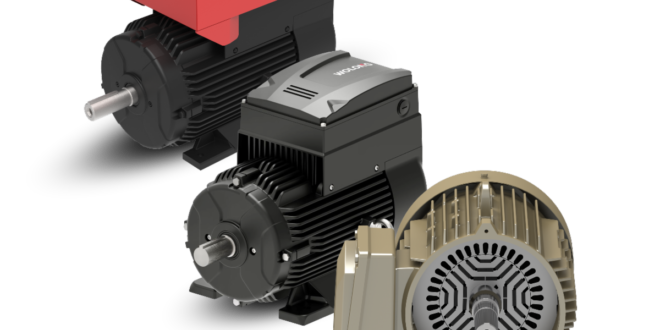
David Tovar shares how integrated motor systems combine the motor, drive, and controls into one unit, improving reliability, efficiency, and simplifying installation and maintenance. They also enable smarter control and better performance compared to traditional motor setups
For decades, industrial motor systems have followed a familiar architecture: a motor paired with a separate variable frequency drive (VFD), connected through wiring, programmed independently, and maintained as two distinct components. While this approach has offered flexibility, it has also introduced complexity, particularly as industrial systems face increasing pressure to improve energy efficiency, reduce downtime, and operate reliably in harsher environments.
As process control demands have evolved, this traditional separation has revealed persistent pain points. Matching motors and drives requires careful sizing and tuning. Installation introduces additional failure points around cabling, enclosures, and environmental exposure. Maintenance teams must manage multiple components with different lifecycles and diagnostics. In applications such as pumping, ventilation, and air handling (where loads fluctuate continuously), these inefficiencies compound over time.
An integrated motor architecture, where the motor and drive are designed as a single, unified system, offers a fundamentally different approach. Rather than assembling compatibility in the field, integration embeds it at the engineering level, simplifying installation while improving reliability and performance across the system lifecycle.
Integration as a reliability strategy, not just a convenience
At its core, an integrated motor combines drive control, power electronics, and the motor itself into one factory engineered unit. This consolidation eliminates the need to select, wire, and commission separate components, reducing the number of interfaces where failures can occur. From an operational standpoint, fewer components translate directly into fewer points of failure.
Reliability gains extend beyond physical simplification. When a drive is purpose built for a specific motor, control algorithms can be optimized around that motor’s electrical and mechanical characteristics. Rather than relying on generic tuning parameters, the drive operates with a control strategy tailored to the motor’s behavior across speed ranges and load conditions. This tight coupling improves process stability, particularly in applications with frequent starts and stops or highly variable demand.
Maintenance requirements also shift. Instead of maintaining separate inventories, documentation, and service schedules for motors and drives, operators manage a single integrated asset. Beyond streamlining maintenance, integrated motor-drive systems can significantly reduce or even eliminate the need for controlled ambient electrical rooms or e-houses, leading to major savings in space and facility costs.
Designing for harsh and variable operating conditions
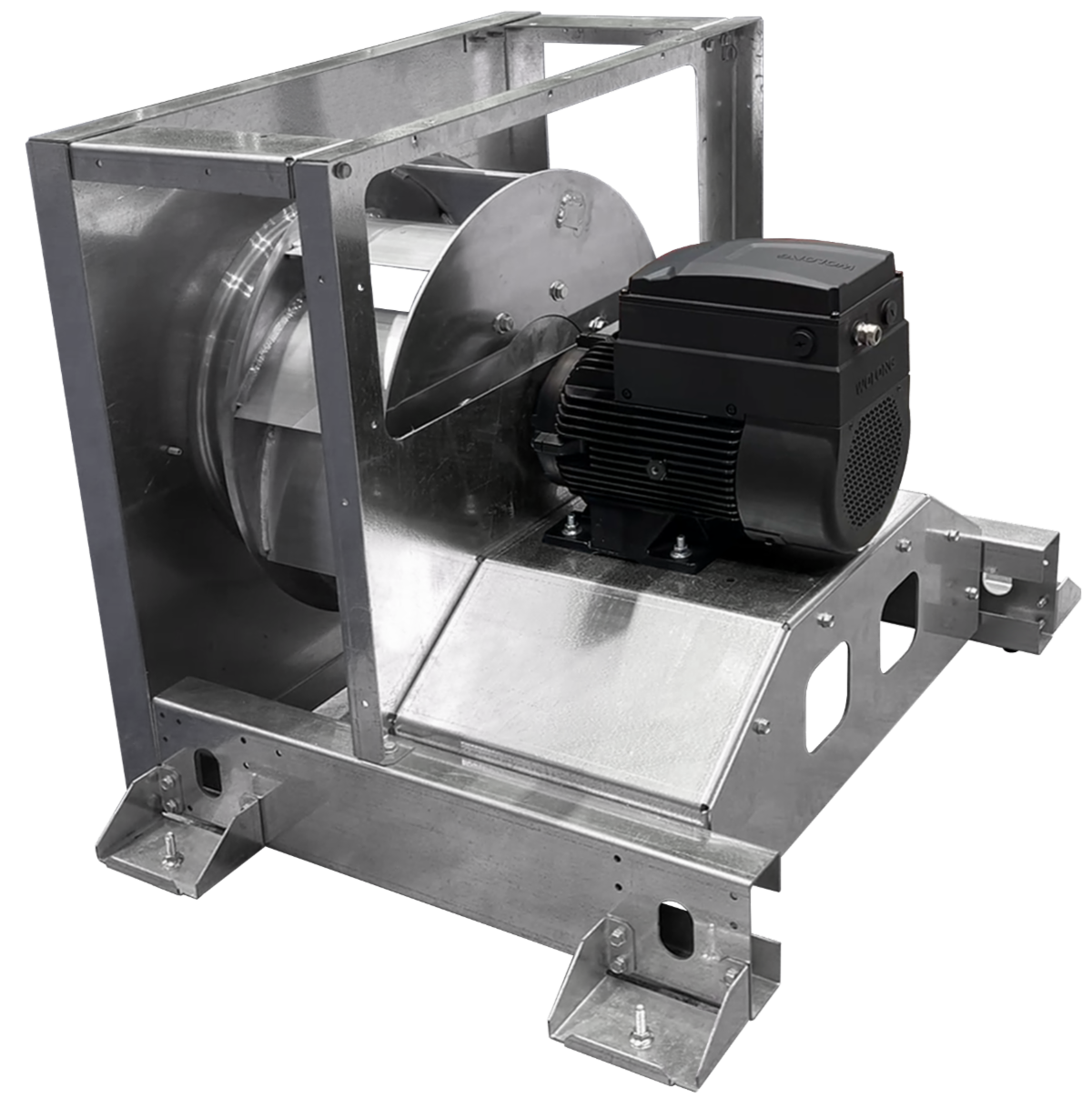
Modern industrial motors are increasingly expected to perform under demanding conditions that go beyond controlled indoor environments. High ambient temperatures, dust, moisture ingress, and frequent load variation are now standard operating realities in many facilities. Integrated motors designed for severe duty environments typically carry high ingress protection ratings. An IP66 rating, for example, provides protection against both dust ingress and high pressure water exposure, allowing motors to operate reliably outdoors or in washdown areas without secondary enclosures. This level of protection is particularly valuable in ventilation and pumping applications where motors may be exposed to the elements.
Thermal performance is another critical consideration. While many industrial motors are rated for ambient temperatures up to 40°C, integrated motor designs can be engineered to operate at ambient temperatures as high as 60°C without derating. This expanded thermal envelope supports deployment in rooftop installations, mechanical rooms, and industrial sites where heat buildup is unavoidable.
Frequent start-stop cycles and variable loads further challenge conventional motor systems. Integrated motors are inherently designed for variable speed operation, allowing them to ramp smoothly rather than cycling abruptly between on and off states. This reduces mechanical stress, minimises current spikes, and extends component life, particularly in fans, pumps, and air handlers where demand fluctuates continuously.
Efficiency, power density and system level gains
Energy efficiency remains one of the most significant drivers of motor system innovation. Traditional induction motors, even at premium efficiency levels, face inherent limitations when operating across wide speed ranges or under partial load. Synchronous reluctance motor technology offers a different efficiency profile, particularly when paired with an integrated drive.
Synchronous reluctance motors can achieve efficiency levels equivalent to IEC IE5, exceeding NEMA Premium (IE3) benchmarks. This improvement represents a substantial step change in energy performance. When evaluated from a system perspective rather than a component level, the efficiency gains extend beyond the motor itself to include reduced losses in the drive and improved control precision.
Higher power density is another consequence of this technology. Integrated synchronous reluctance motors can deliver more power within the same NEMA frame size as a conventional induction motor. This allows engineers to achieve higher output without increasing the physical footprint of the installation, an advantage in space constrained retrofits and OEM designs alike. Importantly, higher power density does not imply higher energy consumption. Instead, it provides additional operational headroom, allowing systems to respond dynamically to peak demand while operating more efficiently under normal conditions.
Embedded intelligence and direct process control
One of the defining advantages of integrated motor systems is their ability to incorporate advanced control functionality directly into the motor. Rather than relying exclusively on external PLCs or control cabinets, integrated motors can accept sensor inputs and manage process variables internally. Embedded PID (Proportional-Integral-Derivative) control loops exemplify this capability. Instead of commanding a motor to operate at a fixed speed, operators can define a target process variable such as airflow, pressure, or flow rate. Using feedback from connected transducers, the motor automatically adjusts its speed to maintain the desired setpoint. This approach mirrors cruise control in an automotive context: the system continuously compensates for changing conditions without manual intervention.
Integrated motors typically provide a robust set of digital and analog inputs and outputs, along with standard industrial communication protocols such as Modbus RTU. Industry specific protocols, including those used in HVAC systems, can also be supported. This flexibility simplifies integration into existing control architectures while enabling more decentralised, responsive control strategies.
Simplifying retrofits and future proofing systems
Retrofitting legacy systems presents a unique set of challenges. Many facilities operate large installed bases of induction motors running at constant speed, often oversized to accommodate worst case demand. Replacing these systems with smarter, more efficient solutions can be disruptive unless the replacement fits seamlessly into the existing mechanical and electrical infrastructure.
Integrated motors designed within standard NEMA frame sizes offer a practical retrofit pathway. By matching the physical footprint of legacy motors while delivering higher efficiency, variable speed capability, and embedded intelligence, these motors allow operators to modernize systems without extensive reengineering. In many cases, the result is immediate energy savings, improved process control, and reduced mechanical wear all without altering the surrounding equipment.
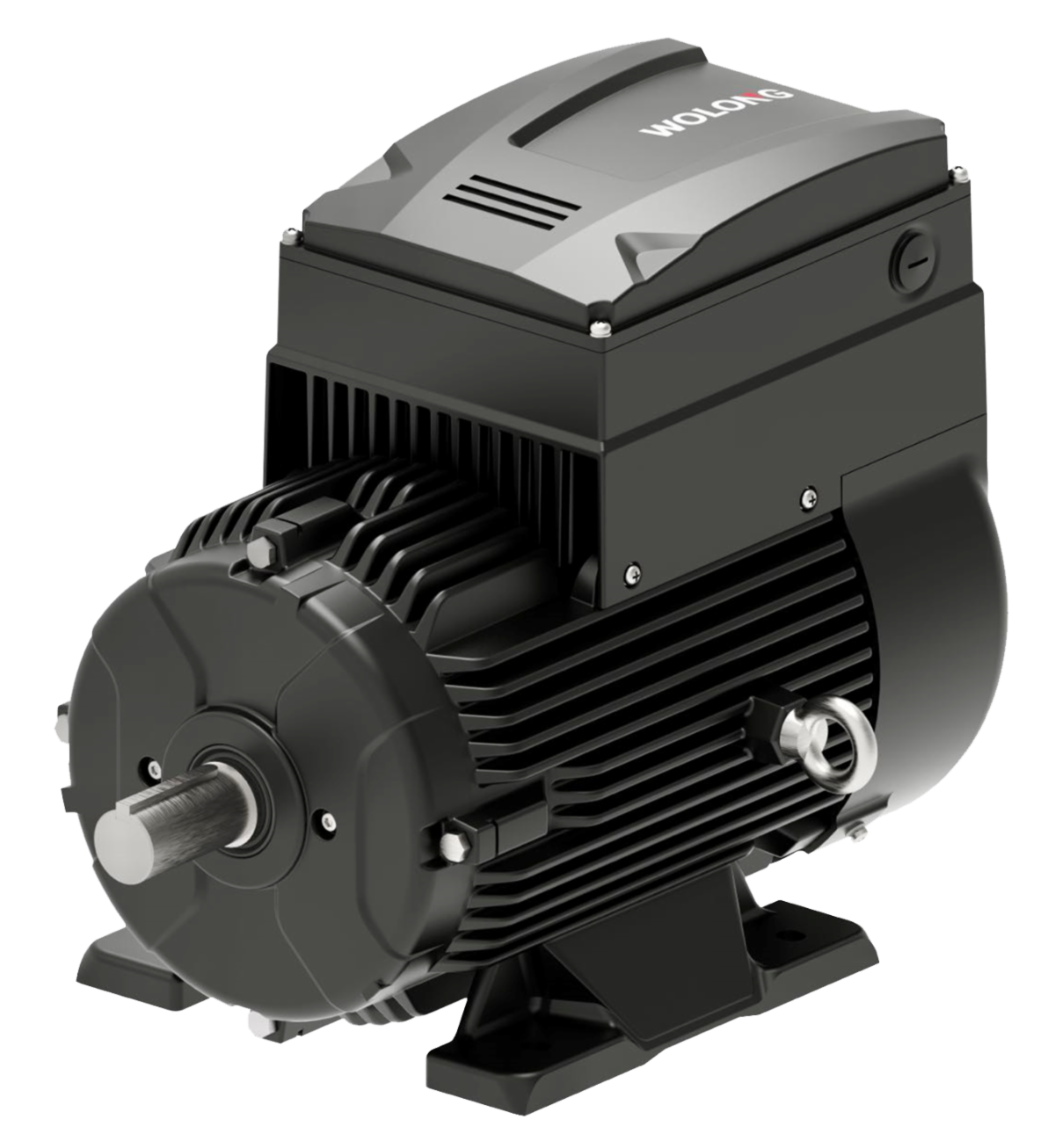
Within this broader shift toward integrated motor architectures, Wolong Electric America has applied synchronous reluctance technology to develop its EMR integrated motor platform for pumping and air handling applications. By combining a drive, control electronics, and motor into a single IP66-rated unit, Wolong Electric America’s EMR motor addresses many of the operational challenges associated with traditional motor drive pairings.
The EMR motor is designed for severe duty environments, supports high ambient temperatures, and incorporates embedded PID control for direct process regulation. Its IE5-level efficiency and high power density enable both energy savings and compact system design, while its integrated architecture simplifies installation, maintenance, and retrofits. Wolong Electric America supports this platform with technical training, application support, and aftermarket service resources to ensure consistent performance over the motor’s expected 15 year service life.
Toward smarter, more resilient motor systems
As industrial systems continue to demand higher efficiency, greater reliability, and more adaptive control, the limitations of fragmented motor architectures become increasingly apparent. Integrated motor designs represent a shift toward systems thinking where performance, efficiency, and reliability are engineered cohesively rather than assembled piecemeal.
By embedding intelligence, optimising efficiency at the system level, and reducing complexity in the field, integrated motors offer a practical path forward for both new installations and legacy upgrades. For engineers and operators navigating evolving operational demands, this approach provides not just incremental improvement, but a redefinition of what modern motor systems can deliver.
David Tovar is Business Leader Drives, Wolong Electric America.