Engineer News Network The ultimate online news and information resource for today's engineer
Engineering has long been driving world progress; but with the booming AI and data centre industry, along with ever-increasing scrutiny on climate goals, it now has to be at the forefront of sustainability efforts more than ever before. There is also a push for increased equality within the sector, as currently only 16% of engineers globally are women. By allowing exploration into engineering from a young age, more diverse talent will be encouraged to enter the industry in the future. Here, on World Engineering Day (4th March) engineering experts discuss the industry, exploring and celebrating the crucial role that engineers and engineering have on society today
Over the past few years, it has become impossible to describe the pace of technological change without resorting to cliches. Technology is evolving at breakneck speed. Innovation is moving at the speed of light. Disruption has become the new normal. We have heard these phrases hundreds of times – but they are largely true.
Nowhere is this more evident than in the engineering sector. The discipline that once focused primarily on physical systems and mechanics is now equally defined by complex software and data. Smart robotics and artificial intelligence, once the stuff of science fiction, are now daily realities.
Against this backdrop of change, the key question is not whether the sector is transforming, but what that looks like in practice. This World Engineering Day, four experts offer their take on the state of the industry today, as well as where it is heading next.
The drive for sustainability
One shift that is well underway is the digitalisation of engineering processes, particularly within the energy industry. As organisations work to decarbonise their operations, data and intelligent models are driving huge sustainability gains.
As Mounir Boemond, Director, Sustainability Segment at AVEVA, explains: “The digitalisation of engineering processes is reshaping how we approach sustainability across the energy industry, with data, connectivity, and intelligent modelling now sitting at the core. Technologies such as digital twins and real-time analytics allow engineers to understand how assets perform over their full life cycle, extending operational life and guiding investment towards lower-carbon choices and extending operational life, while also giving operators the confidence to integrate renewables at scale. This shift highlights how the energy transition continues to evolve, combining traditional problem-solving with digital capability to deliver infrastructure that is both reliable and environmentally responsible.“

He adds: “AI-driven insights, via agnostic data platforms, help to support the analysis of performance data at a far more efficient scale; faults are addressed before failure, and energy output remains steady with fewer material interventions. This blend of digital insight and physical infrastructure reflects the essence of modern engineering practice, where efficiency underpins progress and sustainability goals are translated into practical solutions.”
AI and robotics in modern operations
The energy sector is hardly the only place where AI is reshaping engineering. With huge advances both in AI systems and modern robotics, the emphasis is beginning to shift from experimentation to daily use cases.
Chris Lloyd, Chief Solutions & Technology Officer at Syspro, argues that the real shift will come from embedding AI into existing systems, rather than treating them as a shiny new extra.
“As AI becomes more widely adopted across manufacturing, real progress will come from applying it within the deep vertical enterprise systems that already run operations, not alongside them,” he explains. “In engineering environments, context matters. When AI is embedded within trusted operational context, it can move beyond analysis to support coordinated, explainable and auditable decisions aligned to enterprise goals. That is where the shift becomes meaningful. As opposed to AI systems operating in isolation, intelligence must work inside the systems that manage how organisations buy, make, move and sell.”

However, Lloyd also points out that the human element is key. “AI delivers value when it supports engineers,” he argues. “Building on their expertise, it can surface risk earlier and coordinate actions faster whilst operating within defined guardrails. And by utilising real-life context within AI systems, every recommendation made is transparent, every automated action is traceable, and every AI-powered decision remains accountable.”
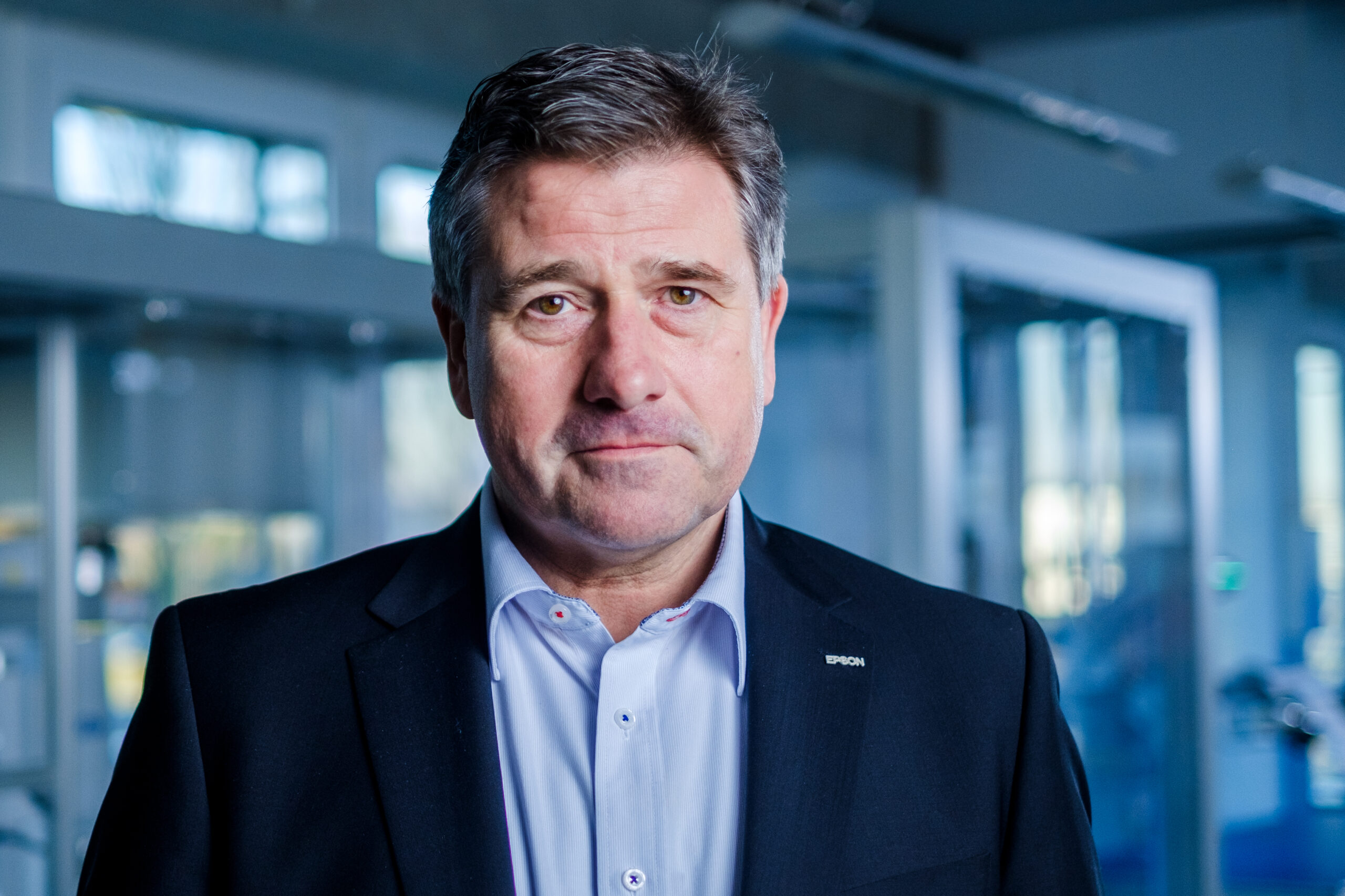
Alongside AI, robotics is undergoing its own evolution. “With robotics advancing rapidly, we are entering a new era in which machines are no longer rigid, single-task tools,” outlines Volker Spanier, Head of Manufacturing Solutions at Epson EMEA. “Instead, they are flexible, reprogrammable partners – cobots designed to collaborate with people across a wide range of roles. Far from replacing workers, these intelligent systems take on repetitive or hazardous tasks, freeing people to focus on creative, strategic, and value-adding work. As automation becomes more accessible and adaptable, the relationship between engineers and intelligent systems is becoming increasingly collaborative rather than competitive.”
Widening the talent pipeline
Whilst engineers may have more technological support than ever, and it’s clear that the role is changing rapidly, the long term success of the industry relies upon who is entering it. Representation remains a persistent challenge, and talent must continue to diversify.
Claire Hu Weber, Vice President, International Markets at Fluke, reflects on both the opportunity and the imbalance: “Engineering isn’t just about technology; it’s about possibility. It connects people, transforms industries, and shapes the future.But we also need to ask who gets to shape that future. Women still make up just 16.9% of the UK’s engineering and technology workforce. That’s not about capability, it’s about opportunity.

“If we want engineering to power a truly sustainable future, we must widen access to it,” she adds. “Imagine the ideas, creativity and breakthroughs we could unlock if more young women were given that early spark. Engineering builds what’s next. The more talent behind it, the greater the impact.”
Across the sector, the message is constituent: the engineering sector is in flux. The industry’s next chapter will be defined by how it handles these changes, including how well it implements and integrates AI, drives sustainability and broadens participation in what comes next.