Engineer News Network The ultimate online news and information resource for today's engineer
As digital infrastructure expands to support AI, cloud computing and continuous connectivity, sustainability is becoming a defining challenge for data centre operators. While significant attention is paid to power-hungry processors and large-scale cooling systems, a quieter source of energy consumption lies in the thousands of small components working continuously in the background. Among these, electrically actuated valves represent a meaningful opportunity to improve efficiency and reduce environmental impact. Greg Wainhouse explains
Modern data centres rely on precise thermal management to ensure reliability and performance. In high-density environments, heat must be removed quickly and consistently to maintain uptime. This has led to the adoption of advanced liquid-based approaches, where coolant circulates close to heat-generating components and carries thermal energy away through controlled flow circuits. These systems depend on fast, responsive valves that can react instantly to changing thermal loads.
Cumulative energy demand
However, the sustainability implications of these valves are often underestimated. Traditional solenoid valves operate using a single electromagnetic coil that must remain continuously energised to hold the valve in position. While each valve consumes only a modest amount of power, the cumulative effect across thousands of units operating around the clock is significant.
Over time, this persistent energy draw contributes not only to higher operational costs but also to increased carbon emissions. This challenge reflects a broader issue in industrial design: components optimised for performance are not always optimised for energy efficiency.
In a sector where marginal gains can translate into substantial environmental benefits, rethinking such components becomes essential. Reducing the baseline energy demand of widely deployed devices offers a scalable pathway to more sustainable operations.
Changing the design status quo
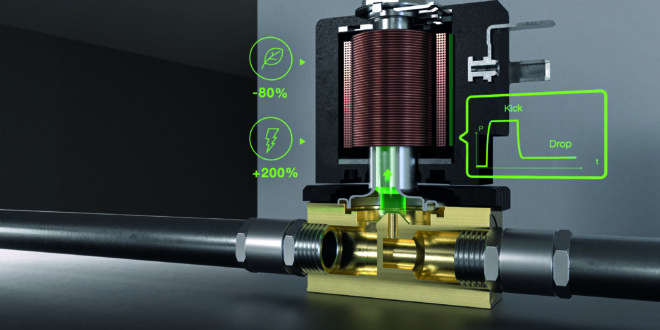
One emerging approach is the use of staged power actuation in valve design. Rather than relying on continuous high energy input, this method applies an initial surge of power to move the valve into position, followed by a much lower level of energy to maintain that state.
By aligning energy use more closely with functional requirements, this design significantly reduces overall consumption without compromising responsiveness or reliability. The implications of this shift are considerable. Across large installations, where hundreds or even thousands of valves operate simultaneously, reducing the energy requirement of each unit can lead to substantial aggregate savings.
Importantly, these savings extend beyond electricity costs. Lower energy consumption directly correlates with reduced greenhouse gas emissions, supporting broader decarbonisation goals and helping organisations meet increasingly stringent sustainability targets.
Cumulative benefits
In addition to energy efficiency, such designs can also improve thermal performance at the component level. Reduced power consumption generates less internal heat, which in turn lowers the thermal stress on materials and surrounding systems.
This can enhance durability, extend service life, and reduce maintenance requirements, all factors that contribute to both economic and environmental sustainability by minimising waste and resource use over time.
Alternative methods for improving valve efficiency, such as pulse width modulation (PWM), have also gained in popularity. These systems regulate power by rapidly switching the valve on and off, effectively controlling the average energy input.
While effective in certain applications, they introduce additional complexity and can create vibration and noise. Over extended periods, these mechanical stresses may impact system stability and longevity, raising questions about their suitability for long-term, high-reliability environments.
Simplifying the equation
In contrast, simplified approaches that deliver efficiency without added operational complexity are often better aligned with sustainability objectives. Reducing the number of components, minimising wear, and maintaining stable operation all contribute to a lower total environmental footprint.
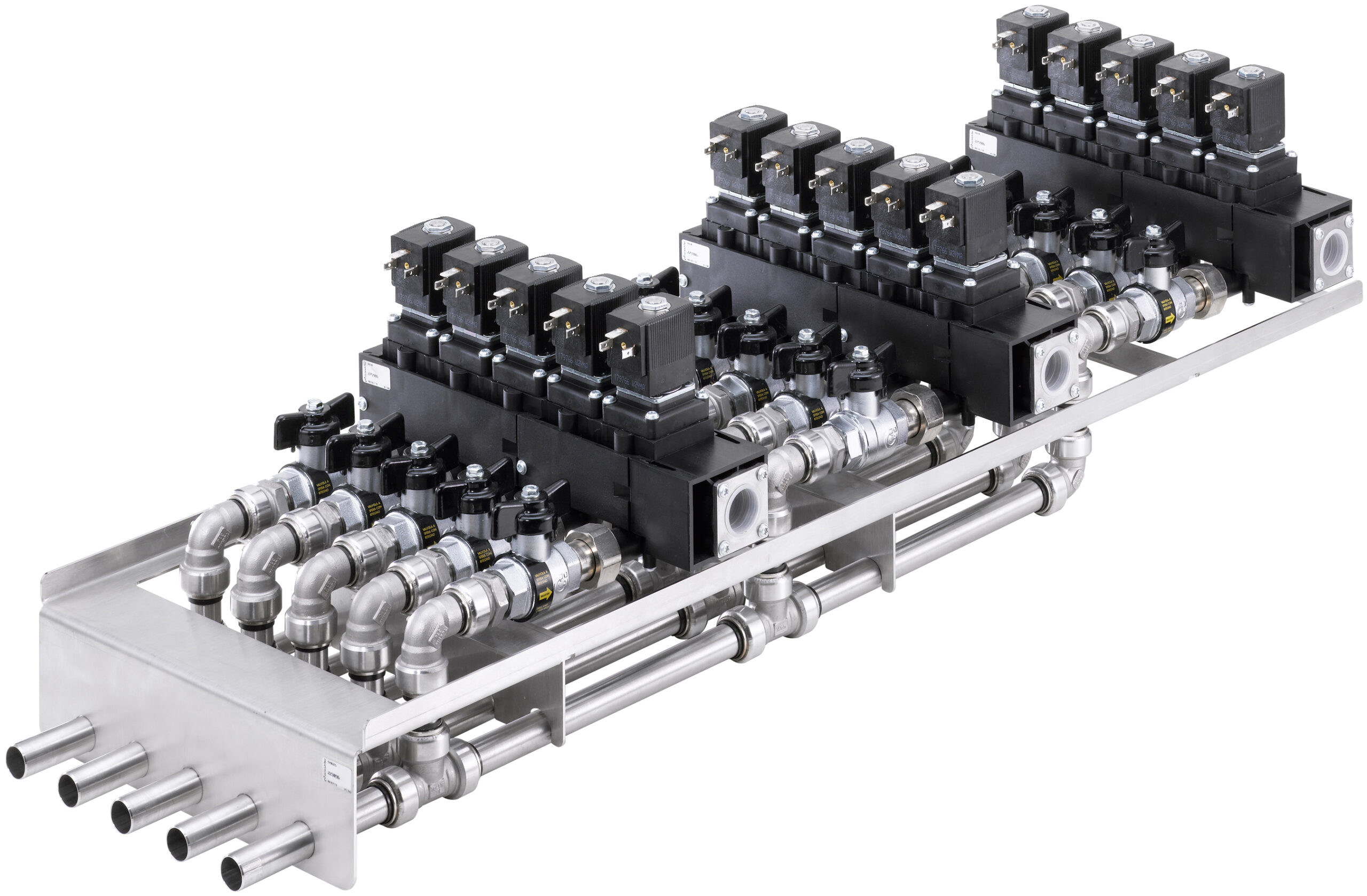
In this context, energy efficiency must be evaluated not only in terms of immediate consumption but also through the lens of lifecycle performance. System-level design also plays a critical role, as integrating components into optimised assemblies can reduce material usage, streamline installation and maintenance, and result in a more compact design.
Well-integrated systems require fewer resources to manufacture and operate, reinforcing the principle that sustainability is best achieved through holistic design rather than isolated improvements.
Cumulative efficiency gains
As the scale of data centres continues to increase, incremental innovations in component efficiency will become increasingly important. While no single technology can address the sector’s environmental challenges in isolation, cumulative gains across multiple systems can deliver meaningful progress.
The focus is shifting from headline innovations to the optimisation of every layer of infrastructure, including those that traditionally received less attention. In this evolving landscape, manufacturers are re-examining established technologies to align them with modern sustainability priorities.
Bürkert, for example, has developed its Kick & Drop coil technology as a response to the inefficiencies associated with continuously energised solenoid valves. By using a high-power ‘kick’ to actuate the valve followed by a low-energy ‘drop’ to maintain its position, the approach can reduce energy consumption by up to 80% per valve.
Beyond energy savings, Bürkert’s design also addresses durability and operational stability, with lower heat generation resulting in longer service life and reduced maintenance demands. When applied at scale, such innovations demonstrate how targeted improvements in component design can support broader sustainability goals, helping data centre operators reduce both their environmental impact and their total cost of ownership.
Greg Wainhouse is Bürkert’s Regional Business Development Manager for Industrial Water, North Europe.