Engineer News Network The ultimate online news and information resource for today's engineer
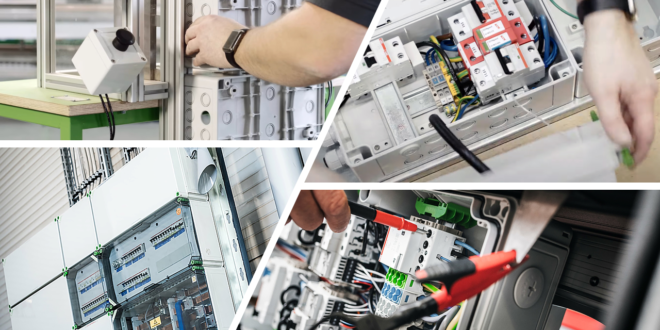
For OEMs and integrators who rely on industrial enclosures to protect their devices and control systems, assembly is another task to add to the project timeline. Fitting items ranging from DIN rails and terminals through to keypads and labelling, assembly can also be a resource-intensive activity. Instead, outsourcing enclosure assembly can streamline operations, especially when it’s managed directly by the enclosure manufacturer. Chris Lloyd explores the requirement for industrial enclosure assembly services
The UK electronic contract assembly market is growing, and it’s projected to rise further over the next decade, demonstrating demand for local contract assembly services. There are several key advantages to manufacturers and system integrators outsourcing the assembly of their completed product, or key constituent modules. What’s more, these benefits can apply not just to smaller manufacturers looking to scale up, but right through to larger OEMs facing pressures to balance productivity and profitability alongside resources.
A key challenge is labour cost, and recent economic data indicates that levels in the UK have climbed to their highest on record. This reflects aspects including wage growth and higher employer contributions, putting pressure on manufacturers with in‑house assembly teams. As a result, outsourcing labour on a contractual basis can be the less expensive option, whether that’s for smaller companies that don’t want the risk of taking on extra staff, or for larger organisations dealing with higher-volume production.
Resolving resource challenges
At the same time, UK manufacturers are facing the ongoing challenge of recruitment and retention. On the one hand, there’s a deficit in the quantity of labour required in manufacturing; on the other, there’s the need for quality, which means relevant skills and experience. While assembly services can suffer from a lack of sufficient internal resource, hiring relevant, temporary expertise can be difficult. Meanwhile, manufacturers or engineering firms don’t want to utilise more skilled staff on tasks where they could be deployed more effectively to match their capabilities.
When it comes to the integration of electrical components or electronic devices within industrial enclosures, this lends itself to external support in assembly. By their nature, industrial enclosures are self-contained units, sitting on or outside a machine or system, rather than embedded and protected within. This makes their complete or partial assembly by an external team a lot more straightforward to manage from a design integration perspective.
Typical assembly requirements for an industrial enclosure include electrical terminals and DIN rails. As a further stage, assembly services can involve the installation of devices such as I/O points, controllers, sensors, user interfaces such as keypads, as well as alarms, lights, or wider output devices. Installing these components within an enclosure can also involve adding the connections, including cables and glands.
Selecting an assembly service
When selecting an outsourced service for enclosure assembly, the common routes are either contracting a specialist electronics assembler or working directly with an enclosure supplier. The primary advantage of partnering with the enclosure manufacturer, assuming that they can offer the required assembly service, is that the approach retains accountability.
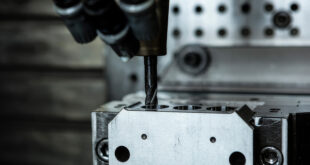
Firstly, accountability with a single supplier means a faster, more efficient process that minimises the timescale by reducing the time required for transportation and administration. Secondly, it retains responsibility for both the quality and speed of assembly with the enclosure supplier. If customisation of the enclosure is also required, such as CNC machining insert points for a keypad or cable, it makes even more sense to keep assembly requirements with the enclosure manufacturer, as this minimises the potential for errors.
At Spelsberg UK, the in-house team comprising designers, CNC machinists, and assembly specialists is scaled to work on one-off enclosures, through to large order batches. This can extend to the assembly of switchgear and control systems, through to turn-key projects. Crucially, these integrated on-site services also enable accurate and reliable project planning with a rapid turnaround.
All-service enclosure team
When specifying an enclosure, the most important thing is capabilities in protecting the device within, as well as the people interacting with it. This housing must also be reliable, achieving the right level of protection long term. However, after an OEM designer or system integrator has ensured that these key enclosure qualities can be met, it’s important to look at how efficiently the end project can be fulfilled, which includes its assembly.
Selecting an enclosure manufacturer that can provide a high-quality design, combined with an efficient assembly service, can make an in-house manufacturing or engineering team’s task a lot easier.
Chris Lloyd is Managing Director at Spelsberg UK.