Engineer News Network The ultimate online news and information resource for today's engineer
The escalating war between the US, Israel, and Iran is creating the most severe disruption to global energy markets since the 1970s. The effective closure of the Strait of Hormuz has pushed oil prices briefly above $110 per barrel within days, while the shock is spreading to shipping, aviation, and trade, raising global recession and inflation risks, according to GlobalData.
The operational profile of the war is widening beyond direct military targets and is now materially impacting commercial activity. The US and Israel have conducted more than 5,000 strikes inside Iran, targeting air defenses, naval infrastructure, and ballistic missile facilities. Iran has retaliated by targeting Israel and the US bases in Bahrain, Kuwait, Qatar, the UAE, and Jordan. This has created an elevated threat environment for critical infrastructure and cross-border trade routes in the Gulf.
Energy and maritime logistics drive immediate economic shock
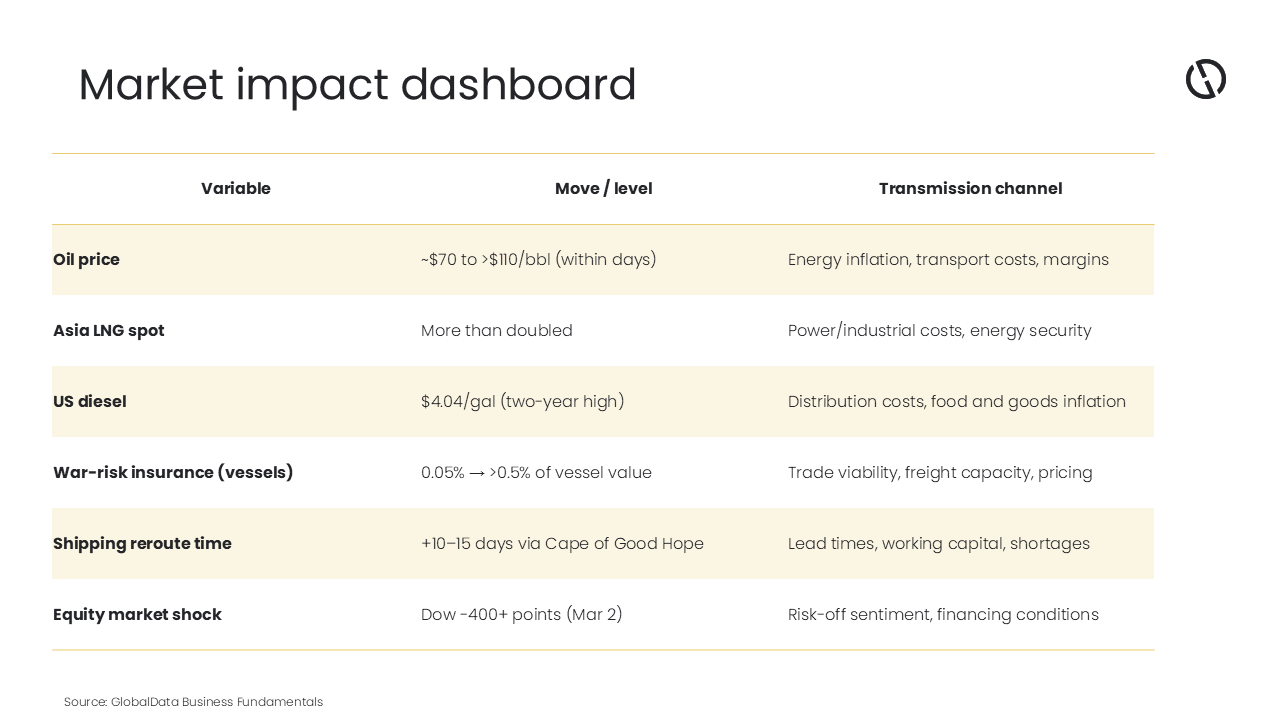
The most immediate macroeconomic impact is being transmitted through energy supply and maritime shipping. The Strait of Hormuz is effectively closed to most traffic after Iranian threats and tanker attacks, leaving nearly 200 vessels stranded. Markets have repriced rapidly: oil has jumped from roughly $70 to above $110 per barrel in days, while Asian LNG spot prices have more than doubled. Higher fuel costs are feeding directly into transportation and distribution, with US diesel reaching a two-year high of $4.04 per gallon — raising the probability of renewed inflation pressure across multiple economies.
Ramnivas Mundada, Director of Companies and Economic Research at GlobalData, comments: “Corporate disruption is already severe across several sectors. Qatar Energy and several Gulf refineries have suspended production or declared force majeure due to direct strikes and logistical blockades. Major shipping groups such as Maersk have halted Gulf operations, with many vessels rerouting around the Cape of Good Hope and adding 10–15 days to journeys alongside sharply higher fuel burn. Aviation has also been hit hard, with airlines including Emirates grounding thousands of flights due to airspace closures in the UAE, Qatar, and Kuwait, triggering immediate losses for airlines and downstream tourism economies.”
Insurance and financial markets amplify the hit
Risk pricing is intensifying the shock. War-risk insurance premiums for vessels have reportedly surged from around 0.05% to more than 0.5% of ship value, rendering some routes uneconomical and further tightening available shipping capacity for both energy and container trade. Equity markets have turned volatile; early in the conflict, the Dow Jones fell more than 400 points in a single session (March 2, 2026), reflecting investor concern over margin pressure, input-cost inflation, and broader geopolitical spillover.
Most exposed sectors
- Energy (LNG, refining, petrochemicals): highest risk from physical disruption, force majeure, and shipping constraints.
- Shipping, ports, and freight forwarding: rerouting, capacity shortages, higher bunker fuel costs, and schedule instability.
- Aviation and tourism: airspace closures, cancellations, and demand shocks across hub markets.
- Manufacturing supply chains (autos, electronics, chemicals/plastics): feedstock shortages and freight cost inflation driving delays and margin compression.
- Marine and trade insurance: premium spikes, coverage restrictions, and increased counterparty risk.
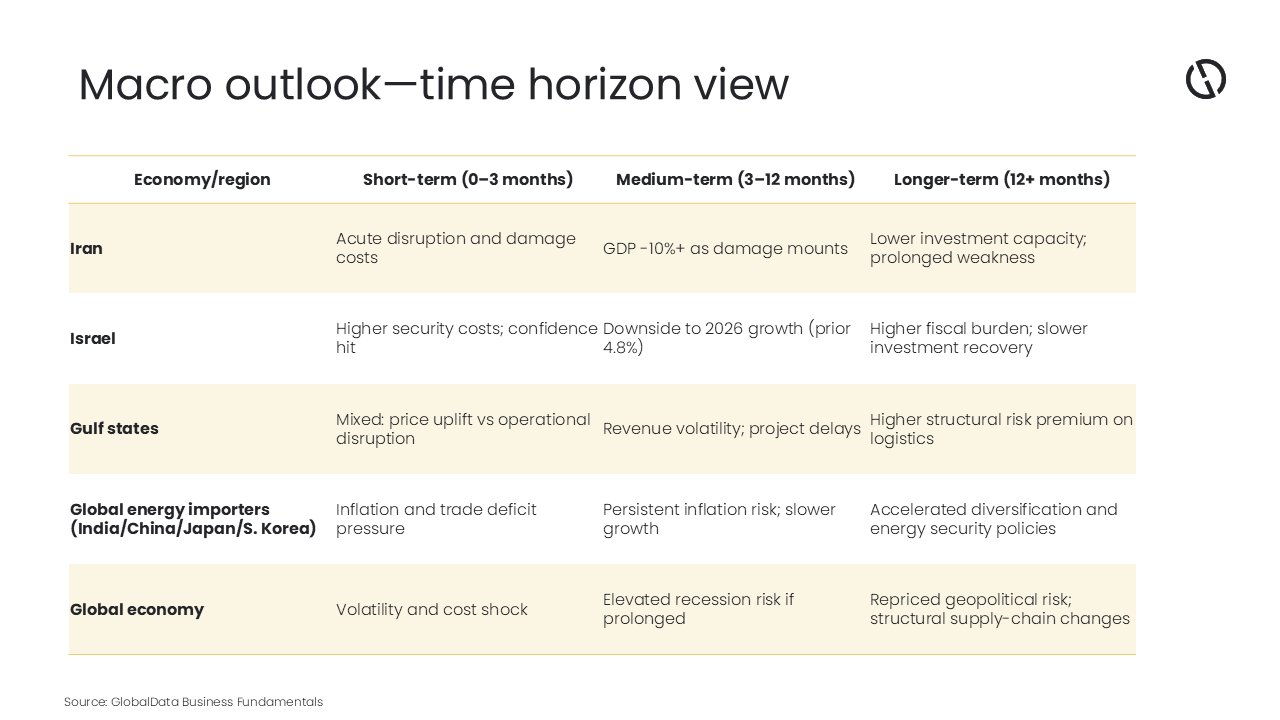
Mundada concludes: “The balance of risks remains firmly to the downside if disruptions persist. Iran faces a potential GDP contraction exceeding 10% over the next three to 12 months as infrastructure damage accumulates. Israel’s 2026 growth outlook, previously projected at 4.3% is, now faces downside risk amid higher defense spending and weaker investment. Major energy importers, including India, China, Japan, and South Korea, are particularly exposed via deteriorating trade balances and persistent inflation. If the war continues beyond two to three months, the probability of a global recession and more entrenched inflation pressures rises materially, elevating stagflation risk across multiple regions.”