Engineer News Network The ultimate online news and information resource for today's engineer
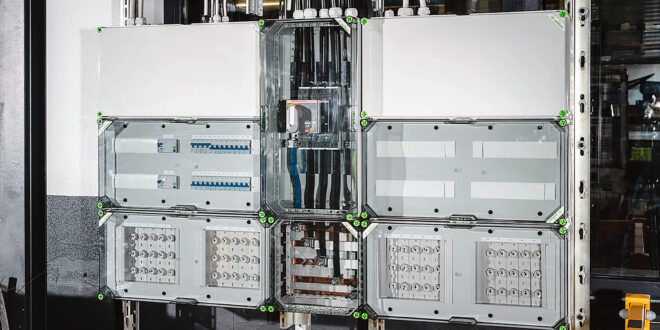
Decentralised electrification is pushing switchgear closer to load points and locations of renewable power generation. To protect distributed switchgear while ensuring fast and simple deployment, modular enclosure systems are becoming vital. Polycarbonate designs provide a tough and durable solution, offering standardisation with flexible options that enable rapid assembly and on-site installation. Chris Lloyd explains
One of the most significant drivers in switchgear design is the increasing move to decentralisation. Providing safe and controlled distribution of electricity at installations ranging from data centres to EV chargers, switchgear is increasingly located closer to the point of use.
Drivers of decentralisation
A key advantage of a decentralised approach is that it can enhance ease and speed of diagnostics and maintenance, which is particularly important for critical applications such as the control of industrial automation or traffic light systems. The minimised cabling required by decentralised systems can also reduce the time and cost of installation.
The increase in renewable energy generation has also driven switchgear decentralisation as power is produced across separate sources that require protection near the point of generation. In addition, the focus on energy use and its management has significantly expanded demand for localised metering, which requires distributed switchgear to provide accessible points of circuit separation.
Moreover, in practical terms, the reduced skills force impacting the UK and Europe is contributing to the change. With fewer interdependencies per installation point and lower wiring density, installation and commissioning of decentralised switchgear modules is significantly easier and faster.
Protecting switchgear
This means that switchgear design needs an external housing that can protect both the switchgear and those in contact with it, while still being sufficiently fast and simple to assemble and install. Increasingly, switchgear installers are turning to high-strength, plastic-based enclosures, such as polycarbonate designs, to fulfil these needs.
Polycarbonate enclosures are lightweight yet still provide the strength and resistance to ingress, impact, and unauthorised entry that metallic enclosures offer. In addition, the material provides corrosion-free, long-life use, which is particularly important when switchgear is installed outside, or if exposed to harsh environments.
The key advantage, however, of a polycarbonate enclosure is the ease of installation. The primary requirement is flexibility to suit the array of switchgear devices and their required configuration. A matrix of conjoining enclosures is not only easier to handle and install, but this approach allows scalability and modularity as the requirements of switchgear changes or expands over time.
Simple installation
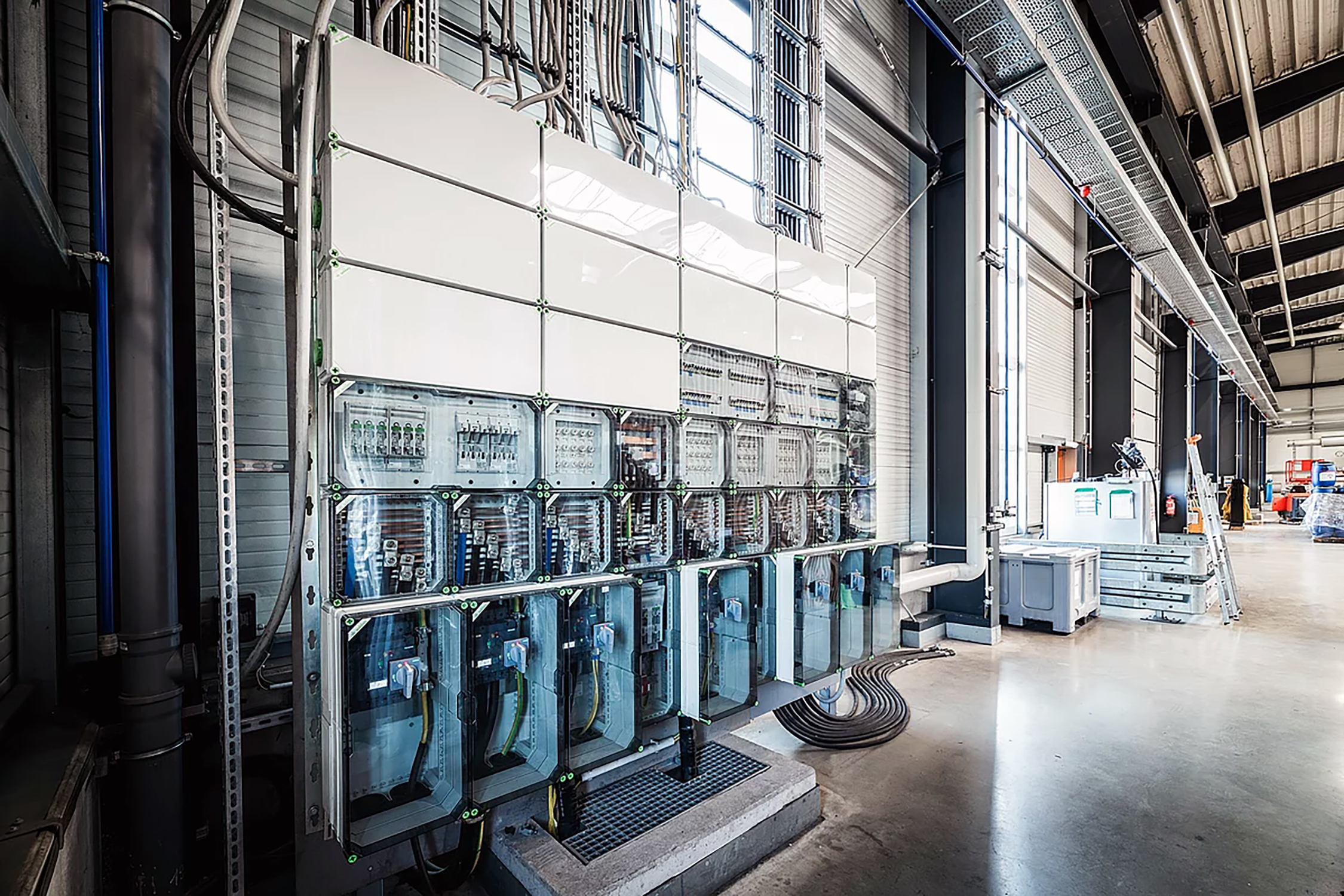
While various polycarbonate enclosures are available with knock-out walls, the Spelsberg GTi ISO insulated distribution box, designed specifically for switchgear, is based around an open housing. Together with a range of easy cable and component fixing options, this design can save significant time in assembly and installation.
These enclosures feature a base with upright corner angles that allow open walls, enabling multiple enclosures to be secured together with a plug-in, tool-free process. Components and wiring can be connected through the adjoining housings, while any openings that are not required are sealed with panels to retain IP and mechanical integrity. A variety of flanges are also available to accommodate various size cable entry and exit points.
Faster for all switchgear approaches
The freedom offered by this system makes on-site installation significantly faster and easier, removing the need for knocking out walls – or even drilling entry points. In addition to the empty enclosures, all the required supporting equipment for installation, such as bus bars and mounting plates, are provided. This method also standardises the internal architecture, meaning that if elements of on-site assembly are required, electrical installers do not need to redesign the layout for each enclosure. Meanwhile, the use of bus bars minimises the requirement for complex, point-to-point wiring.
Alternatively, for switchgear builders developing the architecture off-site, these same advantages help to turn the process into a factory production line rather than project engineering. The standardisation of bus bars, mounting rails, and cable entry/exit points provide a repeatable design that speeds up assembly and also makes testing and fault detection a more streamlined process.
While pre-assembled switchgear makes on-site installation much faster by design, the approach offered by the GTi enclosure enhances this further still. The precise alignment of adjacent units and predefined coupling points for busbars avoid any mismatch between units and ensure a seamless fit.
Assembly and customisation
To support switchgear builders and on-site teams, Spelsberg’s services also extend to assembly and wiring support. The UK engineering team can fit bus bars and mount switchgear components like circuit breakers or contactors, alongside CNC customisation. Meanwhile, with the support of Spelsberg’s Germany engineering hub, ready-to-install, fully wired switchgear systems can also be provided if required for specialised projects.
Decentralised switchgear systems are now an established response to the demands of distributed energy, electrification, and complex load management across modern infrastructure. Against this backdrop, modular enclosure systems that optimise flexibility in design, assembly, and installation, while enabling scalable electrification, are becoming an essential part of switchgear itself.
Chris Lloyd is Managing Director at Spelsberg UK.