Engineer News Network The ultimate online news and information resource for today’s engineer
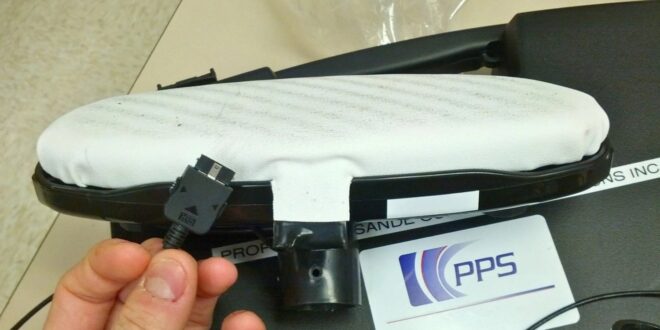
When Professor Gerry Sande, an experienced curling coach and academic at University of Manitoba, needed a way to turn physically demanding sports skills into quantifiable performance data, he turned to tactile sensor specialist PPS who developed a smart training brush. The brush’s embedded pressure sensors could measure an athlete’s sweeping efficiency and identify strengths and weaknesses, facilitating technique improvements. The collaboration on the purpose-built curling brush contributed to Olympic and World Championship success.
Sande Curling was founded by Professor Gerry Sande, a nationally certified curling coach and academic who holds multiple curling-related patents and has coached and worked with many Olympic and World Champion curling teams.
In the early 2010s, Prof Sande began exploring how to objectively measure sweeping efficiency and how this can be used to improve technique. He wanted increased insight into factors such as downward force, sweeping cycles per second, performance efficiency over time, fatigue-related power loss and technique consistency, but the technology required to reliably measure them had not yet been developed.
Believing the solution could lie in pressure sensing, Prof Sande researched the technology online and discovered PPS. Working together from January 2013, the cooperation resulted in a system capable of providing detailed analysis of sweeping performance, including how and where athletes apply pressure, as well as how efficiency changes with fatigue.
Sweeping performance data unlocked
The innovation of the curling training brush is underpinned by PPS’ DigiTacts thin-film pressure sensor arrays. PPS integrated the sensors into the brush and provided Prof Sande with Bluetooth transmission hardware, data capture and visualisation software, and remote training and technical support to enable effective deployment and meaningful use of the data.
To integrate the technology into the curling brush, a slot was cut into the brush head so the sensor tail and cable could be routed internally. The sensor tail was fixed at a 90-degree angle to the plate edge, allowing the electronics to sit securely inside the brush head. This ensured the sensor remained stable for accurate measurement while also protecting it from impact, moisture, snow and debris during on-ice testing. The system also synchronised pressure data with video footage, enabling detailed performance analysis and remains fully operational more than a decade later.
Here, DigiTacts measures force via an array of pressure sensors while also capturing sweeping frequency. This data is streamed wirelessly to a laptop, with live video footage and force traces synchronised directly on screen.
The technology makes it possible to identify where declines in performance are fatigue-driven, supporting long-term analysis of an athlete’s stamina and efficiency. It also allows coaches to compare a team’s sweepers, informing role placement and training focus.
Under test, the training brush revealed performance characteristics that would otherwise have gone unnoticed. For example, the data gathered for a Swedish player under test showed the athlete lost pressure on every fifth stroke.
This insight allowed coaches to adjust the player’s footwork and improve his technique, helping increase efficiency by as much as 50 percent. The data also provided a powerful indicator of stamina, helping teams understand how much sweeping performance declined during sustained effort and how targeted conditioning could reduce that drop-off.
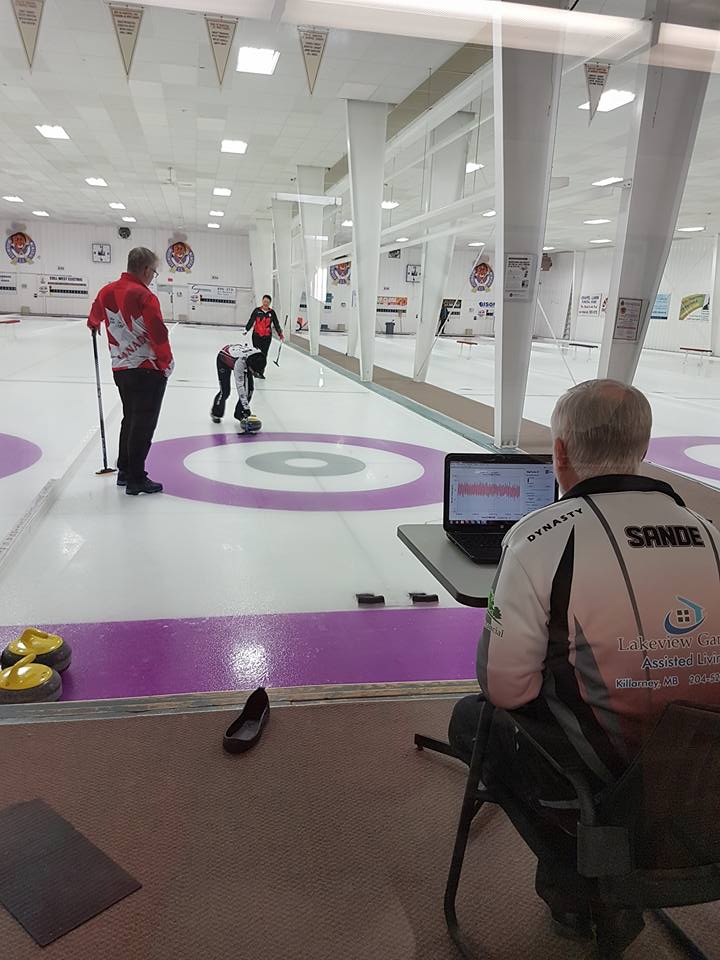
Data-driven gold
Prof Sande has put the training brush developed with PPS to use for more than a decade in a wide range of contexts, from elite performance testing to national team environments. It has been used to assess and refine technique in teams and athletes who have gone on to win national championships and Olympic medals, with those performance gains ultimately applied in elite-level competition using standard equipment.
He quickly found that the ability to correct sweeping technique, improve force consistency, quantify the effects of fatigue and understand individual strengths and weaknesses provided a significant performance advantage. In fact, the system has been used by teams who went on to win Olympic gold medals and World Championship titles.
Success and failure in elite-level curling often comes down to a matter of millimetres, so what might seem like marginal gains in player performance make a major difference on a team’s results on the ice.