Engineer News Network The ultimate online news and information resource for today's engineer
A robot equipped with artificial intelligence was able to build unstable oil-in-water droplets as models for new artificial life forms.
It was also able to predict their properties ahead of time even though conventional physical methods failed to do so, according to University of Glasgow research published in the journal PNAS.
The project is part of a set of experiments to explore the formation of artificial life forms that are based upon new building blocks not found in nature, as well as the development of programmable formulations that could have applications in areas as diverse as drug delivery or new functional materials.
The droplet-robot uses machine learning and evolution and was designed by Professor Lee Cronin, the University’s Regius Chair of Chemistry, and his team to autonomously create a range of oil-in-water droplets and evaluate their behaviour using image recognition.
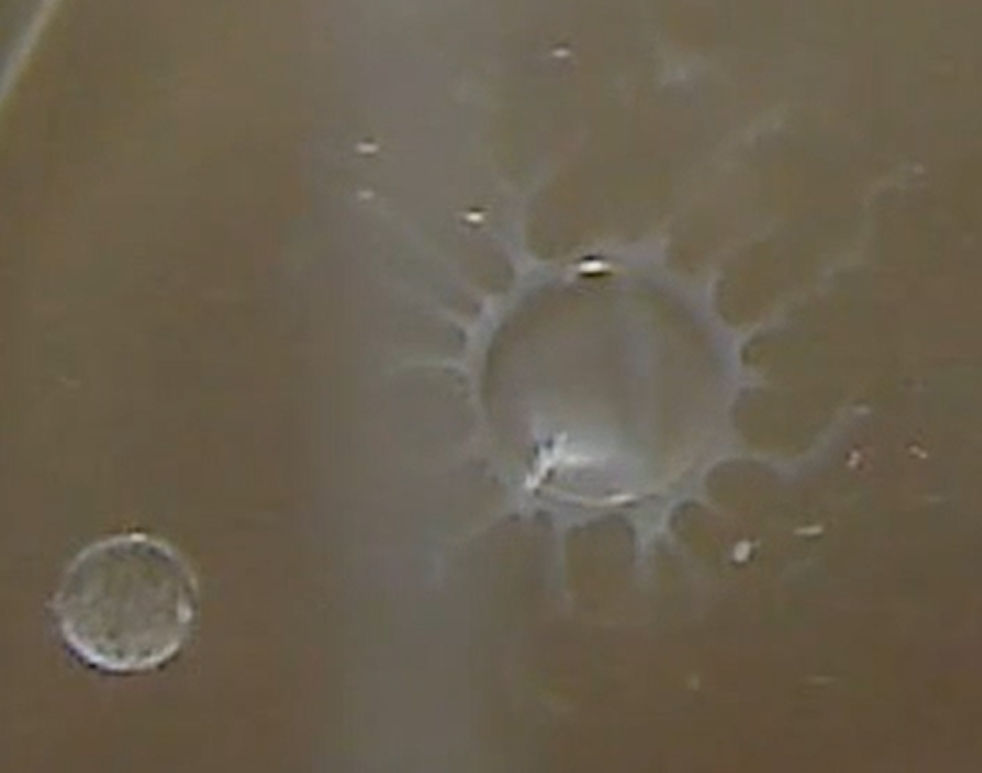
By varying the range of different chemicals making up the oil and water formulations, the droplets could be engineered to have different desirable properties. Once the new properties were discovered they could then be manufactured again, on demand, using a digital code.
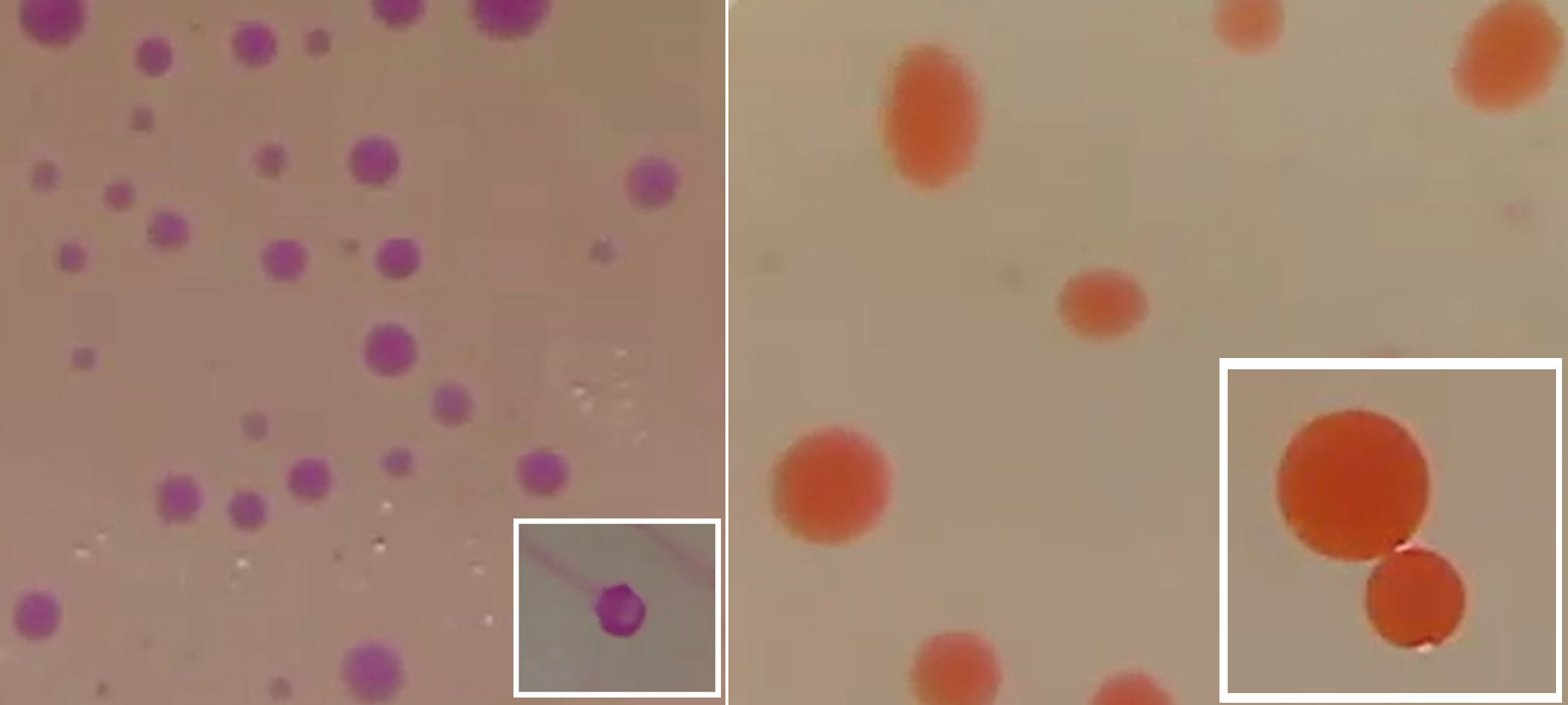
Professor Cronin said: “This work is exciting as it shows that we are able to use machine learning and a novel robotic platform to understand the system in ways that cannot be done using conventional laboratory methods, including the discovery of ‘swarm’ like group behaviour of the droplets, akin to flocking birds. Achieving lifelike behaviours such as this are important in our mission to make new lifeforms, and these droplets may be considered ‘protocells’ – simplified models of living cells.”

This research is funded by the University of Glasgow complex chemistry initiative as well as the European Research Council and the Engineering and Physical Sciences Research Council.
Additionally, the business activity of Cronin Group Plc, the AIM listed company of which Professor Cronin is the founding scientific director, is the digitisation of chemical space.