Engineer News Network The ultimate online news and information resource for today’s engineer
Modern manufacturing depends on more than just machinery, its precision often depends on the engineered abrasives shaping each surface. Tom Dustman explores this topic, providing solutions and insight
In the world of precision manufacturing, precision bore honing abrasives do more than polish a surface, they shape the way components perform across their entire lifecycle. From ensuring the seal integrity of aerospace hydraulics to fine tuning combustion chambers in remanufactured automotive engines, abrasive technology quietly plays a critical role in producing parts that are safer, more efficient, and longer lasting. Despite their widespread use, engineered abrasives are frequently misunderstood as simple one-size-fits-all tools that are easily interchangeable. This oversimplification masks the true potential of abrasive technology. To understand the full impact of precision bore honing abrasives, it helps to think of them not as consumables, but as engineered cutting tools with performance characteristics that must match, and even anticipate, the demands of new materials and applications.
Precision beneath the finish
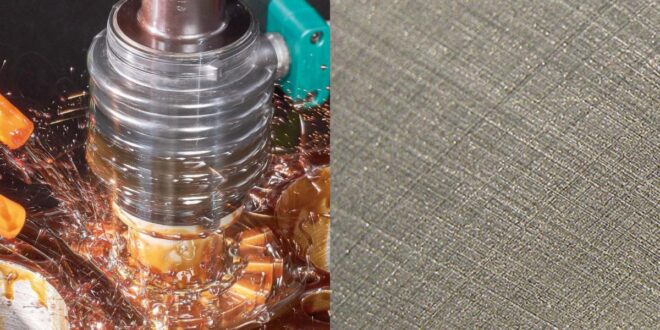
While several finishing methods like grinding and lapping to roller burnishing exist, abrasive honing remains a go-to solution for achieving high precision surface finishes and tight dimensional tolerances. Unlike high speed grinding, honing is a low speed, high accuracy process that reduces heat distortion, eliminating the ‘white layer’ of stressed metal, and leaving behind a crosshatch pattern ideal for lubricant retention.
The advantages of precision bore honing abrasives are especially clear in critical applications like hydraulics, where a single burr or imperfect bore can lead to leakage or system failure. In automotive remanufacturing applications, the demand for higher power density and lower emissions has driven tighter tolerances amongst more complex surface requirements. Bore finishes that once required only a single roughness parameter now must meet up to five separate metrics. These tighter specifications place higher demands not only on machine tools, but on the engineered abrasives themselves.
The rise of superabrasives
One of the most transformative advancements in the past 50 years has been the emergence of ‘superabrasives’, specifically those composed of industrial diamond and cubic boron nitride (CBN). These materials are tougher than traditional silicon carbide or aluminium oxide, and offer approximately 100 times the tool life of conventional precision bore honing abrasives. When bonded in a metal matrix, they retain cutting performance much longer, minimizing tool changes and reducing downtime in automated production lines.
Precision bore honing superabrasives have also unlocked the ability to finish increasingly tough materials, like Inconel in energy sector components or compacted graphite iron (CGI) in remanufactured engine blocks, that would quickly degrade conventional engineered abrasives. In these cases, material hardness isn’t the only challenge. Different materials demand engineered abrasives tailored not just by hardness, but also by grit concentration, bond type, and geometry. This complexity has given rise to a new class of precision bore honing abrasives that are no longer off-the-shelf tools, but tightly engineered products tailored to specific applications.
Many commodity abrasive suppliers focus on minimising cost, often sourcing low grade abrasive particles with weak crystal structures. These materials may meet basic specifications on paper, such as grit size or shape, but under the microscope, their internal structure tells a different story. Microfractures and inconsistencies lead to premature breakdown, unpredictable wear, and erratic performance.
By contrast, engineered abrasives consider a broad spectrum of variables:
• Particle type and hardness: For example, on the Knoop hardness scale, industrial diamond ranks around 7400, CBN around 4700, silicon carbide at 2600, and aluminum oxide at 2100.
• Crystal structure and coating: Tin or copper coatings can enhance bonding and wear resistance.
• Bonding materials: Glass, ceramic, and metal matrices affect how the abrasive responds under pressure and heat.
• Grit concentration and shape: Tighter packing densities and varied geometries influence chip load and consistency.
Choosing the right combination of these factors determines not just whether a part can be honed, but how efficiently, how precisely, and how repeatedly it can be done.
New materials, new challenges
As industries shift toward lighter, harder, and more wear resistant materials, especially in aerospace, energy, and EV applications, abrasive technology must keep pace. Hydraulics manufacturers, for instance, are under increasing pressure to meet ‘zero leak’ mandates. This level of precision requires not only a matched piston-to-bore fit, but also burr free cross holes that can only be achieved through optimized honing.
The need for longevity and performance consistency also feeds into broader sustainability goals. Longer lasting engineered abrasives mean fewer changeovers, less scrap, and more uptime — crucial in continuous manufacturing environments. Manmade materials like ‘seeded gel’ aluminium oxide, engineered from scratch rather than mined, have added another layer of control. These synthetics feature uniform crystal structures and custom engineered bonds, offering improved wear resistance and surface consistency in a growing range of applications.
With more than a century of experience in bore sizing and surface finishing, Sunnen has contributed to the evolution of abrasive technology by integrating materials science with process engineering. Rather than viewing engineered abrasives as off-the-shelf consumables, the company approaches them as precision tools that must be matched to specific performance requirements. Over time, Sunnen brought abrasive manufacturing in-house, allowing for greater control over quality and consistency. Rather than relying on patents, the company has developed proprietary processes that guide how it selects particle types, bonding methods, and abrasive geometries. This internal expertise supports both standard catalog offerings and highly customized solutions, depending on the application.
One distinguishing factor is how Sunnen’s precision bore honing abrasives are developed alongside its honing machines and control systems. This co-design approach helps ensure that the abrasive performs reliably within the larger system, particularly in applications where precision is non-negotiable, such as engine cylinder bores or aerospace hydraulic valves. In practice, this alignment can support more stable tool life, reduced downtime, and more consistent results across production batches.
Where abrasive technology is headed next
Looking ahead, advancements in synthetic precision bore honing abrasives, coatings, and bonding systems are expected to continue reshaping the industry. Precision will only grow in importance as sectors like EVs, aerospace, and renewable energy demand tighter tolerances and tougher materials. Simultaneously, the rise of automation and data driven manufacturing will place a premium on predictable tool life and repeatable performance, attributes that only high quality, engineered abrasives can deliver. As manufacturers reevaluate their processes through the lens of productivity, sustainability, and material science, engineered abrasives are no longer just the end of the line. Precision bore honing abrasives have become vital contributors to solutions, performing as cutting tools themselves and subtly shaping the future of precision manufacturing.
Tom Dustman, Director of Sales, Americas at Sunnen Products Company.