Engineer News Network The ultimate online news and information resource for today's engineer
Statistics show that the overall numbers of women in the field of engineering today are still much lower than their male counterparts, despite ongoing efforts to encourage more women into the industry. Just 17% of the UK’s engineering and technology workforce are women, compared to 56% of other occupations, highlighting how much work there is still to be done to achieve gender balance. Interestingly, however, UCAS admissions data revealed that nearly a fifth of engineering and technology degree programme applicants were female – a rise of 17%. This is proof that change is possible, particularly for future generations – but only with the right approaches and support in place
Engineering is in many ways a discipline at the forefront of innovation. From tackling sustainability challenges to advancing artificial intelligence, few industries are changing the world as rapidly. Yet when it comes to gender diversity, it continues to lag behind. Women remain significantly underrepresented in the profession, accounting for just 17% of the UK’s engineering and technology workforce.
There are encouraging signs of progress. UCAS admissions data recently revealed that nearly a fifth of engineering and technology degree programme applicants were female, marking a 17% increase. However, while more women are entering the pipeline, industry leaders argue that attracting talent is only part of the solution. Creating environments where women can thrive, progress and lead remain equally important.
This International Women in Engineering Day, female leaders from across the technology and engineering sectors shared their experiences, the challenges they have faced, and what still needs to change.
Finding opportunity in engineering
For many women working in engineering today, their career paths began with curiosity and a desire to solve problems.
Claire Hu Weber, Vice President of International Markets at Fluke Corporation, recalls one of the defining moments of her career progression. “One of my earliest leadership roles introduced many new challenges,” she says. “In my first engineering manager role, I led a team of experienced nuclear engineers, most of whom were decades my senior. As a young woman, I knew I could not rely on seniority or tenure. I had to earn credibility by adding real value.”

Rather than focusing on hierarchy, Hu Weber concentrated on helping her team succeed.
“My focus was on simplifying complexity, aligning our work to clear outcomes, and helping the team see how their technical knowledge could be commercially impactful. That experience taught me that leadership is not about how long you have been in the room. It is about how effectively you can help others succeed.”
For Estelle Azemard, CEO of Leaseweb Canada, engineering’s appeal lies in its growing influence on the future. “If you go back a few decades, engineering was often viewed as a fairly straightforward discipline,” she reminisces. “You were building a bridge. Designing a system. Solving a technical problem specifically. As a society, today, engineering sits at the center of almost every major conversation. AI. Sustainability. Healthcare. Transportation. Energy. Digital infrastructure. Engineers are helping shape what the future looks like, in many important ways.”

Navigating a male-dominated industry
But it’s not always easy for women in the sector. “All too often, female engineers find themselves as the lone woman in a room full of men,” points out Paula Reichert, VP Northern Europe at AVEVA. “As a result, many find it difficult to build strong relationships with colleagues because this lack of diversity makes shared experiences scarce.”

Susan Odle, CEO at StorMagic, faced a similar challenge early in her career. “When I entered the workforce, it was transparently a man’s world, and I had to make a conscious choice to become a part of it,” she explains. “While the nature of the challenge may have changed, the ability to persevere and succeed despite complexity is exactly how women will continue to shape the future of technology.”
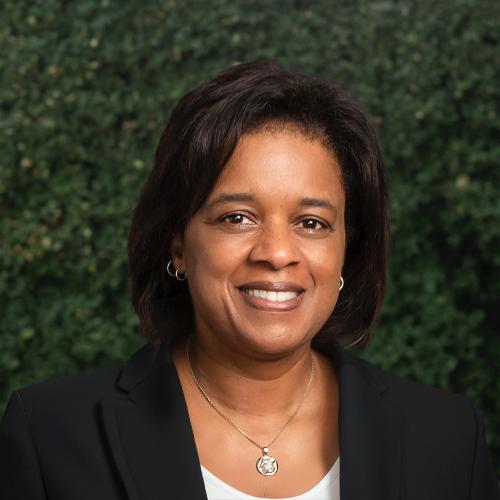
At the same time, she believes resilience has become an increasingly important skill for everyone working in technical fields.
“The technology playing field is changing, and while technical knowledge remains vital, resilience has become equally important. Priorities are constantly shifting due to economic and geopolitical uncertainty, which is now a part of everyday work experience.”
Diversity driving innovation
At its most basic level, increasing opportunities for women in engineering is about fairness. But it’s also about improving innovation, collaboration and even business outcomes.
At AVEVA, Reichert sees first-hand how engineering is helping organisations tackle some of the world’s biggest challenges. She explains: “Engineering is helping industry use resources more responsibly, from mining companies using real-time data to monitor environmental impact, to power generation customers building digital foundations for renewables, grid integration and future digital twins. These challenges need different perspectives – perspectives that can only come from a more diverse workforce.”
“The challenges we’re facing are not getting less complicated, they’re growing,” agrees Leaseweb’s Azemard. “And when problems get more challenging, different perspectives become incredibly valuable.”
“The industry talks a lot about talent shortages. And, rightly so,” she adds. “Creating opportunities for more women to enter and thrive in engineering isn’t simply good for representation. It’s good for engineering. Because the future is going to belong to the organisations that can bring together and deploy the best ideas, regardless of where they come from.”

Leanne Taylor, CEO at Syspro, sees similar benefits within manufacturing and distribution.
“What I’ve learnt over the years is that when you put capable women in the room as problem-solvers and decision-makers, not just as a token presence, that is when outcomes really improve. This matters even more as AI becomes embedded within manufacturing and distribution at pace. The systems being designed today will shape the industry for the next decade and who builds those systems is not a diversity checkbox. It’s a question of who has the abilities we need to succeed.”
Bridging the gap
It’s clear that organisations could benefit from more female talent – the next step is for them to take a more active role in attracting and retaining it.
Visibility is critical. “To bring more women into the industry, we have to make engineering feel more visible and viable for the next generation,” explains AVEVA’s Reichert. “Young women need to see the purpose of the work and the real people behind it. It’s also important to highlight the many different routes in, whether this be apprenticeships, mentoring, or higher education courses.”
Fluke’s Hu Weber also highlights the importance of role models. She points out: “Girls remain less likely to say that engineering is suitable for them or that it fits well with who they are, and make up just 12% of engineering and technology T Level students across the country.”
“We cannot afford to lose talent because girls aren’t seeing any role models in the industry; diversifying the workforce is now imperative for organisations to be able to empower and encourage more women to join.”
“Programmes that connect young people with role models and real-world experience are so important in helping the next generation of engineers build confidence and see what’s possible,” echoes Maisara Fatima, Electronics & Electrical Engineering Student at Strathclyde University and Cirrus Logic Scholar.
“The support I’ve received through the Cirrus Logic Scholarship has given me the confidence to step outside my comfort zone, develop new skills and gain valuable industry experience. It has opened doors I’d never imagined.
“Through mentorship, networking opportunities and now an internship, I’ve been able to see first-hand the impact that engineering can have and the exciting career paths available in the sector.”
Advice for the future
For women and girls considering a career in engineering, the message from industry leaders is clear: take the leap.
Hu Weber encourages young women to back themselves: “My advice to women and girls is to believe in your potential, even when others hesitate. Do not wait to feel completely ready, just start.”
“Build your support system early, with teachers, peers, family, mentors and colleagues who believe in your ambitions.”
And for those still unsure whether engineering is the right path, Syspro’s Taylor offers a simple message: “On International Women in Engineering Day, my advice to the young women considering a career in engineering or industrial technology is this: this industry needs your perspective and contribution. The obstacles may still be there, but so is the opportunity to shape something that matters.”
As organisations across the industry mark International Women in Engineering Day, it’s time to look beyond awareness campaigns. Real change requires visible role models, inclusive cultures, practical support and a commitment to recognising talent wherever it exists.