Engineer News Network The ultimate online news and information resource for today's engineer
Collaborative robots, or cobots, are mainly used as assistants in simple or interactive activities and, in contrast to large and fast industrial robots, work hand in hand with humans.
That is why cobot and industrial robot service engineers are already using igus’ multi-axis round triflex R e-chains.
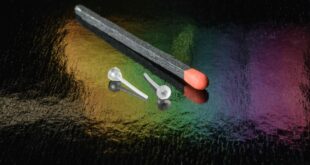
In addition to conventional metal clamps for industrial robots, igus has developed new plastic mounting clamps that attach the energy chain to the robotic arm both quickly and easily.
The new clamps are suitable for cobots from Universal Robots, TMS and KUKA LBR iiwa robotic arms.
Designed rounded edges the plastics clamps also help increase workplace safety by reducing the risk of injury when in contact with the cobot.
The plastic clamps can be quickly attached to the robotic arm via a screw connection and the triflex R is attached to the clamp by a simple clip and fixed into place.
By combining the flexibility of a hose with the stability of an energy chain, the round triflex R ensures reliable cable guidance in multi-axis movements.
A ball/socket principle ensures high tensile strength and easy installation of the e-chain. Interior separation and the prevention of over-stressing also increases service life and operational reliability of the application.
The triflex e-chains are available as a complete package with cobot designed clamps, cables and connectors immediately ready for connection.