Engineer News Network The ultimate online news and information resource for today's engineer
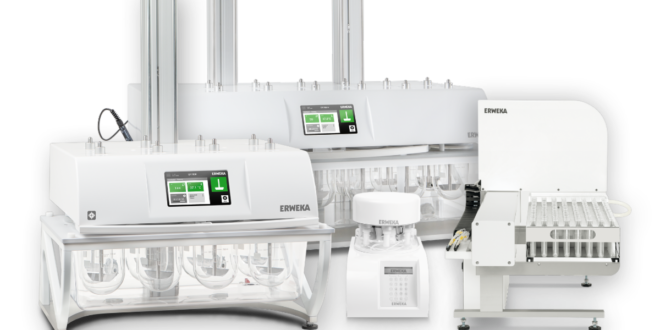
Martin Kühn and David Kötterheinrich explain how pharmaceutical labs can automate dissolution testing to improve consistency, efficiency, and data integrity. It highlights a phased approach to building a fully automated ‘lights-out’ lab that increases throughput and delivers strong long-term ROI
In pharmaceutical quality control and research laboratories, dissolution testing remains one of the most critical, and closely regulated, analytical processes. It determines how a drug product releases its active pharmaceutical ingredient under defined conditions, directly influencing batch release decisions, regulatory compliance, and ultimately patient safety.
Yet while production environments have embraced high levels of automation, many dissolution labs still operate with partially manual workflows. Sampling by hand, paper based documentation, shift handovers, and fragmented data systems introduce variability, delay, and risk. As cost pressures increase and regulatory scrutiny intensifies, laboratories are reexamining what a fully automated dissolution lab actually means in practical terms, and how to move toward that goal in a realistic, phased way.
A fully automated dissolution lab is an integrated, end to end architecture that enables reproducible testing, continuous throughput, and reliable data integrity. Understanding its building blocks, and how they function together, is the first step toward designing a future ready laboratory.
The core architecture of an automated dissolution environment
A dissolution workflow involves far more than immersing tablets in media. A complete cycle typically includes apparatus setup, media preparation, sample loading, timed sampling, potential secondary filtration, transfer to analytical instrumentation, and cleaning in preparation for the next batch. In a traditional laboratory configuration, many of these stages are handled independently. The dissolution bath operates as one unit, samples are manually collected and transferred, analytical testing occurs on a separate instrument, and documentation is recorded either on paper or in disconnected systems. While compliant, this approach creates multiple handoff points, each one a potential source of delay, inconsistency, or transcription error.
In an automated environment, these elements are architected to function as a coordinated system rather than isolated instruments. The dissolution tester, automated sampling module, fraction collector or direct injection interface, and UV–Vis or HPLC system are integrated through centralized control software. Timed sampling is synchronized precisely with analytical measurement. Temperature, paddle speed, and sampling intervals are recorded automatically. Data generated during dissolution flows directly into analytical platforms and is compiled into structured batch reports.
Higher levels of automation extend this integration further, enabling robotic platforms to manage the full sequence from vessel preparation through cleaning and readiness for the next run. Instead of operators moving physically between instruments, the workflow progresses seamlessly within a single connected architecture. The result is not simply faster testing, but a unified system that improves repeatability, reduces manual intervention, and strengthens overall process control.
From manual testing to ‘lights out‘ operation
In its most advanced form, a fully automated dissolution lab operates with minimal human intervention. Analysts prepare methods and load samples, initiate the run, and the system performs the repetitive, time sensitive tasks automatically, often overnight or across weekends. The concept is sometimes referred to as a “lights out lab,” where the equipment continues executing validated workflows while personnel focus on higher value analytical or research activities.
The motivation is not simply labor reduction. In fact, many pharmaceutical laboratories cite skilled labor shortages and increasing documentation demands as primary drivers of automation. Furthermore, dissolution runs frequently extend beyond a single operator’s shift. When one analyst starts a 12 hour run and another finishes it, handovers introduce documentation burden and the potential for deviation. Manual sampling techniques, such as withdrawing aliquots with a cannula and syringe, can vary subtly based on operator speed, positioning, or technique, influencing reproducibility.
If unexpected results occur at the end of a long run, the consequences are significant. A batch may be placed on hold, investigations initiated, and retesting required, consuming additional time and capital. Automated systems execute sampling and timing identically, every time, reducing this variability and strengthening reproducibility. In this sense, automation is as much about risk mitigation and consistency as it is about speed.
One of the most important strategic insights for laboratories is that full automation is rarely an overnight transformation. Transitioning directly from manual sampling to a fully robotic solution can disrupt workflows, training requirements, and operational culture. A more sustainable approach is phased automation. Laboratories often begin with standalone dissolution testers, then add automated sampling modules, followed by offline or online integration with UV–Vis or HPLC systems. Over time, these systems can be upgraded further with additional pumps, fraction collectors, and enhanced software modules, protecting the initial investment while increasing capability.
This scalability ensures that automation aligns with evolving throughput demands and budget realities. Importantly, future proof system architecture allows laboratories to expand without replacing foundational equipment.
Throughput, reproducibility and ROI
Automation’s financial case rests on both tangible and intangible factors. From a throughput perspective, automated systems enable 24/7 operation. In many organizations, tablet production is highly automated and continuous, yet quality control remains a bottleneck. Accelerated testing and batch release allow finished products to reach market sooner, improving cash flow and freeing working capital.
Return on investment calculations typically compare current labor hours, retesting frequency, documentation time, and equipment utilisation against projected automated workflows. While utilizstion rates vary, many laboratories observe payback periods of less than two years, depending on volume and operational structure.
Equally significant is reproducibility. Common operator errors in dissolution testing include inconsistent media preparation, sampling outside defined time windows, or technique related variability. Automation standardizes these steps, reducing the likelihood of deviations that could trigger investigations or delayed batch release. Although the cost of an error is difficult to quantify precisely, the downstream impact of failed releases, regulatory findings, or repeated analyses often exceeds incremental labor savings.
Integration in practice: scalable platforms for modern laboratories
As laboratories evaluate automation strategies, the ability to scale over time becomes a defining consideration. ERWEKA, a global manufacturer of pharmaceutical dissolution and tablet testing equipment, has structured its portfolio around this principle of upgradeability and integration depth. At the foundational level, ERWEKA provides pharmacopeia compliant dissolution testers for widely used USP Apparatus 1 and 2 methods, while also supporting the full USP 1 through 7 range for diverse dosage forms, including transdermal systems and specialized applications. This breadth allows laboratories to standardize across multiple product categories rather than relying on separate vendors.
As automation needs increase, ERWEKA systems can be configured to incorporate automated sampling, offline fraction collection, or online integration with UV–Vis and HPLC instrumentation. In advanced configurations, samples can be transferred directly into the analytical loop of an HPLC system, streamlining the workflow from dissolution to quantification. Because the same base platform can be expanded over time, laboratories are able to preserve initial capital investments while moving progressively toward higher levels of automation.
Beyond hardware integration, emphasis on intuitive software interfaces, robust audit trail functionality, and durable mechanical design contributes to ease of operation and long term reliability. In a regulatory environment where core dissolution parameters are tightly defined by pharmacopeial standards, differentiation often lies not in extreme performance specifications but in usability, integration capability, and the ability to support a laboratory’s full automation journey.
Preparing for the next decade of dissolution testing
Over the next five to ten years, dissolution laboratories are expected to continue advancing toward two defining priorities: comprehensive automation and uncompromised data integrity.
The lights out lab, capable of continuous, unattended operation, represents a logical progression as labor constraints persist and production timelines accelerate. Simultaneously, seamless digital integration between instrumentation, analytical systems, and enterprise platforms will become standard rather than exceptional.
For QC and R&D laboratories navigating cost pressure and regulatory complexity, the fully automated dissolution lab is no longer a distant ideal. It is an achievable, phased evolution, grounded in thoughtful system architecture, scalable integration strategy, and disciplined execution.
Martin Kühn is Managing Director and David Kötterheinrich is Head of Marketing at ERWEKA.