Engineer News Network The ultimate online news and information resource for today's engineer
Michael Wise highlights how rising energy demands and renewable integration are driving more flexible, digitally controlled power systems. It focuses on how energy storage, advanced inverters, and intelligent controls are enabling resilient, scalable microgrids and modern grid stability
Electric power systems around the world are undergoing a structural transformation. Historically, grid infrastructure was designed around centralised generation from large thermal or hydroelectric power plants that delivered predictable output to passive loads. Today’s energy landscape looks fundamentally different. Renewable energy sources introduce variability, electrification is expanding across transportation and industry, and digital infrastructure, from cloud computing to AI data centres, is driving unprecedented electricity demand.
These changes are forcing engineers, utilities, and facility operators to rethink how grid stability is maintained. Instead of relying solely on rotating generators to regulate voltage and frequency, modern grids increasingly depend on fast acting power electronics and intelligent control systems capable of responding to disturbances in milliseconds.
Energy storage systems (ESS) have emerged as one of the most important tools in this transition. When paired with advanced inverters and coordinated control platforms, storage systems can perform functions once reserved for conventional generators: balancing power flows, regulating voltage, responding to frequency fluctuations, and even restoring power after outages. In this sense, ESS installations are evolving from simple backup resources into active participants in grid management.
Power conversion systems: the interface between batteries and the grid
At the heart of every energy storage deployment lies the power conversion system (PCS), the critical interface that allows batteries to interact with the electrical grid. While batteries store energy in direct current (DC) form, power grids operate using alternating current (AC). The PCS performs the bidirectional conversion between these two forms of electricity, allowing energy to flow both into and out of the storage system as conditions require.
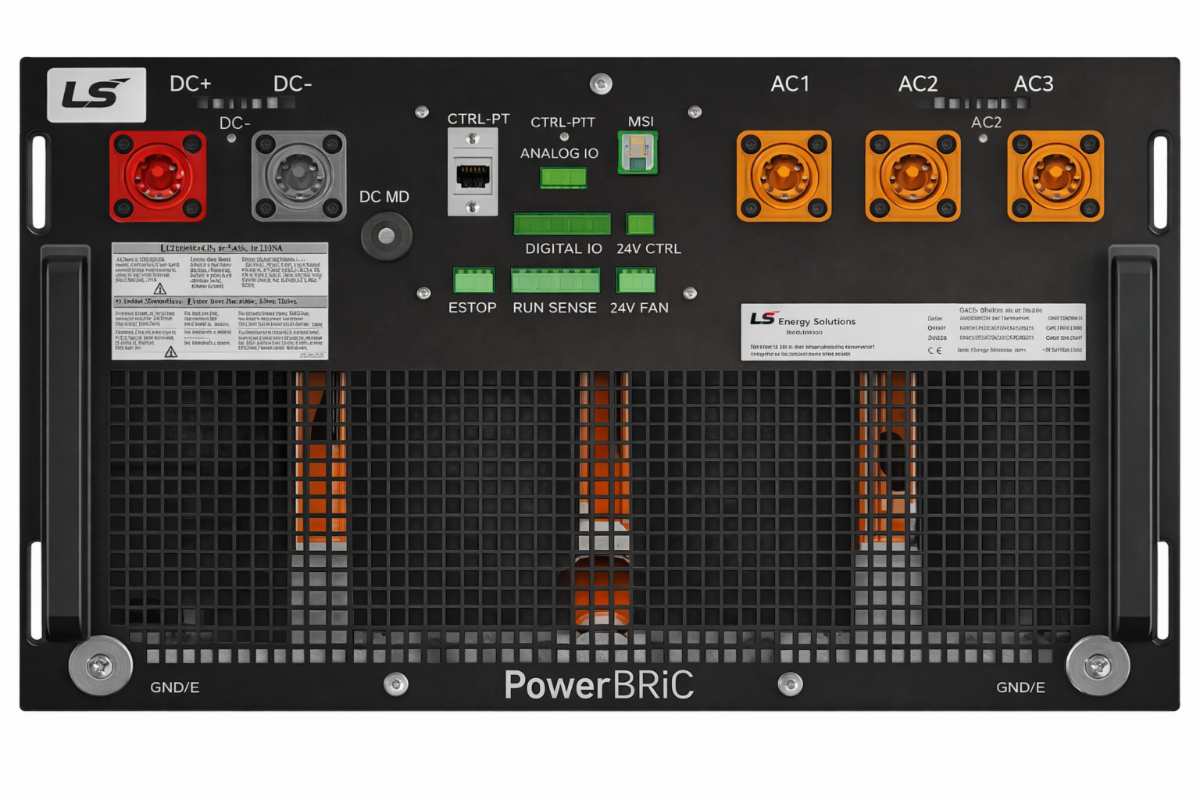
Beyond simple conversion, modern PCS platforms perform several sophisticated functions. They synchronize the storage system with grid frequency and voltage, regulate power quality, and manage reactive power to support network stability. In many applications they also provide fault ride through capability, enabling systems to remain operational during temporary grid disturbances rather than disconnecting entirely. Design architecture plays a significant role in determining how effectively a PCS can deliver these services. Traditional centralised inverter systems rely on a single large inverter unit to manage power conversion for an entire battery installation, while more recent designs increasingly adopt modular inverter architectures composed of many smaller bidirectional inverter modules operating in parallel.
This distributed approach offers several advantages. If one module requires maintenance, the remaining modules can continue operating, improving system availability. Modular systems also allow engineers to scale installations more easily, from smaller commercial installations to multi-megawatt utility projects, while maintaining consistent performance characteristics. Just as importantly, modular inverter designs allow better matching between battery racks and inverter output capacity, improving overall efficiency and simplifying system expansion when additional storage capacity is added later.
Intelligence behind the hardware: hierarchical control systems
While hardware determines the electrical capabilities of a storage system, software and control architectures increasingly determine how effectively those capabilities are used. Advanced ESS platforms rely on layered control structures that co-ordinate inverter firmware, site level controllers, and energy management software.
At the inverter level, firmware manages key electrical parameters such as active power output, reactive power, voltage, and frequency. These fast acting controls allow individual inverter modules to respond immediately to grid fluctuations. Above this level sits the system controller or energy management platform, which co-ordinates multiple inverters, battery arrays, and renewable energy sources.
By monitoring system conditions in real time, these controllers can dynamically allocate power resources, adjust operating modes, and maintain grid stability under changing conditions. Such hierarchical architectures enable a wide range of grid support services. Energy storage systems can provide frequency regulation, compensate for voltage fluctuations, manage ramp rates from intermittent renewable generation, and reduce peak demand for large facilities. In some cases, storage systems can also support black start operations, restoring grid voltage and frequency after a major outage. Perhaps most importantly, modern inverter systems can operate in both grid-following and grid-forming modes. In grid-following mode, inverters synchronize to an existing grid reference. In grid-forming mode, however, the inverter itself establishes the voltage and frequency reference for a microgrid. This capability allows storage systems to maintain stable power even when disconnected from the main grid.
Designing microgrids for reliability, scalability and integration
As storage technologies mature, microgrids are emerging as one of the most important applications for advanced inverter and control systems. Microgrids combine local generation resources, such as solar or wind, with battery storage and intelligent controls to create self-contained energy networks capable of operating either connected to the main grid or independently during disruptions.
Engineering resilient microgrids requires careful coordination between power electronics, protection systems, and communications infrastructure. Switchgear, protection relays, transformers, and circuit breakers must work seamlessly with inverter controls to isolate faults, manage safe islanding, and resynchronise with the grid when normal operations resume. System scalability is another critical design consideration. Microgrids often expand over time as new loads, renewable generation sources, or storage assets are added. Modular inverter architectures and standardised communication protocols allow engineers to expand system capacity without redesigning the entire infrastructure.
Communication standards such as Modbus, DNP3, and IEC 61850 allow storage systems to integrate with supervisory control and data acquisition (SCADA) platforms and distributed energy resource management systems (DERMS). Through these interfaces, operators can monitor system conditions, dispatch energy resources, and coordinate grid services across large networks of distributed assets. Together, these capabilities allow modern microgrids to move beyond simple backup systems and become dynamic components of the broader energy ecosystem.
Integrated platforms for the next generation of power systems
As utilities and facility operators deploy more distributed energy resources, the ability to integrate multiple technologies into cohesive power systems becomes increasingly important. This is where integrated power infrastructure platforms are beginning to play a central role. Companies such as LS ELECTRIC, a global provider of smart power, automation, and energy infrastructure technologies, have expanded beyond traditional electrical equipment to develop comprehensive solutions that combine switchgear, protection systems, inverters, and energy storage platforms.
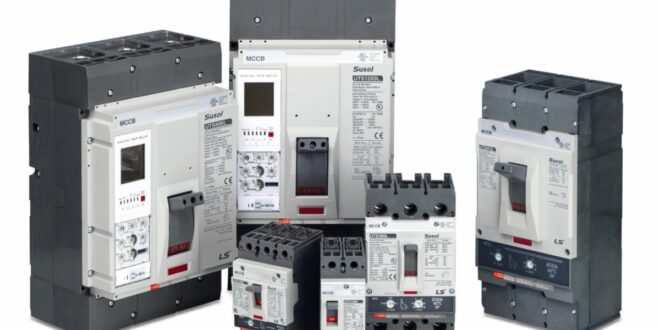
Through the integration of inverter technologies with grid infrastructure equipment, including medium voltage switchgear, circuit breakers, protection relays, and transformers, these platforms enable stable microgrid architectures capable of supporting both grid connected and islanded operation.
The company’s energy storage division, LS Energy Solutions, has deployed more than 300 energy storage projects representing over 1.5 gigawatts of installed capacity worldwide. These deployments have informed the development of modular inverter architectures and integrated control platforms designed to support applications ranging from utility scale grid stabilization to commercial and campus microgrids. By combining advanced power electronics with protection grade infrastructure and intelligent control systems, such integrated platforms illustrate how energy storage systems are evolving into fully functional grid assets rather than standalone technologies.
Toward a distributed, digital energy future
Looking ahead, the evolution of energy storage and microgrid technologies points toward a fundamentally different grid architecture. Instead of relying solely on centralised generation plants, future power systems will likely operate as networks of distributed resources coordinated through digital control platforms.
Advanced inverters will play an increasingly important role in this environment. Grid forming technologies can provide virtual inertia and stabilise voltage and frequency in networks dominated by renewable energy. Improvements in power electronics continue to increase energy density and efficiency, enabling more compact systems capable of delivering higher output. Meanwhile, digital control algorithms allow storage systems to react to grid disturbances with extraordinary speed. Microgrid platforms will also evolve into intelligent energy management systems capable of coordinating solar generation, storage, backup generators, and flexible loads across campuses, industrial complexes, and critical infrastructure sites.
For engineers and energy planners, these technologies represent more than incremental improvements in grid equipment. They signal the emergence of a distributed, digitally managed energy ecosystem, one in which advanced inverters, intelligent controls, and energy storage systems work together to deliver the reliability, resilience, and flexibility required by the next generation of power networks.
Michael Wise is Commercial Operations Manager at LS ELECTRIC America.