Engineer News Network The ultimate online news and information resource for today's engineer
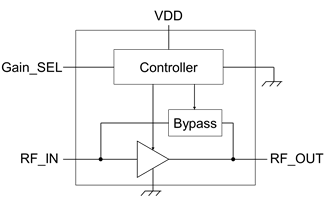
In recent years, the increasing speed of mobile data communication has expanded the use of RF switches and filters in the analog front end of mobile devices.
The resulting increase in signal loss between the antenna and receiver circuits has degraded receiver sensitivity, and focused attention on LNAs with a low Noise Figure (NF) as a means to compensate for signal loss and improve the integrity of the received signal. 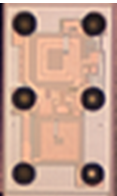
Toshiba has used its new TaRF10 process to develop a prototype LNA with an outstanding noise figure of 0.72dB and a gain of 16.9dB at a frequency of 1.8GHz.
Supplied from a 1.8V source, the prototype consumes just 50μA in bypass mode and offers a NF of 0.72dB. Mobile devices use multiple RF switches and LNAs in the receiver circuit, requiring reduced circuit size to reduce required board area.
Current LNAs typically use silicon-germanium-carbon (SiGe:C) bipolar transistors, making it difficult to integrate LNAs and RF switches fabricated with different processes on the same chip.
The new TaRF10 process can integrate LNAs, control circuits and RF switches on a single chip, as it is highly compatible with RF switches based on the TaRF8 and TaRF9 processes – both of which have outstanding RF characteristics.
TaRF9 realises lower insertion loss and signal distortion than TaRF8. Toshiba now plans to bring to market LNAs with integrated RF switches. Toshiba has developed RF ICs utilising its subsidiary, Japan Semiconductor Corporation to implement the latest SOI-CMOS technology.