Engineer News Network The ultimate online news and information resource for today’s engineer
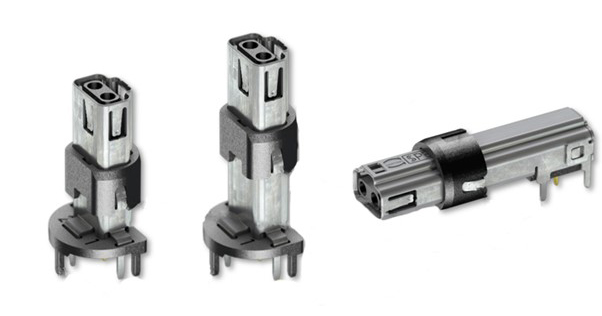
Harting has launched an expanded range of products to support and boost its single pair ethernet (SPE) infrastructure. Semiconductor PHY chipsets, magnetics, cable and piece part mating cable and pcb connector parts are now available.
The range includes straight vertical pcb mounting female connectors, alongside its right angle ‘letter box’ design. These new Through Hole Reflow (THR) parts are fully compatible with Harting’s M12 range of housings for panel fixing and cable mating.
Automation device designers can now begin benefitting from the key features of this new technology by designing it into future iterations of their products.
Today, sensors and actuators in the field level are usually connected via proprietary fieldbuses or analogue systems. With SPE, there is now the option to connect these devices with Ethernet, the ‘open’ data transmission standard, over a single twisted pair cable. This saves space, reduces device design costs, removes the need for extra Gateways and simplifies installation.
Meanwhile, installers and integrators can still rely on the rugged handling, industry standard, M12 connector mating characteristics that they are familiar with for IP67 protection applications, through a range of different length M12-to-M12 patch leads.