Engineer News Network The ultimate online news and information resource for today's engineer
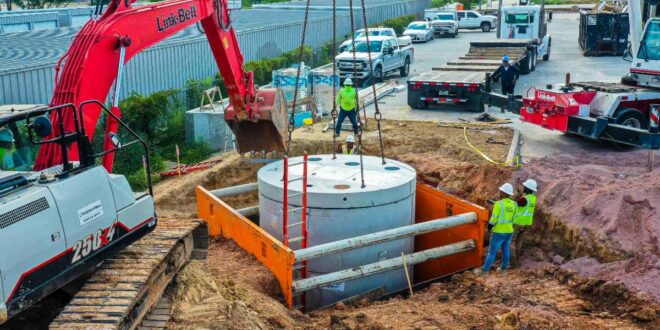
Fully integrated packaged pump lift stations seamlessly combine a precast concrete wet well, advanced pumps, piping, valves and automated controls, delivering efficient movement of wastewater, stormwater, and process fluids with a turnkey installation tailored to meet the demands of each project. Will Doran reports
For decades, civil engineers and project managers accepted the headaches of traditional, site-built concrete pump lift stations. Crews spent weeks battling groundwater, unpredictable weather, and complex field assemblies just to establish a functional wet well and valve vault.
The industry is now experiencing a shift. Developers, municipalities, and industrial facilities are beginning to move away from site-built, cast-in-place structures. Instead, they are increasingly adopting precast, packaged pump lift stations. This transition represents a continued evolution in how critical water and wastewater infrastructure is designed, built, and deployed.
A pump lift station is a complete, factory-built system that collects sanitary wastewater or stormwater into a wet well via an inlet pipe. As the well fills, an electric liquid level control system continuously monitors the water level. When the water reaches a predetermined level, the pump engages, transferring the water out of the wet-well basin and to a higher elevation in the sanitary or stormwater system. For high-pressure or higher-head applications, a grinder pump is recommended. The powerful grinder pump features sharp cutters that shred solids and move them under high pressure through a smaller diameter pipe, ensuring reliable performance even in demanding conditions.
Traditional site-built pump lift stations require a general contractor to pour the concrete wet well on-site. Once the concrete cures, different specialized crews arrive to install pumps, pipework, valves, and electrical control panels.
This piecemeal approach invites delays, integration errors, and a great deal of finger-pointing between contractors when problems arise during installation or long-term operation.
A precast, pre-assembled lift station replaces this fragmented approach with a single, integrated solution. Every aspect is designed and engineered by a dedicated team of specialists with deep expertise in pump station systems.
By entrusting design, manufacturing, and assembly to experts who are fully immersed in the latest technologies, best practices, and municipal specifications, you ensure a solution engineered for today’s infrastructure demands and adaptable to future system requirements. The entire system is engineered and assembled in a controlled, NPCA-certified manufacturing environment. The heavy-duty concrete wet well and valve vault are precast to precise specifications. Inside the factory, technicians pre-assemble the guide rails, submersible pumps, discharge piping, valves, and float switches. Electricians mount and wire the control panels.
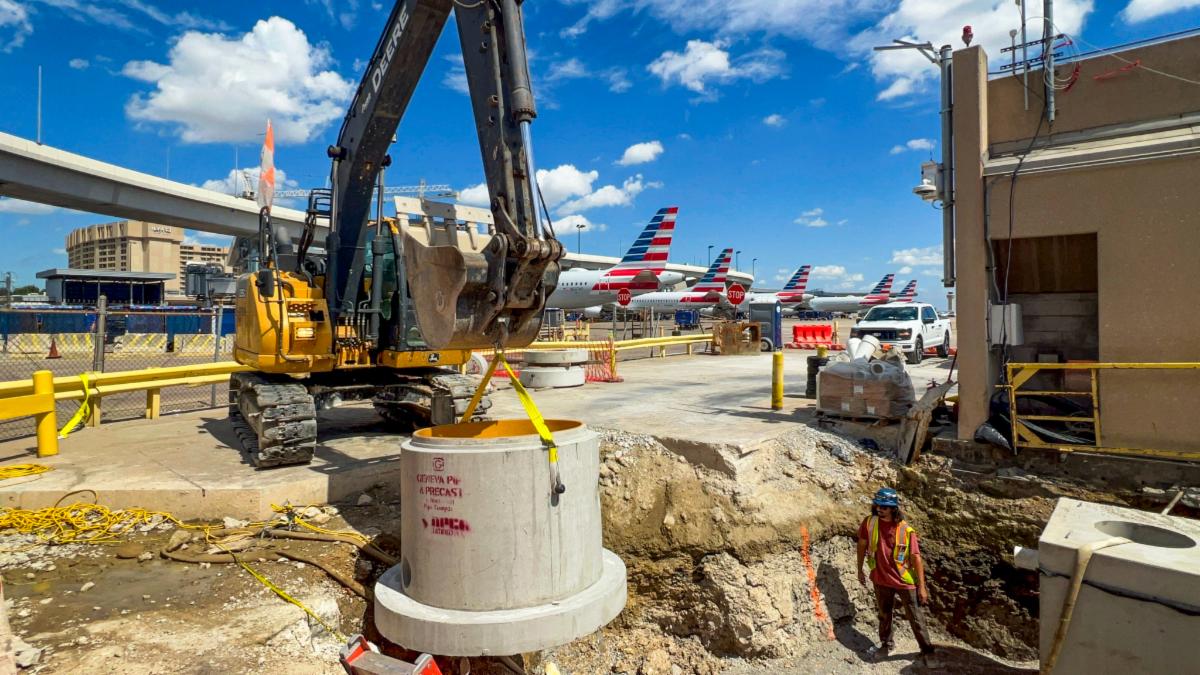
The result is a comprehensive, fully-integrated pump lift station. The pre-assembled internal components are factory-tested by the manufacturer before it leaves the facility. It then ships to the project site as a complete packaged system. Instead of spending time building a station from the ground up, the contractor simply excavates the hole, prepares the subgrade, and lowers the precast wet vault base and riser sections into place. For standard-depth stations, the pre-assembled pump, internal piping, and sensors shipped with the vault are then added, while deeper installations may require select components to be installed on-site. Once the inlet, outlet, and power lines are connected, the station is ready to operate.
The strategic advantages of packaged pump systems
The transition from field-built to factory-built infrastructure solves several historical pain points. By treating the lift station as a manufactured product rather than a construction project, contractors and owners unlock significant strategic advantages.
Accelerated project timelines
Time is the most expensive variable on any construction site. Open excavations present continuous liabilities, risk of weather delays, and may require expensive dewatering operations. Precast modular stations drastically reduce the construction timeline. Because the precast system arrives ready for installation, a contractor can set the structures and backfill the excavation in a matter of days rather than weeks. This speed accelerates the entire project schedule, allowing developments to open faster and municipalities to restore service with minimal disruption.
Superior quality control
Field construction is vulnerable to the elements. Rain, freezing temperatures, and muddy trenches compromise concrete curing and make precision mechanical assembly difficult. Factory manufacturing eliminates these variables. Precast concrete yields higher strength and better density than field-poured alternatives. Mechanical and electrical components are assembled on clean, well-lit production floors by dedicated specialists. This controlled environment guarantees a higher caliber of workmanship and quality, ensuring the station will perform reliably under intense operational stress.
Economic certainty and risk reduction
Traditional lift stations are notorious for cost overruns. Co-ordinating multiple vendors, concrete suppliers, plumbers, electricians, and pump distributors create opportunities for scope gaps and change orders. A packaged system offers better economic certainty. You purchase a complete, functional system for a fixed price. Furthermore, placing the burden of system integration on a single manufacturer eliminates the friction of managing multiple suppliers and subcontractors.
Single-source responsibility
When a field-built system fails, the blame game begins. The pump supplier may blame the electrical contractor, who in turn may question the concrete work. Packaged lift stations eliminate this frustration. One manufacturer designs, builds, and tests the entire assembly, that manufacturer bears complete responsibility for its performance. You get one warranty and one point of contact for the life of the system.
Applications for precast pump stations
The versatility of pre-assembled lift stations makes them the premier choice across a wide spectrum of infrastructure projects. While they scale to meet almost any capacity requirement, they are particularly ideal for the following applications.
Municipal sewer expansion and retrofits
As cities grow, their wastewater collection systems must expand. Municipalities frequently use packaged lift stations to service new annexations or to bypass aging gravity sewer lines. Because these systems install quickly, they minimise traffic disruptions and neighborhood disturbances. Furthermore, city public works departments appreciate the standardised controls and predictable maintenance schedules that packaged systems provide.
Residential and commercial developments
Housing subdivisions, apartment complexes, and retail centers often sit at elevations that prevent gravity flow into the main municipal sewer. Developers rely on lift stations to pump wastewater over ridges and across long distances. Precast packaged systems are highly favored here because they keep project costs predictable and help developers meet strict project completion deadlines.
Data centres
Modern data centers demand more than just reliability and rapid deployment, they require highly advanced control and monitoring solutions tailored for mission-critical operations, including the massive cooling systems essential to sustaining continuous uptime. Operators look for systems equipped with SCADA integration, building-automation compatibility, and robust remote-monitoring features, ensuring real-time oversight not just for fluid management but also for the sophisticated cooling infrastructure required at scale. In this fast-moving sector, requirements can shift quickly, and clarity is rare. State-of-the-art modular, precast pump stations meet the challenge with flexible engineering that can handle evolving controls, customizations, and specialized demands, whether that means integrating with unique cooling applications or managing wastewater. This adaptability, combined with swift installation and risk mitigation, makes packaged pump lift stations the preferred backbone for data center water management and critical cooling support.
Industrial and institutional campuses
Hospitals, universities, and industrial manufacturing plants require heavy-duty fluid transfer solutions. These facilities often produce fluctuating flow rates and challenging wastewater profiles. Packaged stations can be engineered with specialized pumps, protective interior coatings, and advanced telemetry to reliably handle aggressive industrial environments.
Remote and geographically challenging sites
Projects located in areas with high water tables, unstable soils, or harsh winter climates make prolonged site work dangerous and expensive. A packaged system minimises the time an excavation must remain open. The heavy precast concrete also provides excellent natural resistance to buoyancy, preventing the station from floating in high groundwater conditions.
What to look for in a packaged lift station
Not all packaged lift stations are created equal. As the category grows, some suppliers have entered the market and offer units that are simply bolted together with third-party components. To secure a resilient, high-performance system, you must scrutinise the supplier. Here is what you should demand from a packaged lift station manufacturer.
Uncompromising customisability
Avoid manufacturers that force your project into a standard catalogue size. Every site presents unique topography, flow rates, and dynamic head requirements. An expert manufacturer will treat your project as an individual case. They should offer custom wet well dimensions, specific pump selections, and tailor-made control panels that integrate seamlessly with your existing SCADA network and municipal codes. The system must adapt to your engineering requirements, not the other way around.
Vertically integrated supplier
The highest quality systems come from vertically integrated manufacturers. You want a partner that controls every phase of design and production under one roof. They should cast their own heavy-duty concrete, source the pump and assemble the internal components according to project specifications, write their own control logic, and deliver the final product as a complete packaged system.
When a company relies on outsourced precast structures or third-party control panels, they lose control over quality and lead times. A vertically integrated supplier intimately understands how the structural, mechanical, and electrical elements interact. This holistic expertise results in a vastly superior final product.
Turnkey execution and support
A true packaged solution extends beyond the delivery truck. Look for a supplier that takes comprehensive ownership of the system’s success. The best manufacturers offer turnkey execution. They provide expert field technicians to oversee the installation, handle the final startup, and commission the equipment.
When evaluating options, you will encounter specific product lines that serve as benchmarks for the industry. Systems like the NWPX Park PumpTrooper exemplify the ideal pre-engineered approach. These high-tier solutions combine heavy-wall precast concrete with premium submersible pumps and intelligent control architecture. More importantly, they are backed by companies that provide end-to-end service, from initial hydraulic engineering through final site commissioning. By prioritising customisability, vertical integration, and turnkey support, these elite systems deliver decades of reliable service.
Moving your infrastructure forward
The industry has moved beyond the slow, unpredictable nature of site-built concrete structures. Precast, packaged pump lift stations represent the modern standard for stormwater and wastewater infrastructure. They deliver unmatched installation speed, rigorous factory-controlled quality, and financial certainty.
When planning your next residential development, municipal upgrade, or commercial facility, reconsider outdated methods. Demand a system that is engineered for your specific site conditions. Partner with a vertically integrated manufacturer that controls the entire production process and stands behind their product with comprehensive installation and training support.
By choosing a sophisticated packaged solution, you secure a reliable, high-performance asset that will protect public health and the environment for generations to come.
Will Doran is Group Manager – Sales at NWPX Park.