Engineer News Network The ultimate online news and information resource for today's engineer
The US–Israel war with Iran is destabilising much of the surrounding Middle East, with businesses such as hotels, data centers, and pipelines facing heightened risk of damage. Rising geopolitical tensions are set to drive a rapid increase in demand for political risk insurance, according to GlobalData.
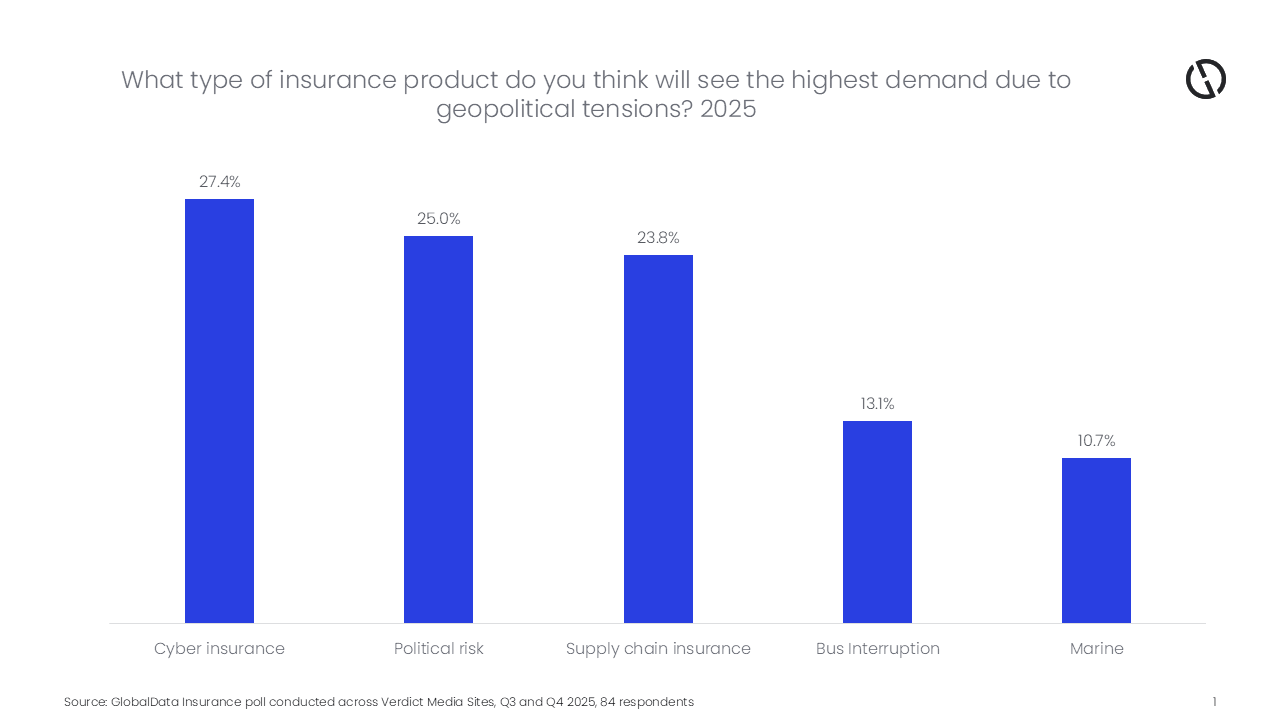
Geopolitical tensions have seen demand for cyber insurance grow sharply since the start of the Russia-Ukraine war, but GlobalData’s poll* data suggests demand for political risk insurance is rising almost as quickly. Recent events have seen missiles hit places such as the Fairmont at the Palm hotel in Dubai, and it appears that areas across the region between Israel and Iran are currently at risk from missile attacks and downed drones.
A GlobalData poll conducted across Verdict Media sites in Q3 and Q4 2025 found that insurance insiders believed cyber insurance would see the highest demand due to geopolitical tensions. But one in four respondents believed that political risk insurance would. Supply chain insurance is also likely to be popular now with heavy restrictions in major shipping routes.
Ben Carey-Evans, Senior Insurance Analyst at GlobalData, comments: “Political risk insurance is important to businesses near potentially dangerous zones, as most insurance policies have war exclusions. This means that if a hotel, for example, is damaged by any kind of military strike, a traditional commercial property or business interruption policy may not pay out. There may also be legal grounds to dispute the terms of that particular contract. The risk of damage caused by intercepted missiles or accidental strikes is extremely high in areas such as the UAE and Qatar at present.”
As the conflict continues, major tourist hubs such as Dubai and Abu Dhabi face heightened exposure. The likelihood of high-value property damage is significant, which is likely to drive further demand for political risk insurance.
Carey-Evans concludes: “It is clear that insurers looking to sell political risk insurance (or cyber, or supply chain insurance) will see a huge spike in business throughout 2026. However, they will be taking on significant risk in doing so, so pricing the product and understanding the level of risk they are exposing themselves will be critical.”
- Poll conducted across Verdict Media sites, Q3 and Q4 2025, 84 respondents