Engineer News Network The ultimate online news and information resource for today's engineer
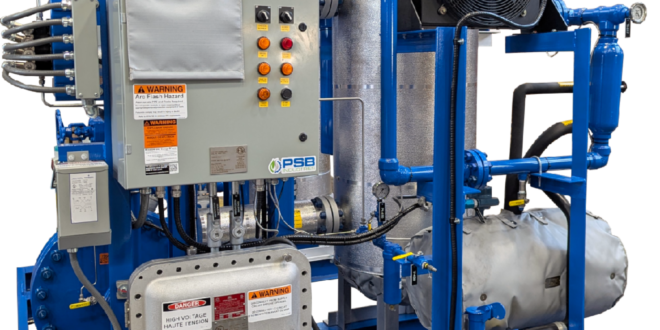
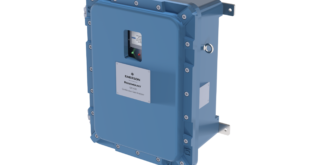
PSB Industries‘s NG-EV Natural Gas Dryer supports continuous, reliable natural gas drying for biogas and renewable natural gas (RNG) projects.
The NG-EV is a dual vessel, fully automatic regeneration system designed to dry medium to large volumes of natural gas for stations with continuous use. Each unit is conservatively sized to remove moisture from gas upstream of natural gas compressors, supporting consistent gas quality to downstream equipment and processes.
At the core of the NG-EV is its dual vessel configuration, which assumes continuous operation. While one vessel is on stream drying, the other vessel is regenerating or in standby mode and ready to be placed back on stream. This design enables uninterrupted gas treatment and helps ensure that drying capacity is available whenever needed.
To verify performance, the NG-EV is equipped with a Digital Dew Point Meter that indicates the effluent dew point. This allows operators to monitor outlet conditions and confirm that the dryer is achieving the desired moisture levels in the treated gas stream.
The standard NG-EV package includes factory-fitted inlet and outlet filtration. A pre filter removes dirt and aerosols before they reach the dryer media, while an after filter removes desiccant dust from the treated gas. Both the pre filter and after filter are supplied with differential pressure indicators to help operators track filter loading and determine when service is required.
The NG-EV is engineered and constructed to recognised industry standards. The dual vessels are manufactured and stamped in accordance with ASME Section VIII, and the associated piping is designed per ASME B31.3. Electrical construction follows NEMA and NEC standards to support safe, code-compliant installation and operation.
For regeneration, the NG-EV utilises a closed-loop system for the molecular sieve adsorbent. This approach supports effective regeneration of the adsorbent and helps maintain drying performance over time. An insulated adsorber vessel and electric heater promote heat conservation during regeneration. The system employs an Incoloy sheath, low watt density, flanged immersion-type electric heater as part of its thermal design.