Engineer News Network The ultimate online news and information resource for today's engineer
Aiding local authorities in Queensland, Australia, in the essential maintenance of roadside culverts, Omniflex has delivered a remote monitoring and control solution for an impressed current cathodic protection (ICCP) control system designed to operate in the complete absence of mains power and cellular coverage.
In Far North Queensland, a vast remote region of Australia, roadside infrastructure operates in extremely challenging environments. Monsoons and seasonal flooding in these remote areas place huge pressure on culverts that are often out of sight, but essential to road safety and drainage. Such culverts are susceptible to corrosion and failure could lead to the roads collapsing.
Working with corrosion consultant Infracorr, Omniflex supplied a bespoke ICCP enclosure and control system to protect the culvert. The system, powered entirely by solar panels and using satellite connectivity, now provides continuous reporting of performance data without the need for regular site visits.
“The culvert that needed cathodic protection was several hours from the nearest town, in a region with no power or network coverage,” explained David Celine, managing director of Omniflex. “This meant that traditional remote monitoring solutions weren’t viable, and sending engineers to inspect the system in person would be very costly.
“During our own early site visits, access was so limited that the consultants were forced to abandon the trip altogether when the road became impassable due to flooding; not a cost-effective use of time.
“With galvanic anodes already in place from a previous installation that were not providing sufficient protection, an ICCP system that would extend the lifespan of the infrastructure and allow performance to be verified was urgently needed,” continued Celine.
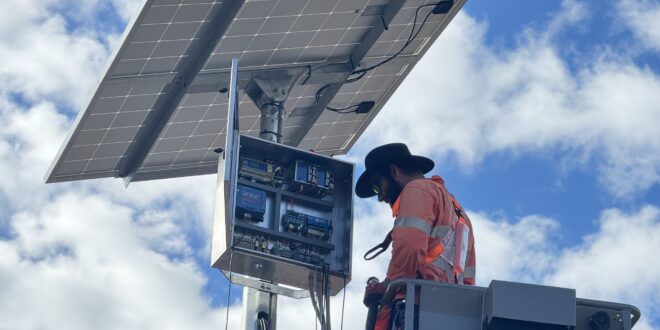
Due to the remoteness of the site, vandalism was considered a risk factor, so the entire ICCP system was installed at the top of a pole under the solar panels, with the batteries buried in the ground in a waterproof enclosure.
Omniflex’s system used two solar-powered transformer/rectifiers for ICCP delivery and a Remote Terminal Unit to monitor and control performance using four reference electrodes embedded in the earth surrounding the culvert. Using satellite connectivity to report back to Omniflex’s Data2Desktop platform, local authorities can easily adjust set points, access performance data and information on solar power generation and battery health in real time, reducing the need for regular in-person site inspections.