Engineer News Network The ultimate online news and information resource for today's engineer

Water is one of the most crucial resources in food processing and manufacturing. From ingredient blending and product washing to steam generation and clean-in-place (CIP) systems, consistent water quality underpins both product safety and brand reputation. As municipal water supplies and some private supplies (such as boreholes) are disinfected using chlorine, food manufacturers must remove residual chlorine before water reaches sensitive processes, especially those with live cultures or active ingredients. Granular activated carbon (GAC) filtration plays a central role in this task, and increasingly, smart sensor technology is transforming how its performance is monitored. Greg Wainhouse looks at the role of chlorine sensors in food processing and manufacturing applications
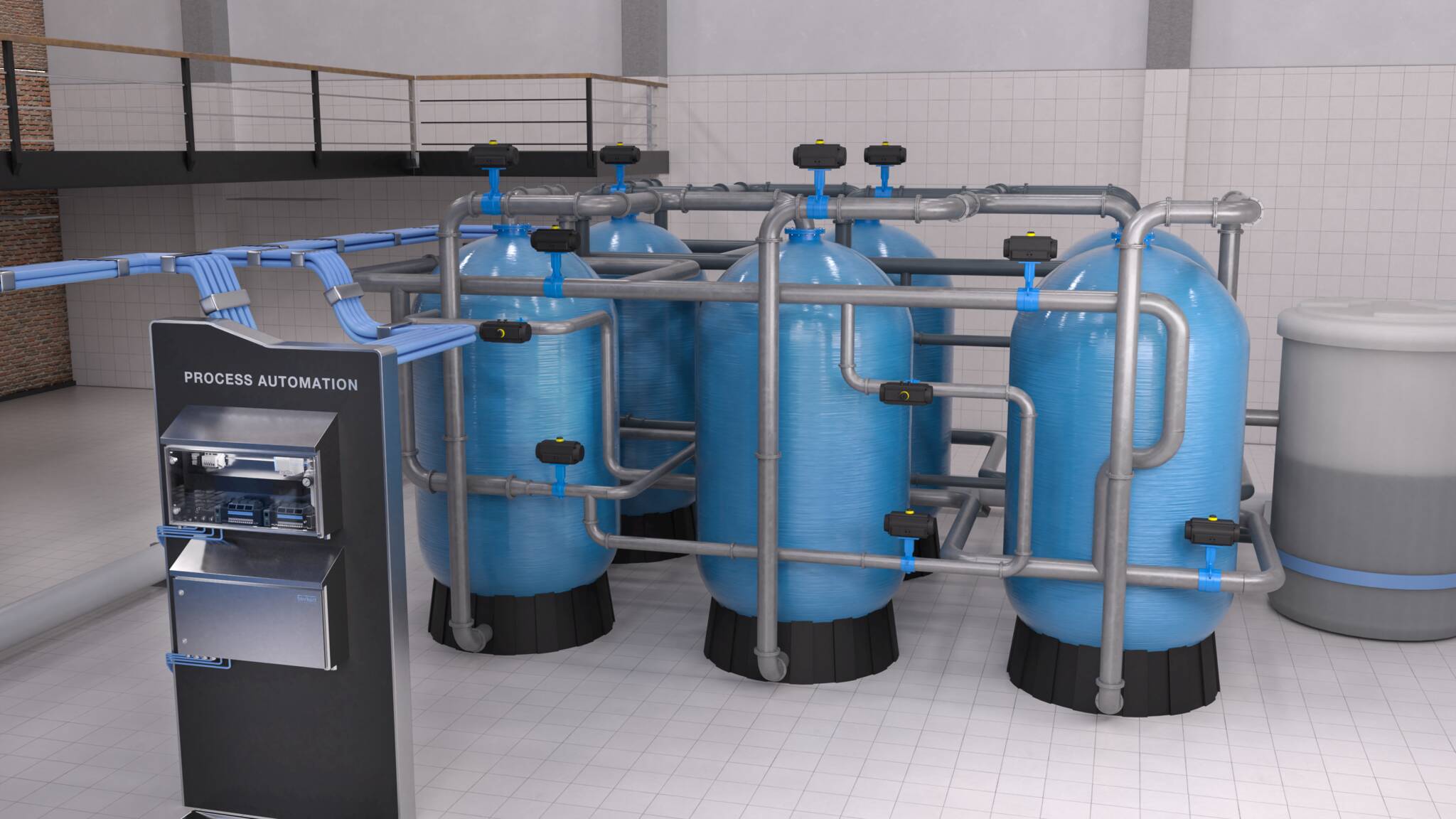
Industrial GAC filters are widely used to remove free available chlorine from incoming water supplies because it can negatively affect taste, aroma and colour, particularly in beverages such as beer, soft drinks and bottled water. Beyond product quality, chlorine also poses a serious risk to downstream assets including reverse osmosis (RO) membranes and electro-deionisation systems.
For this reason, food manufacturers rely on accurate chlorine monitoring with inlet measurements for incoming chlorine loads and outlet monitoring ensures that chlorine has been fully removed. These data points allow operators to monitor filter performance, manage carbon capacity and react quickly to any breakthrough events.
Limitations of traditional chlorine monitoring
However, traditional chlorine monitoring technologies have struggled to meet the needs of fast-moving food manufacturing environments. Conventional amperometric sensors rely on electrodes and electrolyte buffers, making them prone to fouling, drift and require frequent maintenance. Colorimetric analysers, which mix samples with reagents and measure colour change, offer high accuracy but introduce additional complexity through pumps, tubing and ongoing reagent replenishment.
Crucially, both technologies suffer from slow response times. Typical T90 values of two to three minutes for traditional amperometric probes, and a reduced sample frequency to conserve reagent, means operators may not detect chlorine spikes quickly enough to prevent damage or contamination. In food manufacturing, delayed data can result in lost production, increased waste and costly equipment repairs.
Smart sensors for faster, smarter control
Smart water analysis systems are now overcoming these challenges. Bürkert’s OALAB Type 8906 water analysis system, equipped with the MS02 Chlorine Cube, provides fast and precise chlorine measurements tailored to industrial applications such as GAC filter monitoring.
Using advanced amperometric cell-on-chip technology, the MS02 achieves a T90 response time of 30 seconds or less. This rapid feedback enables food manufacturers to respond almost immediately to changes in chlorine concentration, reducing the risk of chlorine reaching sensitive processes. Faster data also supports better operational decisions, including optimising carbon change-out intervals, programming backwashes and preventing unplanned downtime.
Reduced maintenance
Maintenance demands are a key concern in food plants, where downtime must be minimised and hygiene standards are stringent. Traditional amperometric sensors often require electrodes to be removed and manually cleaned due to scaling and heavy element build-up. Colorimetric systems add the burden of reagent handling and mechanical servicing.
The MS02 avoids these issues. Its protective membrane prevents deposits from forming on the sensing cell, while the absence of an electrolyte buffer eliminates the potential for inaccuracies from pH drift, in a process where precision is important for determining the concentration of free chlorine. At the outlet of GAC filters, where zero-chlorine must be confirmed, the sensor’s floating zero-point design prevents polarisation without requiring an external chlorine source.
In comparable industrial water applications, some users have reported continuous operation for over two years without a need for recalibration or maintenance. For food manufacturers, this translates into lower operating expenditure (OPEX) and greater confidence in long-term measurement accuracy for continuous production processes and maximum uptime of advanced water treatment processes, such as reverse osmosis.
Integrated monitoring
Designed with plant facility and utility engineers in mind, OALAB is a plug-and-play, pre-mounted solution requiring minimal installation effort. In addition to chlorine, it can simultaneously measure parameters such as pH, ORP, conductivity and turbidity within a compact footprint, saving valuable space in crowded production environments.
Low sample flow requirements reduce water wastage, while optional built-in data logging and remote connectivity enable predictive maintenance and rapid technical support. Compatibility with industrial communication protocols such as Profinet, Ethernet and Modbus TCP ensures seamless integration with existing automation systems.
Protecting quality, compliance and profitability
As food manufacturers face increasing pressure to deliver consistent quality, maintain compliance and improve efficiency, smart sensor technology is becoming essential. Fast, accurate and low-maintenance chlorine monitoring at GAC filters protects products, safeguards critical assets and reduces operational risk.
By replacing slow, maintenance-intensive legacy solutions, smart water analysis systems enable food processors to move from reactive monitoring to proactive control, ensuring water quality never becomes the weak link in the production chain.
Greg Wainhouseis Regional Business Development Manager – Industrial Water, North Europe, at Bürkert.