Engineer News Network The ultimate online news and information resource for today's engineer
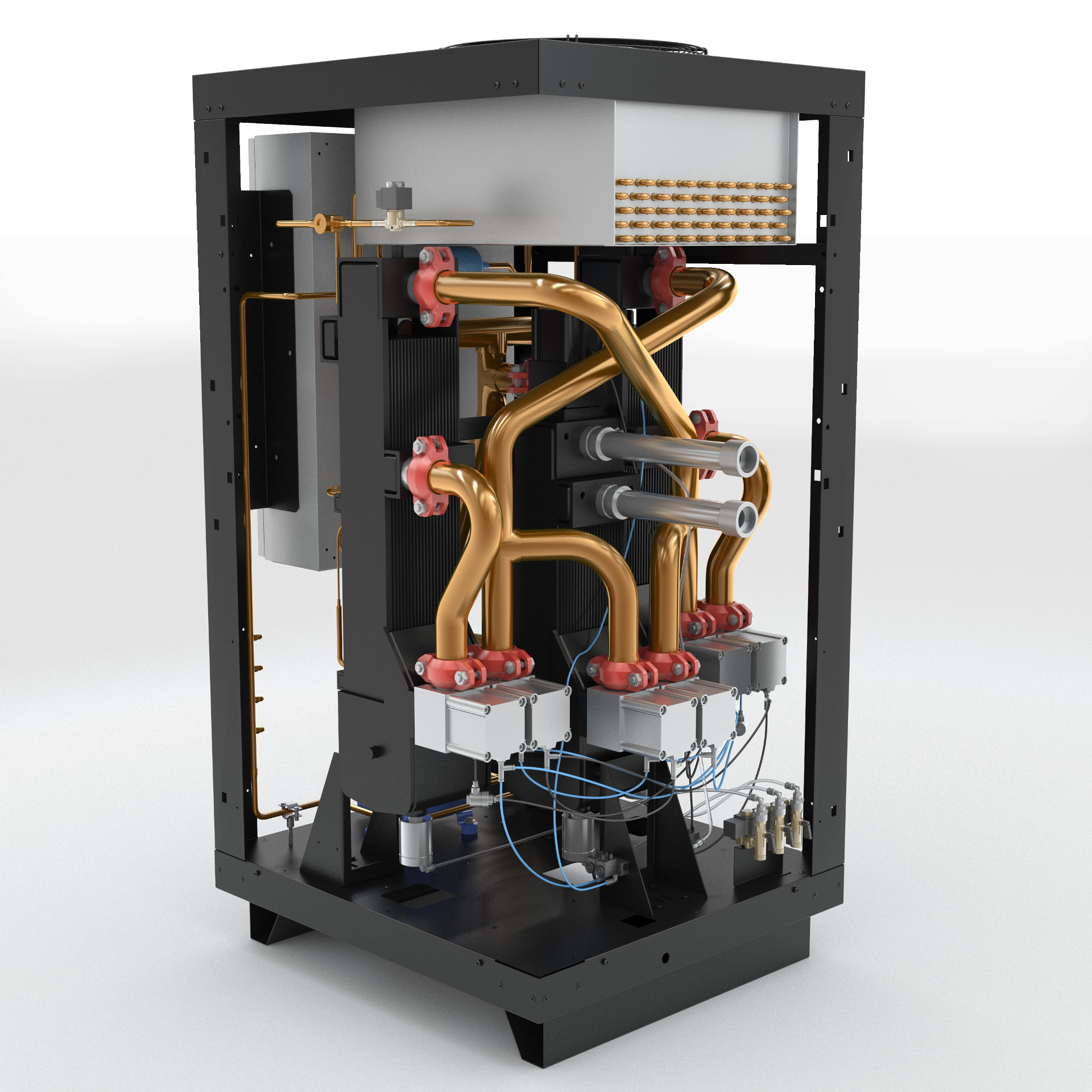 The Sub-Freezing Dryer is the world’s first dryer that provides -20˚C (-4˚F) pressure dew point at 70% lower energy costs and 40% smaller footprint than that of traditional desiccant dryers.
Ingersoll Rand’s new Sub-Freezing Air Dryer is compatible with oil-flooded rotary compressors, oil-free rotary compressors, centrifugal compressors and reciprocating compressors.
“The new Sub-Freezing Air Dryer achieves class leading air quality, previously only attainable with far costlier drum or desiccant dryer technology. We have developed new technology that provides our customers with high quality, -20˚C dew point air, from a high performance regenerative refrigerant dryer in an efficient and economical package,” said Rolf Paeper, vice president of product management and marketing for Compression Technologies and Services at Ingersoll Rand. “This breakthrough technology provides very dry air without wasting energy or purging compressed air; customers have the full capacity of their compressor.”
The Sub-Freezing Dryer supplies a constant ISO Class 3-20˚C(-4˚F) pressure dew point air, regardless of changes in demand or ambient temperatures. This allows customers to dependably meet the compressed air needs of their operation.
 “Whether customer’s needs are general purpose or they are manufacturing critical products such as pharmaceuticals, the Sub-Freezing Air Dryer delivers the air quality they need,” Paeper said. “The high-efficiency, superior operating cost alternative – Ingersoll Rand’s groundbreaking Sub-Freezing Dryer – provides real customer value.”
The Sub-Freezing Dryer has a lower total cost of ownership than traditional regenerative desiccant dryers and has an 80 percent lower maintenance cost than drum dryers.
Unlike drum and desiccant dryers, there is no costly periodic desiccant replacement, and with no desiccant required, downstream particulate filtering is not needed.