Engineer News Network The ultimate online news and information resource for today’s engineer
Evan Butcher examines what has changed since the start of using metal additive manufacturing (AM) as a production technology, and what a modern evaluation of metal AM simulation and optimisation needs to look like if you are serious about first-time-right production on high-value parts
Between 2016 and 2020, a lot of organisations evaluated commercially available additive manufacturing (AM) simulation tools. They took a handful of metal AM parts (usually coupons, demo brackets, simple manifolds) lined up a few software options, and asked a reasonable question: “Can you predict distortion?”
On the basis of those trials, budgets were spent, or the conclusion was reached that simulation was not scalable, too slow or not accurate enough to justify the effort. Ever since, the internal narrative in many companies has been, “We already looked at simulation.” The box is mentally ticked.
The problem is that the world we are printing in now bears very little resemblance to the world those evaluations were designed for. The parts are different, the questions are different, the pace is different, and – critically – the software ecosystem is different. Treating a 2018 bake-off as definitive is no longer a neutral decision, it is an active constraint on what metal AM can achieve.
This article is about what has changed, and what a modern evaluation of metal AM simulation and optimisation needs to look like if you are serious about first-time-right production on high-value parts.
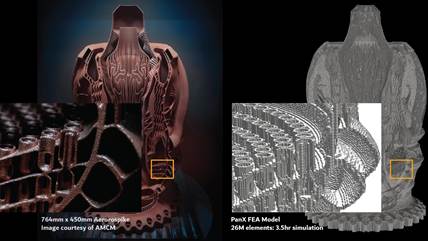
Most 2018 bake-offs were run on modest geometries: coupons, small brackets, simple manifolds. Even then, accuracy and speed were frequently not acceptable — which is one reason so many companies defaulted to trial and error as the practical route to printing parts.
Today’s critical parts look very different. Part size and complexity have dramatically increased. Rocket hardware, dense heat exchangers, large structural components, and part-scale DED repairs push old simulation tools well past their computational limits. Mesh counts explode. Run times balloon. The solver simply fails, and teams fall back (explicitly or quietly) to trial-and-error.
These are not cheap mistakes. With prints frequently reaching six-figure costs, an accurate and scalable simulation capability is needed to:
- Make metal AM profitable
- Increase machine throughput and uptime
- Reduce costs associated with failed prints and rework
- Shorten time to production and qualification
PanX is an enabling technology designed specifically to solve the problems of modern AM. In practice, it is often the only production-ready solver that can handle these complex parts at the required model resolution and accuracy, and where older solvers can run, PanX typically runs 10–100× faster with superior accuracy.
In 2018, the dominant question was: “Can you predict distortion?” Distortion still matters, but it isn’t the whole story, and it isn’t the same story for everyone.
For engineers, the bar has moved. They want simulation to go beyond rough trend prediction and become a tool for:
- Part design (orientation and features)
- Part qualification (thermal history, defect risk, mechanical properties)
- High-accuracy temperature and distortion/stress prediction
- Process optimization (dwell-times, process parameters, geometries)
And for leadership, the underlying question is even more direct. Can simulation help make metal AM profitable and predictable, rather than a high-cost experiment?
A solver that only produces stress and distortion plots is misaligned with the decisions that actually govern flight readiness, warranty exposure, and program economics. PanX was built explicitly with those qualification-grade and business-critical questions in mind, not as a prettier way to look at the same old contours, but as infrastructure for how metal AM gets designed, qualified and run in production.
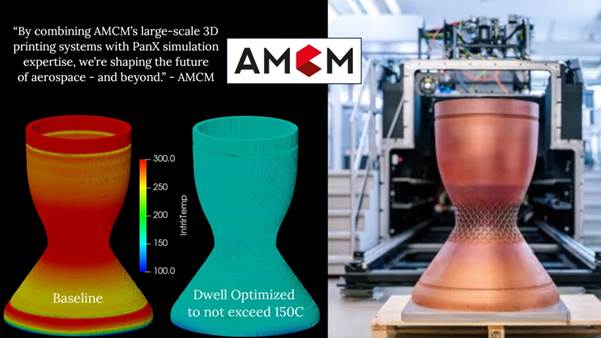
The simulation toolchain you evaluated in 2018 has moved on, or, in many cases, not moved at all. Old solvers have shrinking development teams, frozen roadmaps, or have been absorbed into portfolios where AM is no longer the priority.
At the same time, OEMs and build-prep vendors now expose richer interfaces. That opens the door to something that simply was not realistic in most 2018 trials: simulation as an engine behind your existing workflows, seamlessly feeding insight into the manufacturing strategy rather than living as a separate island.
This is central to the 2026 vision for PanX: prediction plus optimisation, delivered through OEM and ecosystem integrations so that engineers experience it as part of everyday work, not an extra task.
If you accept that parts, questions, pace, and ecosystem have all shifted, it follows that the way we evaluate tools must change as well. In our work with customers, a more realistic evaluation tends to have four characteristics.
1. Use real production parts, not simple research/prototype parts. Include at least one geometry that genuinely stresses your current workflow (the heat exchanger, the large rocket component, the part-scale repair). If a tool cannot cope with that, it does not matter how good it looks on a coupon.
2. Measure throughput, not just one-off runtime. Ask how many meaningful scenarios can be run per week on hardware you are actually willing to buy. The ability to explore 200 variants in the same time an older code needs for two is a material competitive advantage.
3. Tie metrics to qualification and economics. Frame success in terms of fewer failed builds, shorter time to a qualified part, and reduced uncertainty in critical regions, not just “did the displacement match a gauge within X%?”
4. Consider the integration roadmap as a first-order criterion. Probe how the solver will connect to your OEM workflows and automation platforms over the next five years. A frozen codebase, however familiar, is not a neutral choice when your machines and requirements are moving.
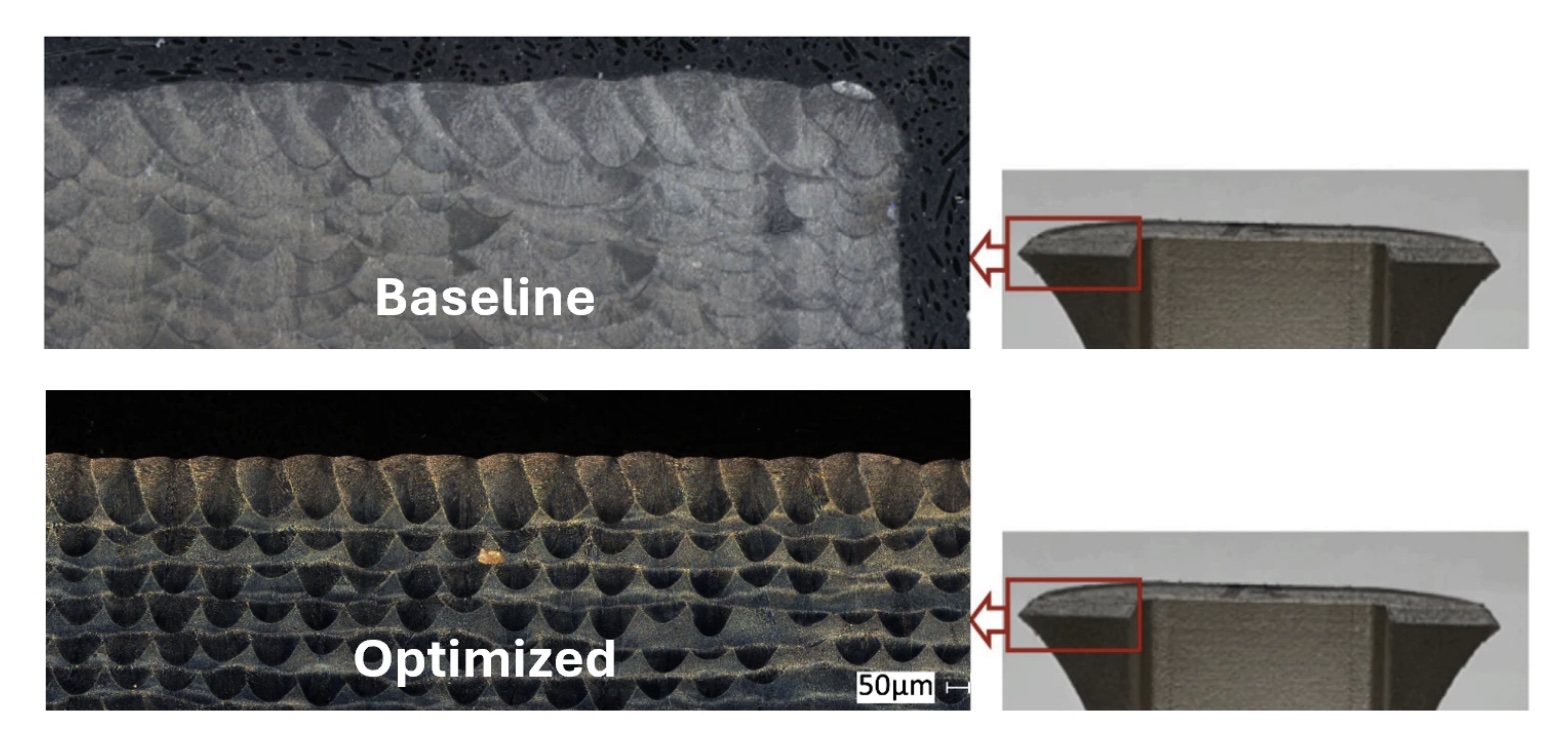
Re-examining a 2018 simulation decision is not an admission of failure, it is an acknowledgment that metal AM has grown up. If your flagship parts are larger and more complex, your qualification burden is heavier, your timelines are tighter, and your tools and evaluation criteria are unchanged, something has to give.
The practical questions to ask inside your organization are straightforward:
- Can our current tools handle the largest, most complex parts we actually care about, at useful run-times and resolution?
- Do they answer qualification-grade questions, or only provide basic distortion plots?
- Are they fast and robust enough to be used as a design and optimization engine, not just a report generator?
- Is there a credible roadmap for OEM integrations and process optimisation, or are we effectively on frozen code?
If the honest answers are uncomfortable, your 2018 evaluation has expired. The opportunity is not simply to swap one solver for another, but to treat simulation and optimisation as core infrastructure for how metal AM is designed, qualified, and run in production.
That is the mindset shift we see in the organisations getting the most value from PanX, and it is the shift the wider industry will need if we want metal AM to move beyond isolated successes and into reliable, large-scale, economically compelling production.
Evan Butcher is the Principal Engineer – Additive Manufacturing at PanOptimization.