Engineer News Network The ultimate online news and information resource for today’s engineer
This innovation shows how interconnected, intelligent systems can maximise responsiveness, productivity and plant control while reducing costs and downtime.
Automation is empowering companies to control and optimise their industrial processes to unprecedented levels.
By analysing the vast amount of data generated continuously by industrial machines, it is possible to identify the initial signs of machine failure and conduct effective predictive maintenance before the issues impact the entire plant.
Accessing online AI functionality
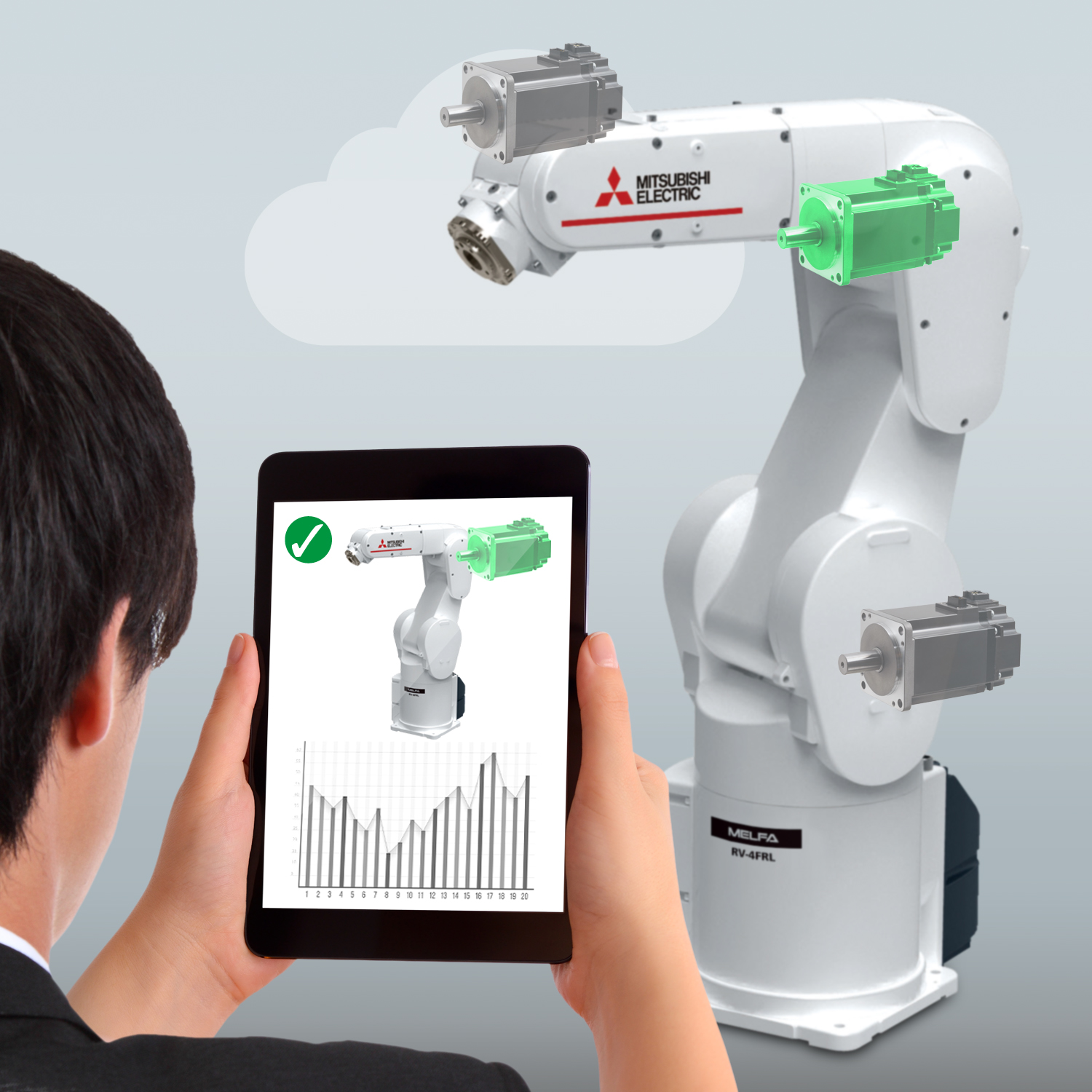
Mitsubishi Electric’s approach to proactive maintenance is based on machine usage and wear characteristics.A working example could monitor the status of a robot with an AI analysis platform, supported by IBM Watson Analytics in the Cloud. This software combines predictive maintenance models, digital simulation, prediction and extrapolation of trends to give easy access to accurate advice on status and the right action to take.
Augmented visualisation is made reality
Machine data analytics is useless if not associated with an appropriate communication system that informs the human operator about the condition of the robot.
Therefore, an AR interface has been developed to ensure a useful conversation can be had between humans and robots.
A robot conversation
The operator can initiate contact and easily visualise the predictive maintenance analytics and monitor the robot while walking past using a tablet computer.
Users can even receive maintenance information or run hands-free operations on the machine via voice commands. The robot can also report the status of a task verbally.
Smart glasses
Not long ago this was part of a vision of factory maintenance in the future, but once the AR platform is enabled, smart glasses can be used to manage and conduct maintenance works.
Through them, human operators can receive information, such as CAD drawings superimposed on the robot, and receive guidance on issues or tasks to perform, eg via maintenance manuals or specific instructions.